
property title gaps Chennai is a practical search topic for readers who need a reliable starting point. This guide explains the issue in clear language, identifies important records, and outlines sensible preparation before action. Individual facts can change the legal position, so general guidance should not replace review of the actual documents. Where a notice, filing, transaction, dispute, or proceeding is active, preserve the records first. Then identify deadlines, the outcome required, and the appropriate forum.
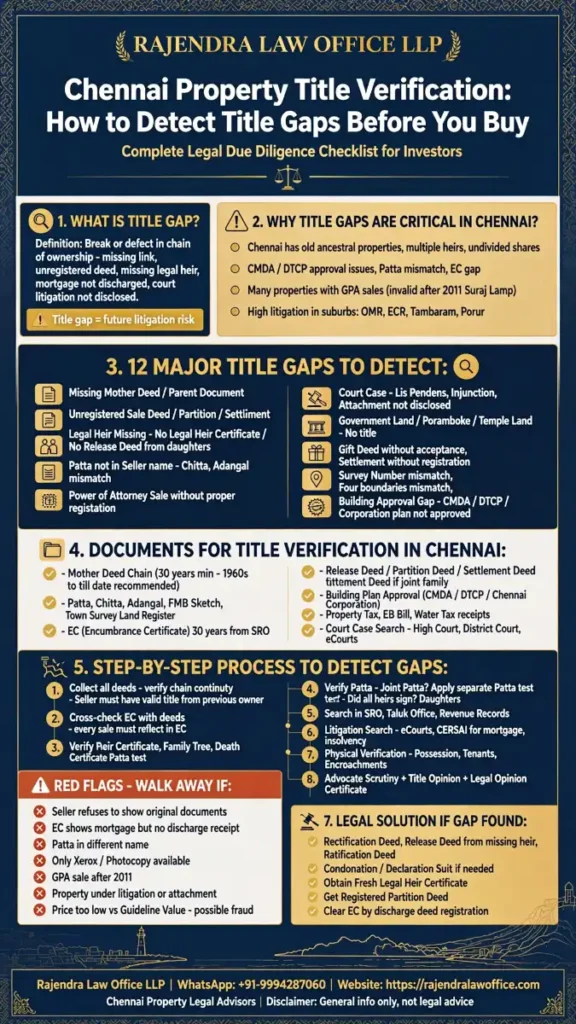
Chennai Property Title Verification: How to Detect Title Gaps Before You Buy
Understanding the Issue
The starting point is a factual description of the parties, events, documents, and objective. Broad labels can conceal important differences. Separate confirmed facts from assumptions and identify which records support each important point. Keep a dated chronology and note missing information that requires verification.
Define the Central Question
Turn the concern into precise questions that can be answered from the records. Ask what right, duty, transaction, notice, or dispute requires attention. This keeps the review focused and identifies material evidence.
Separate Facts From Assumptions
First, distinguish directly supported facts from points based on recollection or interpretation. Next, clearly identify the evidence supporting each factual assertion and interpretation. Meanwhile, retain both favourable and unfavourable documents without excluding relevant material. Therefore, assess the position fairly using the complete evidentiary record.
Identify the Desired Outcome
State the practical result required. It may involve protection, recovery, clarification, settlement, correction, enforcement, or another lawful remedy. A defined outcome lets possible routes be compared against the actual need.
Check the Timeline
Review notices, agreements, emails, filings, and procedural documents for dates that may require action. Verify uncertain deadlines from the relevant source.
Documents and Evidence to Organise
Organise records chronologically with descriptive file names and a simple index. Preserve original versions where possible. Keep complete communication threads and digital records with their surrounding context. If several versions exist, retain them and note which was signed, sent, received, or relied upon.
- Prepare a dated chronology.
- Collect agreements, notices, orders, and transaction records.
- Preserve emails, messages, photographs, and digital files.
- Record payments, submissions, and proof of delivery.
- Identify missing records before consultation.
Build a Chronology
Write significant events in date order. Include agreements, notices, payments, communications, meetings, filings, and responses. A chronology helps a reviewer test the sequence against the records.
Preserve Original Records
Keep signed documents, original files, complete communication threads, receipts, and supporting material. Avoid replacing originals with cropped screenshots when the underlying record is available.
Create an Evidence Index
Give important documents a reference number and short description. Note the fact each record supports and where the original is stored.
Practical Steps Before Taking Action
Clarify the Forum
The appropriate forum can depend on the subject, location, parties, value, documents, and procedure. Identify the relief required and confirm which forum can provide it.
Compare Available Routes
Options can include negotiation, formal notice, mediation, administrative response, complaint, civil proceedings, criminal proceedings where legally justified, or appeal. Compare each route by purpose, evidence, timing, and practical consequence.
Prepare the First Action
Prepare the immediate action carefully. Check names, dates, references, supporting records, and factual statements before submission. Keep a final copy and proof of delivery or filing.
Review Before Submission
Confirm that the response addresses the actual issue and seeks an appropriate result. Accuracy and consistency should come before speed when the deadline permits review.
Pre-Action Checklist
- Objective clearly defined
- Chronology completed
- Key documents indexed
- Deadlines checked
- Forum and procedure reviewed
Questions for a Legal Consultation
- What is the strongest documented issue?
- What evidence is still missing?
- Which route matches the objective?
- Are urgent steps required?
- What documents should be preserved next?
Moving From Information to Action
Good preparation is about identifying the central issue, preserving reliable evidence, and choosing an appropriate next step. A concise chronology, organised document set, and clear outcome statement can make professional review more useful. Where the matter is contested or significant, early review can identify procedural requirements and evidentiary gaps before avoidable problems arise.
Frequently Asked Questions
What is the first step?
Start with the facts, documents, dates, and desired outcome. Then identify any deadline or formal process already underway.
Which records should be preserved?
Preserve agreements, notices, correspondence, payment records, filings, orders, and digital evidence supporting the important facts.
Can negotiation be considered first?
Depending on the facts, negotiation or another lawful settlement route may be considered before or alongside proceedings.
How should digital evidence be stored?
Keep complete files and surrounding context. Avoid editing original records that may later need to be produced.
Why is a chronology useful?
It shows the sequence of events, exposes missing information, and helps connect documents with the factual history.
When should professional advice be obtained?
Seek advice early when deadlines, formal notices, significant transactions, disputed rights, or court proceedings may affect the next decision.
Topic cluster: Property due diligence. Related resources.