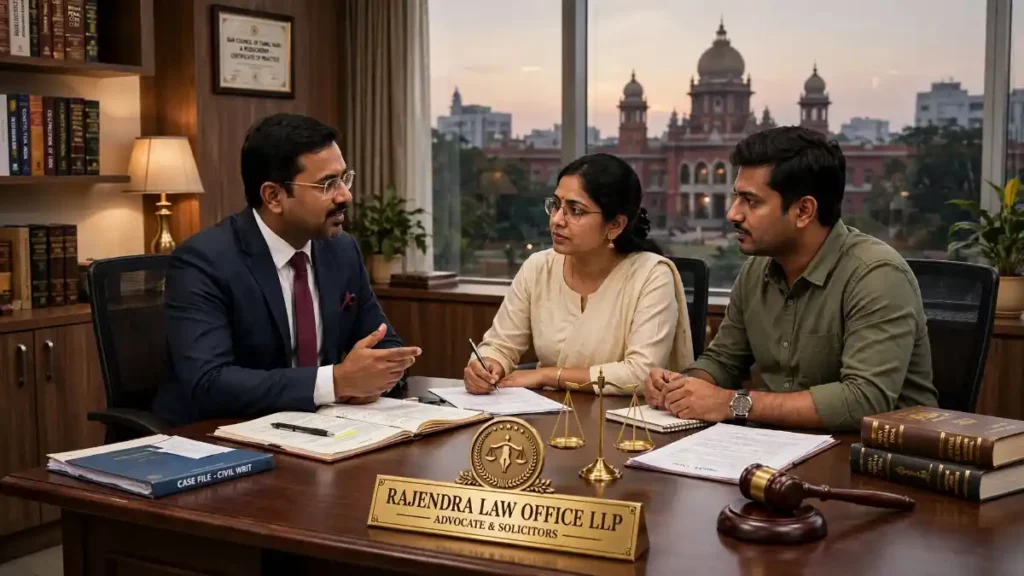
A useful legal consultation should clarify the client’s rights, risks, options, and next steps. The right advice depends on the facts, documents, deadlines, applicable law, and the forum that can grant an effective remedy. In Chennai, a matter may involve a civil court, the Madras High Court, a tribunal, a statutory authority, or an administrative process. Choosing counsel solely by advertising or an assurance of success can be risky. This guide explains how to prepare for a consultation, evaluate legal advice, understand written opinions, and make informed decisions. It is general information and does not create a lawyer-client relationship by itself.
Legal Advice in Chennai: Trusted Legal Counsel for Your Concerns
How to Protect Your Interests: Reliable Legal Advisory services in Chennai?
1. Define the legal problem and the result you need
Before contacting a lawyer, describe the problem in a short, factual summary. Identify the parties, key dates, documents, current proceedings, and any urgent threat. Explain what outcome matters: payment, possession, protection, compliance, settlement, an appeal, or a formal opinion. A client’s preferred remedy may not be legally available, so the objective should be tested against the facts and law. Separate confirmed facts from assumptions and disputed allegations. Mention any notice, summons, police contact, hearing date, limitation concern, or contractual deadline immediately. A clear intake helps counsel identify conflicts, urgency, the relevant practice area, and the documents needed for a meaningful assessment.
2. Choose counsel by relevant experience and transparent process
Legal issues vary significantly. A property title dispute, commercial contract, employment claim, criminal investigation, and appellate proceeding require different analysis. Ask whether the lawyer regularly handles the relevant type of matter and the forum involved. Experience should be assessed through the proposed method, not a guarantee of success. Counsel should explain the scope of the engagement, who will handle the work, likely stages, costs, and what remains uncertain. Verify enrolment and professional details through appropriate official channels when needed. Be cautious of claims that a particular result is certain or that personal influence can replace legal merit.
3. Turn advice into a documented action plan
A consultation should produce a clear understanding of the legal issue and the next practical step. Depending on the matter, that may involve obtaining records, sending a notice, responding to a notice, filing an application, negotiating, or seeking a written opinion. The lawyer should identify deadlines and explain the consequences of inaction. A written legal opinion may be appropriate where the client needs a reasoned assessment for a transaction or decision. A case analysis report may be useful where facts, evidence, and alternative remedies require deeper evaluation. Clarify whether follow-up work is included in the consultation fee or requires a separate engagement.
4. Prepare documents and a concise chronology
Bring the contract, notices, court orders, correspondence, payment records, title documents, or other records relevant to the issue. Organise them by date and mark which documents are originals, copies, or incomplete. Prepare a chronology that records what happened, when, who was involved, and what evidence supports each event. Do not hide adverse documents; they may change the advice. If a deadline is near, put that information at the top. A structured file allows counsel to spend consultation time on legal analysis rather than reconstructing basic facts. Keep confidential materials secure and share them through an appropriate channel.
5. Ask questions that test the legal analysis
Useful questions include:
- What legal issues control the result?
- Which forum has jurisdiction?
- Firstly, What deadlines apply?
- What evidence is missing?
- What are the strongest arguments on both sides?
- Which remedies are realistically available?
- What could the process cost, and what may cause delay?
Ask counsel to distinguish the law that is settled from points that remain uncertain. Request the legal basis for important conclusions and ask what facts would change the recommendation. A lawyer should be able to explain complexity in plain language without oversimplifying it. A consultation is a decision-making exercise, not merely a list of statutory sections.
6. Understand fees, scope, and professional responsibility
Before work begins, clarify the fee, deliverables, payment milestones, disbursements, and whether court appearances or follow-up drafting are included. A short consultation is not the same as a full title search, written opinion, or litigation engagement. Ask how documents will be stored, who may access them, and how conflicts are managed. Professional obligations include confidentiality and duties to the court, subject to applicable law. Avoid arrangements based on a promised outcome. The engagement should make responsibilities clear for both client and counsel. If the matter changes materially, agree on the revised scope before substantial additional work proceeds.
7. Evaluate urgency and preserve rights
Some matters require immediate action because of a hearing, threatened transfer, limitation period, arrest risk, statutory notice, or expiring contractual option. Tell counsel about these issues at the start. Do not assume that sending a legal notice automatically stops limitation or preserves every remedy. Preserve relevant records and avoid communications that may worsen the dispute. If an interim order is needed, the lawyer must assess jurisdiction, evidence, urgency, and proportionality. Where the risk is not immediate, a structured review may be more useful than rushed filing. The aim is to act promptly without sacrificing accuracy.
8. Review the advice before making a major decision
After the consultation, record the recommended next step, documents still required, deadline, cost estimate, and unresolved questions. If counsel provides a written opinion, check that it identifies assumptions, applicable law, risks, and alternatives. A useful opinion does not guarantee an outcome; it explains why one course is preferable on the available facts. If the advice depends on a document not yet reviewed, do not treat it as final. Ask for clarification if the proposed remedy or deadline is unclear. Keep a copy of the engagement terms and communications for your records.
9. Verify the relevant forum and jurisdiction
The proper forum depends on the relief, subject matter, territorial connection, value, and any special statute. A matter may belong before a civil court, the Madras High Court, a tribunal, a labour authority, a registration office, or another statutory body. Ask counsel to explain why the proposed forum can hear the dispute. Check any appeal route and pre-filing requirement. Do not assume that a lawyer’s office location determines jurisdiction.
10. Separate consultation from a written legal opinion
A consultation gives preliminary advice based on the information available and time agreed. A written opinion usually requires document review, legal research, assumptions, analysis, and a reasoned conclusion. A complex dispute may require a separate case analysis report. Confirm the deliverable, turnaround expectations, and fee before instructing counsel. Do not rely on an informal discussion as a substitute for a document-specific opinion where a transaction depends on it.
11. Understand the evidence needed to support a claim
A legal theory must connect to facts and admissible evidence. Ask which documents, witnesses, records, or expert material are needed. Identify who holds missing records and whether a lawful request or court process may be required. Preserve original electronic records and avoid altering documents. Counsel should explain evidentiary gaps and the risk they create.
12. Ask for a realistic cost and time range
No lawyer can reliably guarantee the duration or outcome of contested proceedings. Costs depend on the forum, complexity, evidence, applications, hearings, and enforcement. Ask for the likely stages and what events may increase cost. Separate professional fees from court fees, expert costs, travel, and other disbursements. A transparent estimate should state its assumptions.
13. Check conflicts and confidentiality
Share enough information for a conflict check before sending highly sensitive documents. Ask how the firm protects client records and who may work on the matter. Do not assume every digital communication is privileged in every context. Counsel should explain confidentiality and any legal limits relevant to the engagement.
14. Compare options before committing to litigation
Potential options may include negotiation, mediation, a legal notice, a statutory complaint, arbitration, litigation, or no immediate action. Each route has costs, deadlines, evidentiary demands, and enforcement implications. Ask why the recommended option fits the client’s objectives. A lawsuit should not be the default merely because a dispute exists.
15. Send a one-page case summary
State the parties, key dates, dispute, documents, current proceedings, deadline, and desired outcome. Keep allegations factual and concise. Identify the most urgent risk. Attach an index rather than sending an unlabelled bundle.
16. Bring the complete notice or court order
Do not rely only on a verbal summary of a notice or order. Provide every page, annexure, envelope or service detail where relevant, and the date received. The exact wording may determine the response and deadline.
17. Disclose facts that may hurt the case
Adverse facts can affect the legal strategy and should be raised early. Counsel needs to know about prior proceedings, missed deadlines, inconsistent documents, and communications with the other side. Full disclosure helps avoid a recommendation built on an incomplete picture.
18. Ask what must happen next
Before leaving the consultation, confirm the next task, who will do it, the deadline, and what it costs. Identify whether a written opinion or further research is required. Do not leave urgent dates as an informal assumption.
19. Keep copies of all engagement terms
Retain the engagement letter, fee terms, receipts, and scope changes. Confirm what work is included and who will communicate updates. A clear record reduces misunderstandings about responsibility and cost.
20. Avoid guaranteed-result claims
Legal outcomes depend on facts, law, evidence, procedure, and judicial assessment. Treat promises of certainty or influence with caution. Ask for the legal basis, risks, and alternative outcomes. Good advice explains uncertainty rather than hiding it.
21. Use legal notices strategically
A notice may clarify a demand, record a position, or satisfy a statutory or contractual requirement. It may also affect later pleadings. Check the correct recipient, delivery method, limitation, and legal effect before sending it. A notice does not automatically resolve the dispute.
22. Get urgent deadlines checked first
Mention summons, hearing dates, limitation concerns, threatened sale, or statutory notices immediately. Ask counsel to verify the date and the governing provision. Do not assume negotiations or a pending consultation suspend the deadline.
23. Request a written risk summary
Ask for the strongest points, weaknesses, missing evidence, likely forum, possible remedies, and practical costs. A concise written summary helps compare options and brief other authorised decision-makers. It should state assumptions and unresolved questions.
24. Protect confidential records
Share sensitive documents only through appropriate channels and with authorised recipients. Keep a copy of what was sent and when. Avoid public posting of case records or personal information. Ask about secure storage and retention.
25. Reassess advice when facts change
New documents, payments, notices, orders, or admissions can alter the recommendation. Inform counsel promptly and ask whether the deadline or strategy changes. Do not continue with an outdated plan merely because work has begun.
26. Conclusion and practical next steps
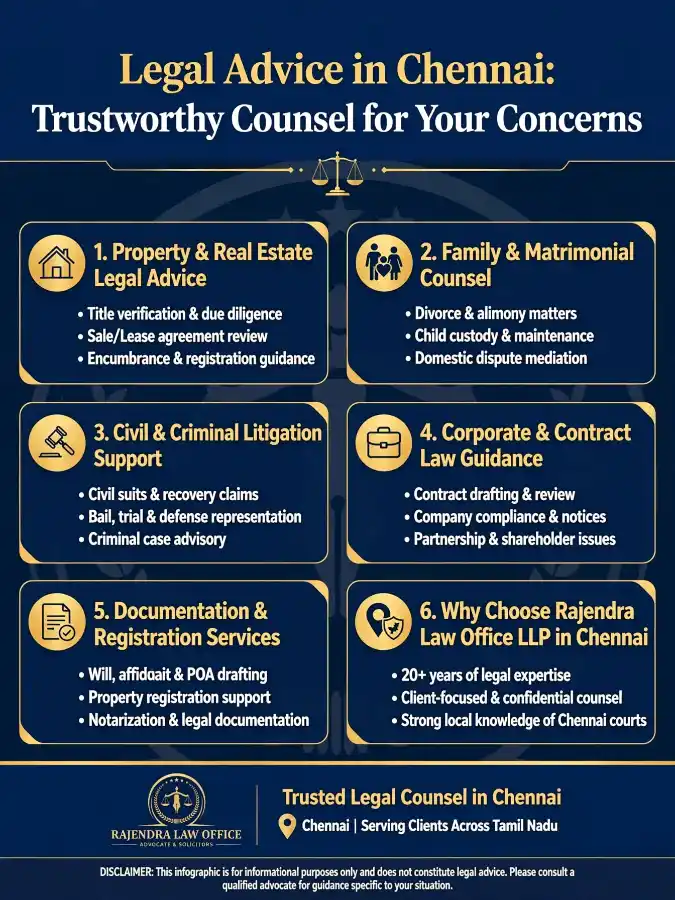
Effective legal advice begins with accurate facts, relevant documents, clear objectives, and an honest assessment of risk. Prepare a chronology, disclose urgent deadlines, and ask counsel to identify the forum, evidence gaps, remedies, costs, and next steps. Confirm whether you need a consultation, written opinion, or case analysis report. Verify professional details and avoid guaranteed-result claims. Rajendra Law Office LLP’s website provides information about its stated legal services; a specific engagement should begin only after scope, fees, and documents are clarified.
How to prepare for an effective legal consultation
A consultation is more productive when the client presents a clear chronology and identifies the decision that must be made. Start with the parties’ full names and roles, the relevant dates, the location of the events, and the outcome sought. Separate facts personally known from statements made by others. Identify any facts that may weaken the case instead of leaving them undisclosed; an early, complete account helps counsel assess risk and avoid advice based on an inaccurate premise.
Bring the documents most closely connected to the issue. Depending on the matter, these may include agreements, title deeds, registration records, notices, orders, correspondence, payment evidence, photographs, company records, or prior legal advice. Arrange them in chronological order and label each item. Keep originals secure and provide copies unless originals are specifically required. For electronic records, preserve the original message or file and note its source and date rather than relying only on cropped screenshots.
At the end of the meeting, confirm the immediate next steps in writing. Ask which forum has jurisdiction, what deadline applies, which documents are missing, what the likely procedural stages are, and what costs are excluded from the quoted fee. Clarify whether the engagement covers consultation only, a written opinion, drafting, negotiation, or court appearance. No lawyer can responsibly guarantee an outcome. A useful opinion should explain the strongest arguments, the material risks, the evidence needed, and the practical alternatives, including settlement where appropriate.
Questions to settle before the consultation ends
Ask for a clear distinction between the immediate step and the longer-term strategy. An urgent reply to a notice may be necessary even when the merits remain disputed. In other matters, a document review or title search should precede any demand or filing. Confirm what the lawyer will deliver, whether further work requires a separate engagement, and how new facts or documents should be submitted. Keep a copy of the engagement terms and the advice received.
Frequently Asked Questions
What should I bring to a legal consultation in Chennai?
Bring a dated chronology, relevant contracts, notices, orders, payment records, correspondence, and a clear statement of the outcome you seek.
Is a consultation the same as a written legal opinion?
No. A written opinion generally requires document review and research, with a reasoned analysis, assumptions, risks, and recommendations.
Can a lawyer guarantee success?
No responsible assessment can guarantee a court or tribunal outcome. Ask for the legal basis, evidence gaps, risks, and realistic alternatives.
How do I choose the correct lawyer?
Look for relevant subject-matter and forum experience, a clear method, transparent fees, conflict checks, and realistic explanations of risk.
Does sending a legal notice stop limitation?
Not automatically. Limitation depends on the applicable law and facts. Obtain advice before relying on a notice to preserve a claim.
What should happen after the consultation?
Confirm the next action, responsible person, deadline, required documents, fee, and whether further written advice or research is necessary.