When someone faces arrest or criminal charges, fear and confusion naturally follow. Families worry. Individuals feel anxious. However, the law provides an important safeguard called bail. Bail protects personal liberty while ensuring that the accused cooperates with the legal process. At Rajendra Law Office LLP, we guide clients step by step through bail procedures. Therefore, in this guide, we explain different types of bail in simple words so you can clearly understand your rights and legal options.
Demystifying Different Types of Bail: A Comprehensive Guide – Rajendra Law Office LLP
What Is Bail?
Bail is a legal mechanism that allows an accused person to be released from custody while the case continues in court. In other words, the court permits temporary freedom on certain conditions.
The idea behind bail is simple. A person is presumed innocent until proven guilty. Therefore, unless custody is necessary, the accused should not remain in jail during trial.
Courts grant bail after considering several factors, such as:
- Nature and seriousness of the offence
- Risk of absconding
- Possibility of influencing witnesses
- Criminal background
- Cooperation with investigation
Now, let us understand the different types of bail available under Indian law.
Regular Bail
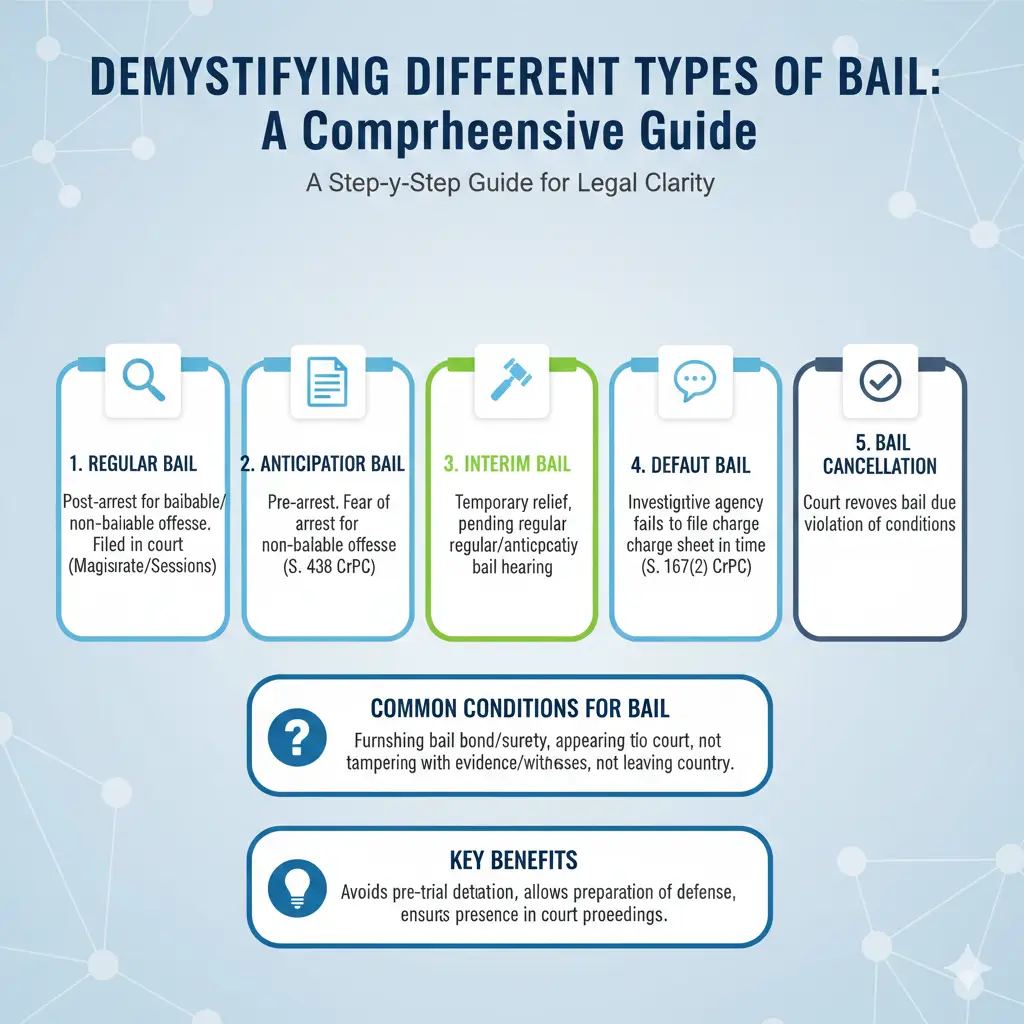
Regular bail applies when a person has already been arrested and is in police or judicial custody. The accused files a bail application before the Magistrate or Sessions Court.
The court examines the facts carefully. If the offence is bailable, the accused has a legal right to bail. However, if the offence is non-bailable, the court exercises discretion.
The provisions relating to bail are found under the Code of Criminal Procedure. The court may impose conditions, such as:
- Appearing before the police when required
- Not leaving the jurisdiction without permission
- Not tampering with evidence
Thus, regular bail ensures temporary liberty while the case proceeds.
Anticipatory Bail
Anticipatory bail protects a person who fears arrest. Instead of waiting to be arrested, the individual approaches the Sessions Court or High Court seeking protection in advance.
This remedy is available under Section 438 of the Code of Criminal Procedure. The court grants anticipatory bail if it believes the arrest may be unjustified or motivated.
For example, in cases involving business disputes or matrimonial conflicts, false complaints sometimes arise. Therefore, anticipatory bail becomes a powerful legal shield.
However, courts examine the seriousness of allegations before granting relief. If approved, the person cannot be arrested, provided they comply with conditions.
Interim Bail
Interim bail is temporary bail granted for a short period. Courts usually grant interim bail when:
- The main bail application is pending
- The accused requires urgent medical treatment
- There is an immediate personal emergency
Interim bail acts as short-term protection. Later, the court decides whether to grant regular bail.
Thus, it serves as a bridge between custody and final bail determination.
Bail in Bailable Offences
In bailable offences, bail is a matter of right. Police officers must grant bail once the accused furnishes the required bond.
Examples of bailable offences include minor assaults or less serious offences under the Indian Penal Code.
Here, the court does not exercise discretion. Instead, it ensures compliance with procedural requirements.
Bail in Non-Bailable Offences
Non-bailable offences are more serious. Examples include offences involving grave injury, financial fraud, or severe criminal conduct.
In such cases, bail is not automatic. The court carefully evaluates the circumstances. The judge balances personal liberty against public interest.
Therefore, skilled legal arguments become crucial. A well-drafted bail petition can significantly influence the outcome.
Default Bail
Default bail arises when the police fail to complete the investigation within the prescribed time limit. Under Section 167 of the Code of Criminal Procedure, the investigation must conclude within:
- 60 days for less serious offences
- 90 days for serious offences
If the police do not file a charge sheet within this period, the accused gains the right to default bail.
However, the accused must apply before the charge sheet is filed. Timing is critical. Therefore, legal awareness becomes essential.
Bail After Conviction
Many people believe bail is available only before conviction. However, courts may grant bail even after conviction, especially during the appeal process.
When a convicted person files an appeal, the appellate court may suspend the sentence and grant bail.
For example, High Courts, including the Madras High Court, frequently hear bail applications in criminal appeals.
Thus, even after conviction, legal remedies remain available.
Factors Courts Consider While Granting Bail
Courts follow established principles. They do not grant bail casually. Instead, judges examine:
- Gravity of the offence
- Evidence available
- Likelihood of fleeing
- Past criminal record
- Possibility of influencing witnesses
At the same time, courts respect the constitutional right to personal liberty under Article 21 of the Constitution of India.
Therefore, each bail decision balances fairness and justice.
Conditions Imposed by Courts
Courts often impose conditions while granting bail. These conditions may include:
- Surrendering passport
- Reporting regularly to the police
- Avoiding contact with witnesses
- Depositing surety amounts
If the accused violates conditions, the prosecution may seek cancellation of bail.
Hence, compliance is extremely important.
Cancellation of Bail
Bail is not permanent immunity. If the accused misuses freedom, the prosecution may apply for cancellation.
Common grounds include:
- Threatening witnesses
- Committing another offence
- Violating court conditions
Courts take violations seriously. Therefore, responsible conduct after bail is essential.
Special Laws and Bail
Certain special laws impose stricter bail conditions. For example:
- Narcotic offences
- Economic offences
- Terror-related laws
Under such laws, courts apply additional safeguards before granting bail.
Therefore, expert legal guidance becomes even more critical.
The Role of a Criminal Lawyer in Bail Matters
Although bail laws appear straightforward, practical court proceedings require skill. A criminal lawyer:
- Drafts strong bail petitions
- Highlights weaknesses in prosecution case
- Argues constitutional protections
- Ensures procedural compliance
At Rajendra Law Office LLP, we act quickly because timing often determines success. Immediate legal intervention increases the chances of relief.
Common Misunderstandings About Bail
Many people assume bail means the case is over. However, bail only grants temporary freedom. The trial continues.
Others believe serious offences automatically prevent bail. In reality, courts examine each case individually.
Therefore, understanding the law prevents unnecessary panic.
Why Early Legal Action Matters
In criminal matters, delay can harm your case. Early consultation helps in:
- Filing anticipatory bail before arrest
- Securing default bail within statutory timelines
- Preventing procedural mistakes
Thus, proactive legal strategy makes a significant difference.
Protecting Your Liberty with the Right Legal Support
Facing criminal charges can feel overwhelming. However, the legal system provides safeguards. Bail exists to protect liberty while ensuring justice.
At Rajendra Law Office LLP, we believe that every individual deserves strong legal representation. We act promptly, argue effectively, and protect your rights at every stage.
Whether you need anticipatory bail, regular bail, interim relief, or assistance during appeal, professional guidance ensures clarity and confidence.
Frequently Asked Questions
Regular bail applies after a person is arrested and taken into custody. The accused files a bail application before the Magistrate or Sessions Court seeking release. Anticipatory bail, on the other hand, is filed before arrest when a person fears being arrested in a non-bailable offence. It is a preventive remedy that protects liberty in advance. Both types of bail are governed by the Code of Criminal Procedure, but courts examine facts carefully before granting relief.
No, bail is not automatic in all cases. In bailable offences, the accused has a legal right to bail. However, in non-bailable offences, the court exercises discretion. The judge considers the seriousness of the offence, evidence, and the possibility of absconding before deciding.
Default bail arises when the police fail to complete the investigation within the statutory time limit, usually 60 or 90 days depending on the offence. If the charge sheet is not filed within this period, the accused gains the right to seek bail, provided the application is filed before submission of the charge sheet.
Yes, bail can be cancelled if the accused violates court conditions, threatens witnesses, tampers with evidence, or commits another offence. Courts take violations seriously and may revoke bail to protect justice.
Yes, courts may grant bail after conviction if the accused files an appeal. The appellate court may suspend the sentence while the appeal is pending, depending on the facts and legal grounds involved.
Conclusion
Bail is not just a legal term. It is a safeguard of freedom. Indian law carefully balances personal liberty and public interest. Therefore, understanding different types of bail empowers you to act wisely. Regular bail protects after arrest. Anticipatory bail prevents unnecessary detention. Interim bail offers temporary relief. Default bail safeguards against investigative delay. Post-conviction bail supports appellate rights.
Each type serves a unique purpose. Together, they form a comprehensive system to protect justice and fairness. If you or your loved one faces criminal proceedings, do not panic. Instead, seek timely legal advice. With the right approach, you can navigate the bail process confidently and lawfully. At Rajendra Law Office LLP, we stand ready to protect your liberty and guide you through every legal challenge with clarity, strength, and dedication.
Read More
- Family Lawyers in Chennai: Compassionate Legal Support for Your Family
- Defenders of Justice: Understanding the Crucial Role of Criminal Defense Lawyers
- Employment Lawyers in Chennai: Advocates for Workplace Justice
- Demystifying Criminal Law: Understanding Legal Proceedings and Cases
- Consumer Protection Lawyers in Chennai: Advocates for Consumer Rights
- Law Commission of India – CrPC Reports Page