Medical Negligence Claims Require Evidence, Legal Strategy and Forum Selection
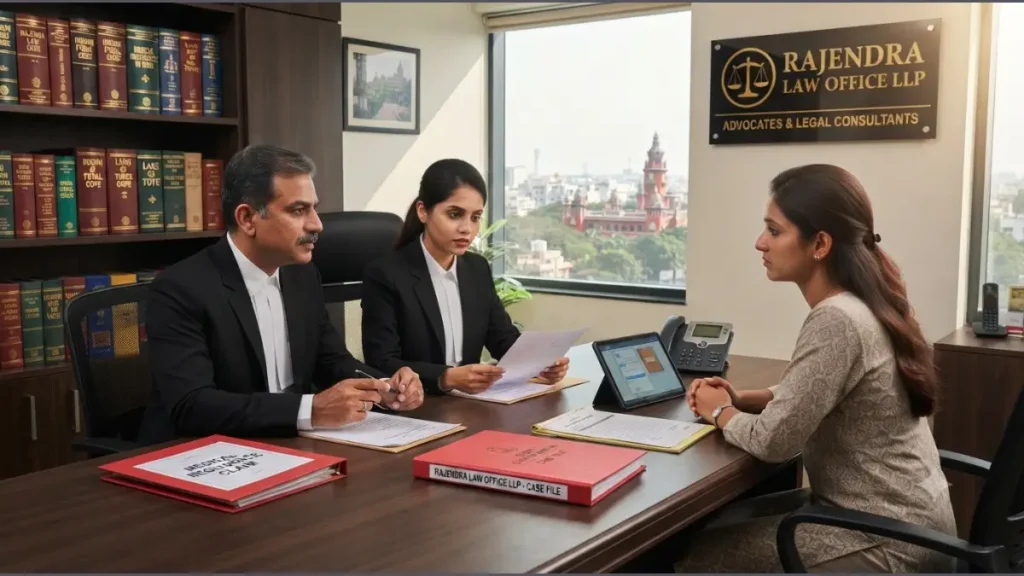
Medical treatment involves professional judgment, clinical risks, and changing patient conditions. However, avoidable professional failures can create serious legal consequences. Medical malpractice lawyers in India examine whether conduct fell below accepted professional standards. They also examine whether that failure caused measurable injury or loss. A poor treatment outcome alone does not automatically establish medical negligence. Courts distinguish complications, medical risks, and genuine differences of clinical opinion from actionable negligence. Therefore, patients need careful evidence review before starting proceedings. A medical negligence claim may involve a doctor, hospital, diagnostic centre, nursing home, or other healthcare provider. Depending on the circumstances, remedies may arise under consumer law, civil law, criminal law, or professional discipline. Rajendra Law Office LLP can assist with evidence preservation, legal notices, forum selection, pleadings, expert evidence, settlement discussions, and litigation strategy. Prompt legal assessment also helps protect limitation periods and important medical records.
Understanding Medical Negligence and Professional Liability
What Constitutes Medical Negligence Under Indian Law?
Medical negligence generally concerns a breach of professional duty causing legally recognizable harm. The Supreme Court has repeatedly emphasized reasonable skill and reasonable care. It has also distinguished civil negligence from the higher threshold applicable to criminal negligence. Therefore, lawyers must assess clinical facts rather than rely solely on an adverse outcome. The assessment usually examines the patient’s condition, accepted treatment choices, available alternatives, and treatment chronology. It also examines whether the healthcare professional acted as a reasonably competent practitioner. Recent Supreme Court authority again recognizes the substantially higher threshold for criminal medical negligence.
Duty, Breach and Causation Must Work Together
A successful negligence claim usually requires more than identifying an unfortunate medical result. The claimant must establish a professional duty and a breach of that duty. The claimant must also connect that breach with the resulting injury. Consequently, medical malpractice lawyers review records chronologically before selecting legal remedies. Relevant evidence can include prescriptions, consent forms, laboratory reports, imaging, operative notes, discharge summaries, and billing records. Expert medical opinion can become important when technical clinical questions arise. Under the Bharatiya Sakshya Adhiniyam, 2023, expert opinions can assist courts on scientific and medical questions.
The Reasonable Professional Standard Guides Legal Assessment
Indian courts do not ordinarily demand perfection from medical professionals. Instead, courts examine whether the practitioner used reasonable skill and reasonable care. The Supreme Court has stated that genuine differences between acceptable treatment choices do not automatically constitute negligence. Similarly, a treatment decision involving recognized risks does not automatically establish professional misconduct. Therefore, lawyers should identify the precise clinical departure alleged by the patient. They should then connect that departure with the actual injury through reliable evidence. This approach prevents a complaint from resting only on hindsight. It also allows the responding doctor or hospital to explain clinical decisions. Consequently, medical malpractice litigation requires balanced examination of both medical evidence and legal standards.
Causation Connects the Medical Error With Actual Patient Harm
Causation often becomes the central dispute in medical negligence litigation. A patient may suffer harm despite appropriate treatment because serious illnesses carry inherent risks. Therefore, lawyers must determine whether the alleged breach materially contributed to the injury. Medical records should establish the patient’s condition before the alleged negligent act. Subsequent investigations can demonstrate the nature and timing of deterioration. Independent medical opinions may then connect the breach with the resulting condition. Courts can also examine alternative causes, pre-existing conditions, and later treatment. Accordingly, a strong claim should avoid broad allegations such as careless treatment. Instead, it should identify the particular act, omission, consequence, and supporting evidence. This structure improves pleadings before consumer commissions and civil courts. It also helps counsel determine whether criminal proceedings are legally appropriate.
Common Forms of Medical Malpractice Claims
Medical malpractice claims can arise across diagnosis, surgery, medication, emergency care, maternity care, and hospital administration. Therefore, lawyers must understand the particular clinical context before alleging negligence. Diagnostic negligence may involve an avoidable failure to investigate significant symptoms. Surgical negligence may involve wrong-site surgery, retained objects, or inadequate postoperative monitoring. Medication errors can involve incorrect dosage, contraindicated medicines, or serious prescription mistakes. Emergency-care disputes can involve unreasonable delays after a patient presents with urgent symptoms. Informed-consent disputes can involve procedures performed without adequate disclosure of material risks. Hospital negligence can also involve failures involving staff coordination, infection control, records, or monitoring. Each allegation requires fact-specific analysis rather than a standard template. Consequently, evidence collection should begin immediately after the suspected incident.
Diagnostic Errors and Delayed Treatment Need Careful Medical Review
Misdiagnosis does not automatically establish professional negligence. Doctors may reach different conclusions because symptoms can overlap across multiple diseases. However, an unreasonable failure to investigate significant symptoms may support a negligence claim. Lawyers should examine diagnostic protocols, available test results, referral decisions, and consultation notes. They should also determine when warning signs became apparent to the treating team. A delayed diagnosis may increase treatment costs, disability, or permanent injury. Therefore, causation requires comparison between actual treatment and reasonably available intervention. Independent specialist review can help identify whether the diagnostic process met accepted professional standards. The evidence should also explain how earlier intervention could have changed the outcome. This approach strengthens claims before consumer commissions, civil courts, or regulatory authorities. It also avoids overstating genuine clinical uncertainty as professional misconduct.
Surgical, Anaesthesia and Medication Errors Can Create Serious Claims
Surgical negligence can involve incorrect procedures, inadequate monitoring, avoidable infections, or failures during postoperative care. Anaesthesia-related allegations require detailed review of dosage, monitoring, consent, patient history, and emergency response. Medication negligence can involve incorrect medicines, dosage errors, contraindications, or inadequate monitoring. Each allegation requires specialized medical evidence because clinical circumstances differ substantially. Therefore, lawyers should obtain complete operative records and medication charts before drafting legal allegations. Nursing records can also reveal monitoring intervals and escalation decisions. Furthermore, laboratory reports may identify changes that required medical intervention. Expert evidence can help distinguish unavoidable complications from departures from accepted standards. The Supreme Court has cautioned against treating every unsuccessful medical outcome as negligence.
Consumer, Civil and Compensation Remedies
Medical Services and Consumer Protection Proceedings
Paid medical treatment can fall within consumer protection principles concerning deficient services. The Supreme Court recognized medical services under consumer protection law in Indian Medical Association v. V.P. Shantha. The Consumer Protection Act, 2019 now provides the statutory framework for consumer dispute redressal. Section 35 permits consumers to file complaints concerning services. The Act also provides electronic filing and mediation mechanisms in appropriate proceedings.
Consumer Commission Jurisdiction Depends on Consideration Paid
The current consumer jurisdiction rules use the value of goods or services paid as consideration. The 2021 jurisdiction rules specify three monetary levels. District Commissions cover consideration up to ₹50 lakh. State Commissions cover consideration above ₹50 lakh and up to ₹2 crore. The National Commission covers consideration above ₹2 crore. Therefore, lawyers should verify the applicable jurisdiction before filing. Compensation claimed should not automatically be confused with consideration paid. The jurisdiction framework can materially affect filing strategy.
| Forum | Current consideration-based jurisdiction |
|---|---|
| District Consumer Commission | Up to ₹50 lakh |
| State Consumer Commission | Above ₹50 lakh to ₹2 crore |
| National Consumer Commission | Above ₹2 crore |
Compensation Can Cover Multiple Categories of Patient Loss
Medical negligence compensation depends upon the evidence and circumstances of each case. A claim may include treatment expenses caused by the alleged negligence. It may also address future medical costs, disability-related expenses, and loss of earning capacity. Pain, suffering, and reduced quality of life may also become relevant. Families may face additional expenses after prolonged hospitalization or permanent disability. Therefore, lawyers should preserve bills, salary records, disability documents, and future treatment estimates. The pleadings should explain how each claimed loss connects with the alleged negligence. Courts and commissions assess compensation according to applicable legal principles and evidence. Consequently, exaggerated claims without supporting documents can weaken credibility. A properly documented loss schedule can make the claim clearer and more defensible.
Civil Suits and Contractual or Tortious Remedies
Patients may also consider civil proceedings when consumer jurisdiction does not provide the appropriate route. Civil claims can involve negligence, breach of duty, contractual obligations, or related causes of action. The Code of Civil Procedure, 1908 governs procedure in ordinary civil litigation. Jurisdiction depends upon the nature of the claim, parties, cause of action, and applicable territorial rules. Therefore, lawyers should identify the correct civil court before instituting proceedings. They should also examine limitation under the Limitation Act, 1963. Different causes of action can attract different limitation rules. Accordingly, limitation should receive early attention rather than later procedural correction.
CPC Procedure Shapes Pleadings, Evidence and Court Proceedings
The CPC provides the procedural framework for civil suits in India. Medical negligence litigation can involve pleadings, discovery, documentary evidence, witness examination, and expert testimony. Lawyers must formulate precise pleadings because vague allegations may create evidentiary difficulties. The plaint should identify the duty, breach, causation, injury, and relief claimed. Supporting medical documents should correspond with the pleaded allegations. Defendants may contest causation, professional standards, limitation, jurisdiction, or maintainability. Therefore, procedural preparation remains as important as medical analysis. Civil courts may also consider interim applications where appropriate. Lawyers should assess whether urgent preservation of records or other protective orders require court intervention. The exact procedure can vary according to the court and nature of the proceeding.
Limitation and Delay Can Affect the Available Legal Remedy
Limitation periods differ according to the legal remedy pursued. Consumer complaints generally face a two-year limitation period from the cause of action. The Consumer Protection Act permits delayed complaints when sufficient cause is established and recorded. Civil proceedings require separate analysis under the Limitation Act and applicable provisions. Therefore, patients should obtain legal advice soon after discovering suspected negligence. Delay can also affect evidence quality because records, witnesses, and clinical recollections become harder to verify. Lawyers should create a chronology immediately after receiving the complete medical file. The chronology should identify consultations, procedures, complications, admissions, referrals, and subsequent treatment.
Criminal Liability, Police Complaints and Professional Discipline
Criminal Medical Negligence Under the BNS and BNSS
When Criminal Negligence May Become Relevant
Criminal medical negligence requires a significantly higher threshold than ordinary civil negligence. The Supreme Court has reaffirmed this distinction in recent jurisprudence. Under Section 106(1) of the Bharatiya Nyaya Sanhita, 2023, causing death through a rash or negligent act can attract criminal liability. The provision separately addresses death caused by a registered medical practitioner during a medical procedure. The statutory explanation defines the registered medical practitioner through recognized qualifications and registration requirements.
BNS Section 106 and Death During Medical Procedures
Section 106 BNS specifically addresses causing death by negligence. For a registered medical practitioner performing a medical procedure, the statutory punishment differs from the general provision. However, prosecution still requires proof satisfying criminal law standards. Therefore, a bad result or treatment complication alone should not trigger criminal allegations. The Supreme Court has emphasized independent medical assessment before criminal prosecution against doctors. Such safeguards recognize the distinction between professional error and gross criminal negligence. Lawyers must therefore examine whether available evidence supports the required criminal threshold. They should also avoid confusing civil deficiency with criminal culpability.
BNSS Procedures Govern Criminal Complaints and Investigation
The Bharatiya Nagarik Suraksha Sanhita, 2023 replaced the former criminal procedure framework from 1 July 2024. It governs investigation, police procedures, Magistrate proceedings, and criminal process. A medical negligence complaint involving criminal allegations may require police investigation and medical assessment. Lawyers should present relevant records with the complaint rather than rely on broad accusations. The investigating officer may need independent medical opinion concerning the alleged negligence. Courts can then assess whether the evidence supports further criminal proceedings. BNSS also provides procedural mechanisms concerning investigation reports and communication of investigation progress.
Evidence, Medical Records and Regulatory Complaints
BSA Evidence Rules Support Expert and Digital Medical Evidence
The Bharatiya Sakshya Adhiniyam, 2023 governs admissibility and relevance of evidence under the current evidence framework. Section 39 recognizes expert opinions concerning science and specialized fields. Medical negligence cases frequently require expert analysis of diagnosis, surgery, medication, treatment standards, and causation. Digital records can also become important in modern hospitals. Electronic prescriptions, laboratory systems, imaging databases, emails, messages, and electronic hospital records may require proper evidentiary treatment. Therefore, lawyers should preserve original records and reliable copies. Metadata and system-generated records can become relevant when authenticity is disputed.
Medical Records Should Be Preserved Before Litigation Escalates
Medical records often form the foundation of a negligence claim. Patients should seek complete records covering consultation, diagnosis, treatment, surgery, medication, monitoring, discharge, and follow-up. NMC materials recognize important obligations concerning maintenance and handling of patient records. The NMC professional conduct framework also regulates registered medical practitioners. Therefore, missing records can become an important factual issue during litigation. Lawyers should send written requests for records and preserve proof of those requests. Patients should also retain bills, prescriptions, test reports, referral notes, and correspondence. Avoid altering original files because authenticity can become important later.
Building a Strong Medical Negligence Claim in India
Legal Strategy, Forums and Practical Remedies
Selecting the Correct Forum for the Patient’s Claim
Medical negligence disputes can involve several legal forums. Consumer Commissions can address deficiency in medical services where consumer jurisdiction applies. Civil courts can address appropriate civil claims under applicable procedural and substantive law. Criminal courts may become involved when evidence supports criminal negligence. Medical regulatory authorities can address professional misconduct by registered practitioners. High Courts may exercise constitutional or supervisory jurisdiction in appropriate cases. The Supreme Court remains the final constitutional and appellate forum within its jurisdiction. Therefore, forum selection should follow the legal remedy and factual circumstances. Filing parallel proceedings requires careful consideration because procedural and substantive consequences can differ. Experienced medical malpractice lawyers should map the available remedies before initiating litigation.
Remedies May Include Compensation, Refunds and Corrective Relief
Patients may seek several forms of legal relief depending upon the chosen forum. Consumer proceedings can seek compensation for established deficiency and resulting loss. Appropriate cases may also involve refund-related relief or corrective directions. Civil proceedings can seek damages and other relief recognized under applicable law. Criminal proceedings primarily address penal consequences rather than ordinary compensation alone. Regulatory proceedings may result in professional disciplinary action under applicable rules. Therefore, the relief should match the forum and legal foundation. A lawyer should prepare a remedy matrix before filing. This matrix can include medical expenses, future treatment costs, disability losses, income losses, and other documented consequences. Properly framed relief also prevents unnecessary duplication between different legal proceedings.
Chennai Patients Can Approach the Appropriate Police and Consumer Forums
For Chennai-based matters, jurisdiction depends upon the hospital location, cause of action, residence, and applicable forum rules. Chennai has police districts covering areas including Triplicane, Egmore, Thousand Lights, Mylapore, Adyar, and T. Nagar. The Chennai Police structure identifies these areas within its administrative framework. Therefore, the appropriate police station should be determined from the incident location. Patients should not assume that the nearest station always determines every aspect of jurisdiction. Emergency assistance is available through the Chennai District police helpline at 100. Medical emergencies should receive immediate treatment before legal documentation begins.
Potential Chennai police jurisdictions include:
- Egmore Police Station
- Triplicane Police Station
- Thousand Lights Police Station
- Mylapore Police Station
- Adyar Police Station
- T. Nagar Police Station
The precise station should be verified according to the incident location.
Government Departments and Professional Authorities May Also Matter
Medical negligence claims can involve several public authorities depending upon the circumstances. The National Medical Commission regulates registered medical professionals within its statutory framework. State medical councils can have disciplinary roles under applicable regulatory arrangements. The Department of Consumer Affairs administers the consumer protection framework. Police authorities handle criminal complaints and investigations. Courts and consumer commissions adjudicate disputes and grant appropriate remedies. Therefore, a medical negligence lawyer should identify every relevant authority before taking action. Regulatory complaints may differ from compensation proceedings in purpose and procedure. Similarly, a police complaint requires a criminal-law assessment rather than merely a consumer-law assessment. Coordinated legal strategy helps avoid inconsistent allegations across different forums.
Legal Support Should Begin With Evidence Preservation
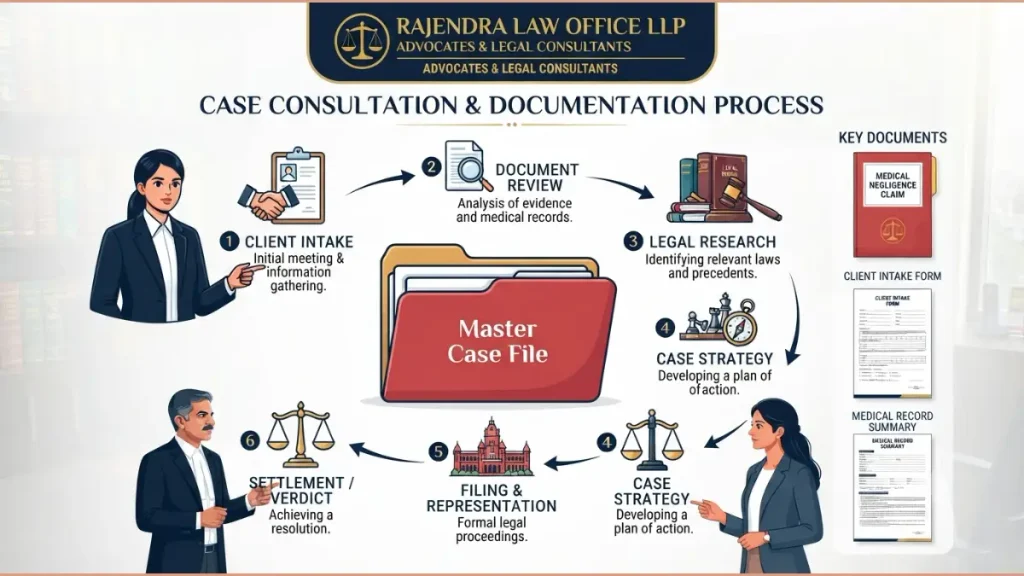
The first practical step should usually involve preserving all available evidence. Patients should retain original medical documents and make secure copies. They should record dates, names, consultations, procedures, symptoms, and communications. Lawyers should then review whether the facts indicate negligence, complication, misconduct, or another legal issue. The evidence can be categorized into medical, financial, procedural, and communication records. An expert medical review may then identify the relevant professional standard. Counsel can subsequently choose consumer, civil, criminal, regulatory, or combined remedies. Early preparation also helps identify limitation concerns. Finally, settlement discussions can be considered where legally appropriate. Rajendra Law Office LLP can assist with legal notices, evidence review, pleadings, expert coordination, forum selection, and representation.
Frequently Asked Questions
1. What is medical negligence in India?
Medical negligence generally involves a breach of professional duty that causes legally recognizable harm. A poor treatment outcome alone does not automatically establish negligence.
2. Can I file a consumer complaint against a hospital?
Yes, eligible medical services can fall within consumer protection law. The complaint must satisfy statutory requirements concerning service, deficiency, limitation, and jurisdiction.
3. What evidence helps prove medical negligence?
Medical records, prescriptions, test reports, operative notes, consent forms, bills, expert opinions, and treatment timelines can support a negligence claim.
4. Can a doctor face criminal proceedings for negligence?
Yes, criminal liability can arise in qualifying cases. However, criminal medical negligence requires a substantially higher threshold than ordinary civil negligence.
5. Which Consumer Commission handles my medical negligence claim?
Current jurisdiction depends on the consideration paid for services. District, State, and National Commissions have different monetary jurisdiction levels.
6. How can medical malpractice lawyers help patients?
Lawyers can assess evidence, identify legal remedies, select forums, issue notices, prepare pleadings, coordinate expert opinions, and represent patients during proceedings.
Legal Notice
This article provides general legal information concerning medical negligence claims in India. It does not replace case-specific legal advice. Medical negligence disputes depend upon clinical evidence, causation, limitation, jurisdiction, and applicable law. Current statutory provisions and procedural requirements should be verified before filing any complaint, suit, police complaint, or regulatory proceeding.
Rajendra Law Office LLP provides legal assistance concerning medical negligence disputes, hospital liability, consumer proceedings, civil claims, criminal complaints, professional misconduct matters, evidence assessment, and litigation strategy across applicable Indian forums.