Navigating Trademark Law and Registration: Essential Steps and Procedures – Rajendra Law Office LLP
Understanding Trademark Law and Brand Protection
Trademark law safeguards names, logos, slogans, labels, symbols, and distinctive brand elements. Businesses rely on trademarks to establish market recognition. Consequently, unauthorized use may harm reputation and consumer trust. Trademark owners enjoy exclusive rights within approved classes of goods or services. Registration strengthens legal protection and enforcement capabilities. Furthermore, trademarks become valuable commercial assets over time. Legal review helps identify registrable and distinctive marks. Strong trademarks reduce future conflicts and enhance business growth.
Common Trademark Assets
- Brand names.
- Logos.
- Taglines.
- Product labels.
- Service marks.
| Trademark Type | Example Purpose |
|---|---|
| Word Mark | Brand Name |
| Device Mark | Logo Protection |
| Label Mark | Packaging Identity |
| Service Mark | Service Branding |
Importance of Trademark Registration
Registration provides statutory rights and nationwide protection. Therefore, businesses should avoid relying solely on unregistered rights. Registered proprietors may initiate legal proceedings more effectively. Trademark registration also deters potential infringers. Additionally, investors often prefer businesses with protected intellectual property. Registration creates public notice of ownership. Legal professionals assess eligibility before filing applications. Consequently, applicants reduce rejection risks and procedural delays. Strategic registration strengthens commercial positioning and market credibility.
Key Benefits
- Exclusive rights.
- Brand protection.
- Market differentiation.
- Licensing opportunities.
- Legal enforcement.
Trademark Search and Availability Assessment
Trademark searches identify existing marks that may conflict with proposed applications. Therefore, businesses should conduct searches before filing. Availability assessments reduce objections and opposition risks. Legal professionals analyze phonetic, visual, and conceptual similarities. Furthermore, trademark databases reveal potentially conflicting registrations. Comprehensive searches support informed branding decisions. Early due diligence prevents unnecessary costs and delays. Proper assessment improves registration success rates significantly.
Search Objectives
- Detect conflicts.
- Reduce objections.
- Protect investments.
- Strengthen applications.
- Support branding decisions.
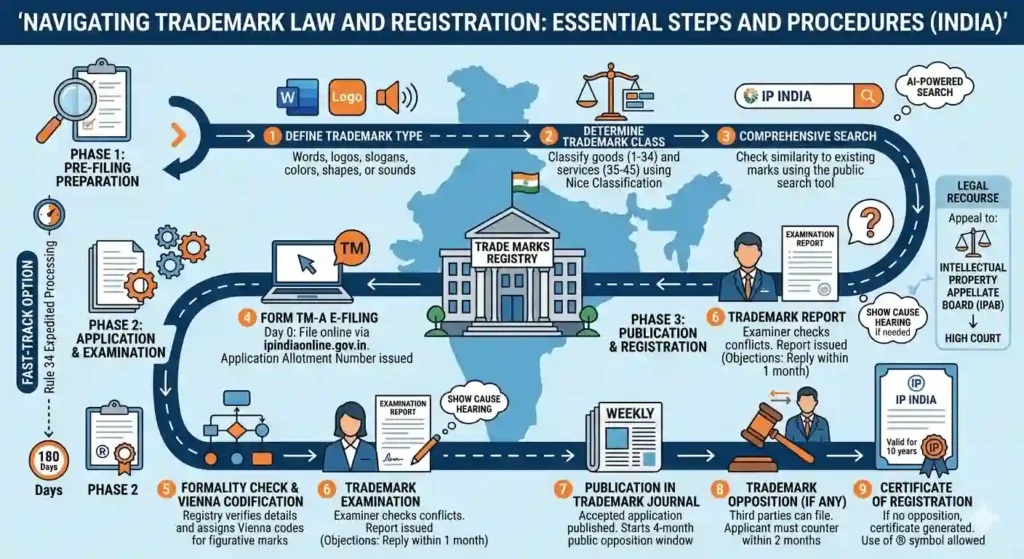
Filing the Trademark Application
Applicants must choose appropriate trademark classes before filing. Goods and services determine class selection. Therefore, accurate classification remains critical. Applications should contain correct ownership and usage details. Supporting documents strengthen claims and procedural compliance. Additionally, professional drafting minimizes errors. The Trademark Registry reviews submitted applications carefully. Proper preparation improves approval prospects and reduces examination complications.
| Filing Element | Purpose |
|---|---|
| Applicant Details | Ownership Verification |
| Trademark Representation | Mark Identification |
| Class Selection | Scope Protection |
| User Claim | Usage Evidence |
Examination, Objections, and Responses
The Trademark Registry examines applications for compliance and conflicts. Examiners may issue objections citing statutory grounds. Consequently, applicants must submit detailed responses. Legal arguments often determine successful outcomes. Professional representation strengthens objection replies considerably. Furthermore, evidence of use may support registrability claims. Strategic responses address concerns effectively. Timely action prevents abandonment and procedural setbacks.
Trademark Publication and Opposition Proceedings
Accepted applications proceed to publication in the Trademark Journal. Third parties may oppose registration during the prescribed period. Therefore, applicants should monitor published applications closely. Opposition proceedings involve evidence and legal submissions. Businesses often require professional representation during disputes. Additionally, settlement discussions may resolve certain conflicts. Strong legal strategies protect valuable brand rights. Proper advocacy improves prospects of successful registration.
Registration Certificate and Post-Registration Rights
Successful applications receive registration certificates from the Trademark Registry. Registration grants statutory protection and enforcement rights. Consequently, owners may use the registered trademark symbol. Businesses should monitor unauthorized usage actively. Legal professionals assist with renewals and portfolio management. Furthermore, licensing and assignment opportunities often arise after registration. Continuous protection preserves commercial value and brand integrity.
Trademark Infringement and Enforcement Remedies
Trademark infringement occurs when unauthorized use causes confusion or damages goodwill. Owners may pursue civil and criminal remedies. Therefore, immediate action often becomes necessary. Civil courts can grant injunctions and damages. Authorities may investigate criminal offences under applicable laws. The Bharatiya Nyaya Sanhita, 2023 may apply in certain circumstances. Legal support strengthens enforcement strategies and rights protection.
Available Remedies
- Temporary injunction.
- Permanent injunction.
- Damages claim.
- Account of profits.
- Criminal complaint.
Legal Forums, Jurisdiction, and Regulatory Authorities
Trademark disputes involve multiple authorities and forums. The Controller General of Patents, Designs and Trade Marks administers registrations. Trademark Registries process applications and oppositions. High Courts exercise jurisdiction over many intellectual property disputes. Civil courts hear infringement and passing-off actions. Additionally, police stations may investigate counterfeiting and related offences. Jurisdiction depends on statutory provisions and case facts. Therefore, legal assessment remains essential before initiating proceedings. Strategic forum selection improves efficiency and enforcement outcomes.
Why Choose Rajendra Law Office LLP
Trademark protection requires legal precision and commercial understanding. Rajendra Law Office LLP provides comprehensive trademark registration and enforcement services. Services include trademark searches, application filing, objection responses, opposition management, and litigation support. Furthermore, the firm advises startups, companies, NGOs, professionals, and NRIs. Lawyers evaluate risks and develop customized protection strategies. Clients receive practical guidance regarding branding and intellectual property management. Early legal involvement prevents avoidable disputes. Therefore, businesses secure stronger protection and long-term commercial advantages. Professional representation supports every stage of trademark ownership.
Trademark Search Services
Comprehensive searches identify risks before filing. Lawyers evaluate existing registrations and market conflicts carefully. Additionally, detailed assessments strengthen branding decisions. Early analysis reduces future legal complications significantly.
Objection and Opposition Management
Registry objections require strategic legal responses. Lawyers prepare evidence and persuasive submissions. Furthermore, opposition proceedings demand effective advocacy. Professional representation improves prospects of successful outcomes.
Trademark Renewal and Portfolio Protection
Trademark rights require ongoing maintenance and monitoring. Legal professionals manage renewals and compliance obligations. Consequently, businesses preserve valuable intellectual property assets. Strong portfolio management supports long-term growth.
Infringement Litigation Support
Unauthorized use can damage brand value substantially. Lawyers pursue injunctions and compensation claims efficiently. Moreover, strategic enforcement deters future violations. Effective litigation protects commercial interests.
NRI and International Trademark Advisory
NRIs often require coordinated trademark protection strategies. International expansion creates additional legal considerations. Therefore, professional guidance ensures compliance and effective registration planning. Strong advice supports global brand protection.
FAQs
Q1. Why should I register my trademark?
Registration grants exclusive rights, strengthens enforcement options, and protects brand identity across India.
Q2. How long does trademark registration take?
Timelines vary based on examination, objections, and opposition proceedings. Proper filing often reduces delays.
Q3. Can an NRI apply for trademark registration in India?
Yes. NRIs may apply directly or through authorized representatives subject to applicable requirements.
Q4. What happens if someone opposes my trademark?
The dispute enters opposition proceedings where parties submit evidence and legal arguments.
Q5. Can I sue for trademark infringement?
Yes. Trademark owners may seek injunctions, damages, and other statutory remedies against infringers.
Q6. How often must a trademark be renewed?
Trademark registrations generally require renewal every ten years to maintain legal protection.
Read More
- Family Dispute Lawyers in Chennai: Finding Harmony in Conflict
- Exploring Alternative Dispute Resolution (ADR): Legal Options
- Expertise in Real Estate Litigation: Legal Resolution Services
- Experienced Lawyers in Chennai: Trustworthy Legal Guidance
- Expertise in Property Litigation and Disputes: Legal Representation
- IP India Portal