
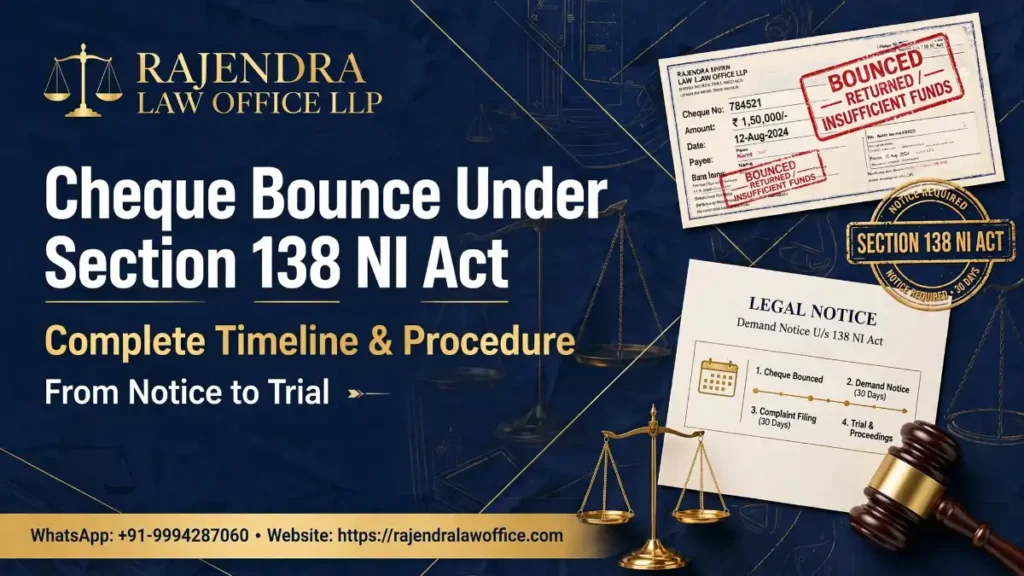
Cheque bounce cases represent one of the most common commercial disputes in India today. Specifically, Section 138 of the Negotiable Instruments Act, 1881, governs this critical area of law. Consequently, understanding the practical timeline becomes essential for both creditors and debtors alike. Moreover, the legal framework provides comprehensive remedies for aggrieved parties. Understanding the procedures ensures swift resolution of financial disputes. Furthermore, timely action can maximize recovery prospects significantly. The Indian legal system prioritizes commercial transactions extensively. Therefore, proper knowledge of legal procedures protects business interests effectively. Notably, Section 138 addresses insufficient fund scenarios comprehensively. Additionally, criminal prosecution remains a powerful deterrent mechanism. Indeed, many disputes resolve through mutual settlement arrangements. However, filing timely complaints remains crucial throughout proceedings.
Cheque Bounce Case Under Section 138 NI Act: Complete Timeline & Procedure
Understanding Section 138 of the Negotiable Instruments Act and Its Legal Framework
Definition and Scope of Cheque Bounce Provisions
Section 138 of the Negotiable Instruments Act establishes criminal liability for cheque bounce. Specifically, this provision applies when cheques are returned unpaid. Moreover, the banks communicate return reasons through standardized return memos. Consequently, insufficient funds represent the most common bounce reason. Additionally, technical errors can trigger returns occasionally. However, criminal liability only attaches under specific circumstances. Indeed, the drawer must receive proper notice beforehand. Furthermore, the drawer requires reasonable opportunity for cheque payment. Notably, the act prescribes penalties including imprisonment and fines. The section protects innocent payees from financial fraud. Importantly, the law recognizes good faith mistakes differently. Therefore, understanding these distinctions prevents unnecessary legal complications. Also, multiple bounce instances strengthen prosecution arguments considerably. Indeed, pattern evidence demonstrates deliberate intent more convincingly. Additionally, documentary proof through bank statements proves essential. Moreover, the payee’s credibility influences judicial decisions significantly.
The Constitutive Elements Required for Section 138 Prosecution
Essential Requirements for Criminal Liability Under Section 138
The law establishes four fundamental requirements for Section 138 prosecution. First, the cheque must be drawn on a scheduled bank. Second, the drawer must issue the cheque legitimately. Third, the cheque presentation must occur within six months. Fourth, the bank must return it unpaid. Additionally, the cheque must be presented through proper channels. Moreover, the payee must establish prior notice receipt. Furthermore, insufficient funds must cause the actual dishonor. Consequently, technical reasons may not establish criminal liability. However, gross negligence can strengthen the prosecution case. Importantly, the act recognizes only specific dishonor grounds. The legal framework protects drawers against arbitrary prosecution. Notably, the drawer’s intention becomes crucial during prosecution. Therefore, proving mens rea (criminal intent) remains necessary. Additionally, circumstantial evidence can establish intent effectively. Moreover, the drawer’s financial condition matters during proceedings. Indeed, regular accounts with adequate balances support drawer’s defense. Furthermore, communication records demonstrate payee’s knowledge requirements.
Complete Practical Timeline: From Cheque Issuance to Final Resolution
Day Zero to Day One: Cheque Issuance and Initial Transaction
Initial Cheque Presentation and First Bank Processing
The timeline begins when the drawer issues a cheque to the payee. Specifically, the cheque contains drawer’s signature and numerical amounts. Moreover, both written and numerical amounts must match exactly. Consequently, discrepancies can result in bank returns automatically. Additionally, the cheque must contain proper date entries. Furthermore, post-dated cheques follow different presentation rules comparatively. Notably, the payee should preserve the cheque carefully. The drawer remains liable regardless of cheque storage. Additionally, proper endorsement ensures cheque negotiability effectively. Moreover, the payee should present the cheque timely. Indeed, delays can limit recovery options significantly. Therefore, understanding presentation deadlines prevents unnecessary complications. Also, the bank’s clearing house processes cheques electronically. Furthermore, modern systems provide instant digital verification increasingly. Notably, the drawer’s account details appear on cheques. Additionally, the drawer’s bank maintains transaction records permanently. Moreover, digital records facilitate legal proceedings significantly.
Bank Clearing and Initial Processing Procedures
Automated Verification and Technical Clearance Steps
The bank verifies drawer’s signature against registered patterns automatically. Consequently, signature mismatches trigger immediate cheque rejection. Additionally, account status verification occurs simultaneously throughout clearing. Moreover, the system checks for frozen or inactive accounts. Notably, counterfeit cheque detection systems operate continuously now. Furthermore, security features receive detailed verification during processing. Indeed, modern banks employ sophisticated fraud detection algorithms currently. Therefore, technical holds rarely occur under normal circumstances. Also, the clearing house networks process cheques centrally. Furthermore, inter-bank transfers occur through standardized electronic systems. Additionally, the entire clearing process typically completes within 24 hours. Moreover, the drawer receives bank statements detailing transactions. Notably, account holders can track payment status online. Indeed, real-time notifications alert account holders about rejections. Therefore, ignorance about cheque bounce becomes increasingly difficult. Additionally, the drawer bears responsibility regardless of knowledge.
Day Two to Day Five: Cheque Dishonor and Bank Return Process
Return Memo Issuance and Grounds for Dishonor
When the bank rejects the cheque, it issues return memos immediately. Specifically, return memos specify exact dishonor reasons in standardized codes. Consequently, insufficient funds (code 13) represent the most common reason. Additionally, signature mismatch (code 21) ranks second in frequency. Moreover, account closure issues trigger immediate cheque rejection automatically. Notably, frozen accounts prohibit all payment transactions systematically. Furthermore, the bank communicates returns through multiple channels currently. Indeed, physical return memos reach drawers within 24-48 hours. Therefore, electronic notifications supplement traditional paper-based returns increasingly. Also, the drawer receives detailed reasons for rejection. Furthermore, the payee can contact the bank for clarification. Additionally, return memos become crucial evidence during litigation. Moreover, banks maintain official return memo records permanently. Notably, certified copies serve as authentic proof. Indeed, courts accept bank-issued documents as conclusive evidence. Therefore, obtaining official return memos strengthens payee’s legal position.
Communication Standards and Legal Notice Requirements
Statutory Notice Delivery and Acknowledgment Procedures
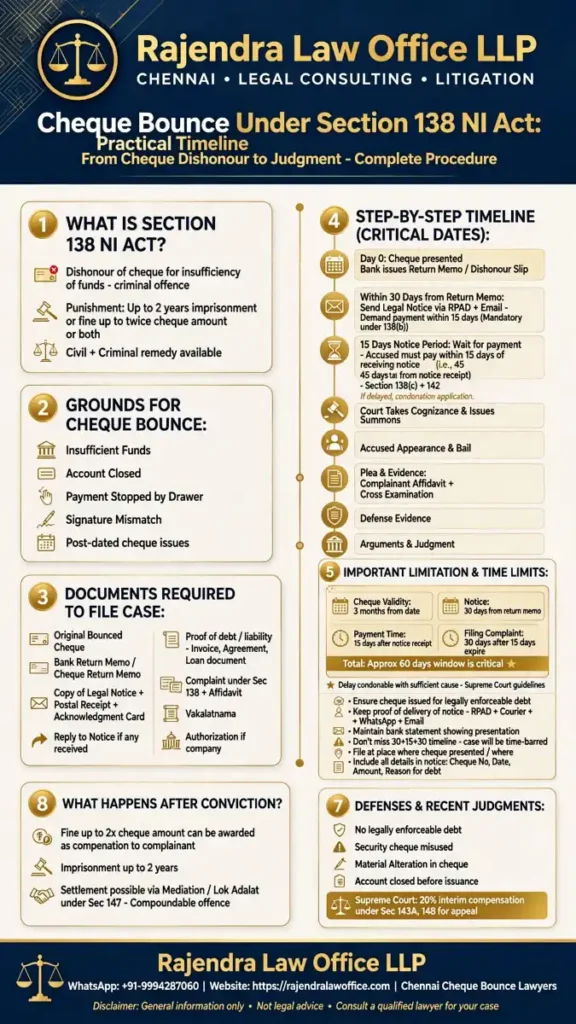
Section 138 requires the payee to deliver formal legal notice. Specifically, the notice must reach the drawer within 30 days. Consequently, failure to serve proper notice defeats prosecution attempts. Additionally, the notice should include specific cheque details. Moreover, the notice demands cheque amount payment within specified timeframe. Notably, the payee should obtain acknowledgment of notice receipt. Furthermore, the notice demonstrates payee’s seriousness about enforcement. Indeed, the drawer’s response proves crucial during prosecution. Therefore, the drawer must receive reasonable opportunity for payment. Also, the legal system presumes innocence throughout proceedings. Furthermore, adequate notice ensures fair trial rights protection. Additionally, improper notice service grounds dismissal applications successfully. Moreover, procedural compliance remains mandatory throughout legal processes. Notably, courts strictly interpret statutory requirements regarding notices. Indeed, technicalities often determine case outcomes significantly. Therefore, hiring experienced legal counsel prevents procedural mistakes.
Day Thirty-One to Day Forty-Five: Criminal Complaint Filing and Initial Inquiry
Complaint Registration at Designated Police Stations
The payee must file the criminal complaint within statutory timelines. Specifically, Section 138 complaints are filed at district magistrate courts. Moreover, police stations merely register these complaints formally. Consequently, courts handle the substantive proceedings directly. Additionally, the complaint should contain complete factual narration. Furthermore, the complaint must attach supporting documentary evidence. Notably, bank return memos constitute primary evidence pieces. The complaint should specify exact cheque dates and amounts. Moreover, the payee’s identification details require accurate documentation. Indeed, the drawer’s information must appear completely. Therefore, incomplete complaints face rejection at preliminary stages. Also, the payee requires a lawyer for proper filing. Furthermore, self-representation complicates procedural compliance significantly. Additionally, courts scrutinize complaint documents rigorously throughout processing. Moreover, defective complaints require amendments before proceeding. Notably, amendments consume considerable time and resources. Indeed, proper preparation prevents unnecessary delays effectively. Therefore, consulting legal professionals ensures effective complaint submission.
Jurisdictional Framework and Proper Forum Selection
Venue and Jurisdiction Under CPC and Criminal Procedure Code
Section 138 cases are cognizable criminal matters exclusively. Consequently, magistrate courts exercise jurisdiction over these offences. Additionally, jurisdiction generally lies where the cheque dishonored. Moreover, the drawer’s residence can establish alternative jurisdiction occasionally. Notably, the jurisdiction based on offense commission location applies. Furthermore, the Criminal Procedure Code, 2023 (BNSS) governs procedures. Indeed, the Bharatiya Nyaya Sanhita (BNS) provides substantive provisions. Therefore, the Bharatiya Sakshya Adhiniyam (BSA) governs evidence matters. Also, civil recovery options exist simultaneously through courts. Furthermore, the Civil Procedure Code (CPC) governs civil suits. Additionally, dual remedies allow parallel proceedings effectively. Moreover, payees can pursue both criminal and civil action. Notably, criminal prosecution strengthens civil recovery positions substantially. Indeed, successful criminal prosecution influences civil judges favorably. Therefore, coordinated legal strategy maximizes recovery prospects. Additionally, many cases settle after criminal conviction.
Day Forty-Six to Day Ninety: Summons Issuance and Drawer Response Preparation
Service of Summons and Appearance Requirements
The magistrate issues summons directing drawer’s appearance after complaint scrutiny. Specifically, summons specify exact date and time requirements. Moreover, service occurs through multiple methods currently. Notably, police officials serve summons personally whenever possible. Furthermore, postal service supplements personal service effectively. Additionally, process servers ensure proper notice delivery substantially. Consequently, the drawer must appear on specified dates. However, exemption orders allow representatives’ appearance occasionally. Indeed, the drawer cannot ignore summons casually. Therefore, non-appearance results in ex-parte proceedings automatically. Also, ex-parte orders prejudice drawer’s legal position severely. Furthermore, defaults strengthen payee’s case considerably. Additionally, drawers must respond to summons promptly. Moreover, proper preparation ensures effective defense presentation. Notably, documentary evidence supports drawer’s position substantially. Indeed, bank records can prove sufficient fund availability. Therefore, gathering supporting documents immediately protects interests.
Preliminary Defenses and Interim Bail Considerations
Anticipatory Bail and Pre-trial Application Strategies
The drawer can apply for anticipatory bail before arrest. Specifically, Section 438 BNSS provides this protection mechanism. Moreover, courts grant bail considering various bail factors. Consequently, the drawer’s financial condition influences bail decisions. Additionally, employment status and family ties matter significantly. Furthermore, prior criminal history prejudices bail applications considerably. Notably, the drawer should establish strong community ties. Indeed, regular court attendance demonstrates commitment satisfactorily. Therefore, bail orders impose conditions typically. Also, bail conditions may restrict travel or financial dealings. Furthermore, violation of conditions jeopardizes bail orders immediately. Additionally, surety arrangements strengthen bail applications substantially. Moreover, responsible sureties convince courts effectively. Notably, professional or financial credentials help substantially. Indeed, multiple sureties demonstrate serious commitment convincingly. Therefore, consulting bail specialists optimizes success rates.
Substantive Legal Proceedings and Evidence Presentation Strategies
Day Ninety-One to Day One Hundred Eighty: Trial Commencement and Witness Examination
Payee’s Evidence Presentation and Documentary Proof Submission
The trial formally begins when the court takes cognizance officially. Specifically, the payee presents evidence establishing case elements. Moreover, documentary evidence forms the trial’s backbone fundamentally. Consequently, bank return memos constitute primary evidence pieces. Additionally, cheque documents themselves provide irrefutable proof. Furthermore, account statements demonstrate transaction patterns effectively. Notably, the payee’s testimony supports documentary evidence substantially. Indeed, witness testimony corroborates primary documents convincingly. Therefore, reliable witnesses strengthen the payee’s case significantly. Also, the legal notice serves as procedural evidence. Furthermore, acknowledgment receipts prove proper service effectively. Additionally, the payee should present evidence chronologically. Moreover, organized presentation assists judicial comprehension substantially. Notably, professional legal representation ensures effective presentation. Indeed, improper presentation weakens even strong cases. Therefore, experienced lawyers structure evidence optimally. Additionally, technical evidence like bank confirmations matter.
Types of Evidence Under Bharatiya Sakshya Adhiniyam (BSA)
The Bharatiya Sakshya Adhiniyam replaced the Indian Evidence Act recently. Specifically, BSA provides comprehensive evidence admissibility guidelines. Moreover, documentary evidence receives special recognition under BSA. Consequently, electronic records gained legitimate status recently. Additionally, digital signatures prove authenticity effectively now. Furthermore, bank electronic confirmations satisfy documentary evidence requirements. Notably, email communications constitute admissible evidence currently. Indeed, SMS and messaging app records serve evidentiary purposes. Therefore, modern communication methods strengthen case significantly. Also, the court can request certified bank records. Furthermore, certification eliminates authenticity challenges substantially. Additionally, certified copies bear judicial value equally. Moreover, original documents provide maximum credibility. Notably, photocopies require secondary evidence principles application. Indeed, secondary evidence suffers from reduced reliability concerns. Therefore, obtaining certified originals maximizes effectiveness. Additionally, the payee’s cross-examination tests credibility rigorously.
Cross-Examination and Drawer’s Defense Preparation
Challenging Evidence and Establishing Reasonable Doubt
The drawer’s counsel conducts rigorous cross-examination of payee’s witnesses. Specifically, cross-examination tests evidence reliability and credibility. Moreover, skilled advocates identify inconsistencies in testimonies effectively. Consequently, contradictions weaken payee’s overall case substantially. Additionally, the drawer can present alternative explanations. Furthermore, documentary evidence can contradict payee’s claims sometimes. Notably, the drawer should prepare comprehensive defense strategies. Indeed, advance preparation prevents courtroom surprises. Therefore, adequate time for preparation proves essential. Also, the drawer can present character witnesses. Furthermore, character witnesses establish trustworthiness impressively. Additionally, professional reputation influences judicial assessment significantly. Moreover, the drawer’s prior payment history matters. Notably, regular bill settlement demonstrates reliability. Indeed, banking relationship longevity supports drawer’s position. Therefore, documentary proof of regular payments helps substantially. Additionally, the drawer can challenge evidence quality.
Day One Hundred Eighty-One to Day Three Hundred: Judgment Delivery and Appeals
Judicial Decision-Making and Conviction Factors
The magistrate delivers judgment after thorough evidence analysis. Specifically, the judgment considers all evidence presented systematically. Moreover, the magistrate assesses witness credibility carefully. Consequently, consistent testimonies receive favorable judicial consideration. Additionally, corroborating documentary evidence strengthens conclusions. Furthermore, the judgment explains reasoning comprehensively. Notably, the magistrate addresses each legal element specifically. Indeed, conviction requires proof beyond reasonable doubt. Therefore, any doubt favors the accused constitutionally. Also, circumstantial evidence requires particularly careful evaluation. Furthermore, multiple corroborating circumstances can establish guilt effectively. Additionally, the magistrate can acquit despite criminal appearance. Moreover, procedural compliance failures can ground acquittals. Notably, improper notice service defeats prosecution. Indeed, statutory timeline violations affect validity substantially. Therefore, procedural compliance receives paramount importance. Additionally, conviction carries imprisonment and fine penalties.
Remedies Post-Conviction and Appeal Procedures
The convicted drawer can appeal the judgment within statutory periods. Specifically, appeals lodge with high courts typically. Moreover, appellate courts review factual and legal conclusions. Consequently, appellate review provides comprehensive second-look mechanism. Additionally, the appeal period usually extends 60 days. Furthermore, extension possibilities exist under compelling circumstances. Notably, the drawer should file appeals promptly. Indeed, delayed appeals face dismissal on procedural grounds. Therefore, prompt legal action prevents forfeiture. Also, the payee can appeal acquittals similarly. Furthermore, both parties enjoy equal appellate rights. Additionally, appellate courts reconsider entire case evidence. Moreover, appellate judges examine trial procedures rigorously. Notably, appellate judgment becomes practically final. Indeed, further review requires special permission typically. Therefore, appellate stage carries significant importance. Additionally, successful appeals can reverse trial outcomes.
Simultaneous Civil Recovery Options and Debt Recovery Tribunal Jurisdiction
Banking Regulation Act and Debt Recovery Tribunal Proceedings
The payee can simultaneously pursue civil debt recovery actions. Specifically, civil suits seek monetary compensation exclusively. Moreover, the CPC governs civil recovery procedures. Consequently, district courts exercise civil jurisdiction. Additionally, banks can file in Debt Recovery Tribunals (DRTs). Furthermore, DRTs provide specialized financial dispute resolution. Notably, DRTs handle cheque bounce cases efficiently. Indeed, DRT procedures move faster than regular courts. Therefore, banks prefer DRT proceedings increasingly. Also, the payee must establish basic contract terms. Furthermore, the debt must appear clearly undisputed. Additionally, the cheque represents contractual obligation evidence. Moreover, the amount claimed must match cheque value. Notably, interest claims may include from dishonor date. Indeed, civil suits complement criminal prosecution effectively. Therefore, coordinated strategy maximizes financial recovery. Additionally, successful civil judgments facilitate execution proceedings.
Recovery Mechanisms and Practical Implementation Strategies
Post-Judgment Execution and Asset Recovery Processes
Judgment Execution Under Criminal Law Framework
Criminal convictions mandate cheque amount payment plus penalties. Specifically, the magistrate imposes fines or imprisonment alternatively. Moreover, the drawer must deposit payment within specified periods. Consequently, non-payment triggers warrant issuance automatically. Additionally, property attachment becomes possible under execution orders. Furthermore, the payee monitors judgment debtor’s assets carefully. Notably, bank account attachment facilitates forced recovery. Indeed, salary garnishment can recover amounts substantially. Therefore, judgment execution provides multiple recovery avenues. Also, the drawer can arrange staggered payments sometimes. Furthermore, magistrates can accept periodic installments occasionally. Additionally, negotiated settlements often occur at execution stage. Moreover, partial payment discharge partial obligations. Notably, settlement agreements prevent further proceedings. Indeed, amicable resolution benefits both parties substantially. Therefore, flexibility during execution promotes practical resolution. Additionally, execution officers coordinate collection activities efficiently.
Civil Execution and Attachment of Property
Civil judgments authorize execution through property attachment procedures. Specifically, the payee files execution petitions post-judgment. Moreover, courts issue notices to judgment debtors. Consequently, the debtor must deposit judgment amount. Additionally, non-compliance triggers asset seizure proceedings. Furthermore, immovable property attachment occurs through registration. Notably, movable property attachment includes bank accounts, vehicles. Indeed, attached property auctions recover judgment amounts. Therefore, asset tracing becomes crucial for recovery. Also, the payee can engage recovery agents. Furthermore, specialized recovery firms locate hidden assets effectively. Additionally, disclosure of assets becomes court-mandated. Moreover, false disclosure attracts contempt penalties. Notably, court orders compel financial transparency. Indeed, judgment debtors cannot hide assets indefinitely. Therefore, transparency enforcement promotes fair recovery. Additionally, cooperative debtors receive reduced penalties sometimes.
Compromise Settlement and Out-of-Court Resolution Mechanisms
Statutory Compromise Provisions and Negotiation Strategies
Section 147 NI Act provides statutory compromise provisions. Specifically, both parties can settle at any proceeding stage. Moreover, court approval remains mandatory for validity. Consequently, approved settlements terminate further proceedings conclusively. Additionally, compromise agreements must contain full payment commitment. Furthermore, partial settlements can occur in certain circumstances. Notably, the payee can accept reduced amounts. Indeed, guaranteed partial recovery beats uncertain litigation outcomes. Therefore, practical settlement approach saves time and costs. Also, compromise agreements provide closure for both parties. Furthermore, relationship preservation becomes possible through amicable settlement. Additionally, goodwill recovery provides business relationship benefits. Moreover, future transactions remain possible post-settlement. Notably, compromise agreements prevent permanent relationship damage. Indeed, business continuity matters in commercial disputes. Therefore, pragmatic approach promotes mutual benefit. Additionally, settlement documentation should address all outstanding claims.
Alternative Dispute Resolution and Mediation Frameworks
Court-Mandated Mediation and Conciliation Procedures
Courts increasingly encourage mediation before trial commencement. Specifically, trained mediators facilitate settlement discussions professionally. Moreover, mediation confidentiality encourages candid negotiations. Consequently, confidential communications cannot be disclosed later. Additionally, mediation remains non-binding initially. Furthermore, successful mediation produces binding settlement agreements. Notably, mediation costs significantly lower litigation expenses. Indeed, time-saving benefits prove substantial. Therefore, early mediation prevents prolonged disputes. Also, neutral mediators ensure fairness throughout discussions. Furthermore, creative solutions emerge through collaborative discussions. Additionally, win-win outcomes become achievable through mediation. Moreover, relationship preservation improves through respectful negotiation. Notably, mediation success rates reach remarkably high levels. Indeed, many disputes resolve at mediation stage. Therefore, early mediation adoption prevents litigation burden. Additionally, mediation agreements facilitate swift fund recovery.
Consumer Protection Act and Additional Remedial Provisions
Consumer Protection Act Applicability and Complaint Procedures
The Consumer Protection Act (CPA) protects service consumers. Specifically, cheque bounce disputes may involve service elements. Moreover, service deficiency claims complement cheque recovery actions. Consequently, dual remedies strengthen payee’s overall legal position. Additionally, CPA provides expedited complaint procedures. Furthermore, consumer disputes adjudicate through specialized commissions. Notably, commission procedures prove faster than regular litigation. Indeed, consumer commissions award compensation plus penalties. Therefore, CPA provides additional recovery avenues. Also, service providers bear liability for deficient services. Furthermore, financial institutions can face CPA actions. Additionally, unfair practice allegations strengthen consumer complaints. Moreover, CPA compensation includes medical expenses, travel costs. Notably, punitive damages become available occasionally. Indeed, successful CPA proceedings provide substantial relief. Therefore, consumers should explore multiple remedy options. Additionally, coordinated pursuit maximizes total compensation recovery.
Recent Legal Amendments and Modern Procedural Developments
Bharatiya Nyaya Sanhita (BNS) and Bharatiya Sakshya Adhiniyam (BSA) Impact
New Criminal Procedure Code and Evidence Law Implications
The BNS replaced the Indian Penal Code recently. Specifically, cheque bounce provisions transferred to BNS comprehensively. Moreover, substantive offence definitions remain substantially unchanged. Consequently, Section 138 effectively continues under BNS. Additionally, the BNSS replaced the Criminal Procedure Code. Furthermore, procedural changes affect case management significantly. Notably, electronic filing systems became mandatory recently. Indeed, digital case tracking improves transparency substantially. Therefore, online status monitoring provides real-time updates. Also, the BSA replaced the Indian Evidence Act. Furthermore, digital evidence admissibility expanded considerably. Additionally, electronic records gained increased recognition. Moreover, email communications satisfy documentary requirements. Notably, WhatsApp messages constitute admissible evidence increasingly. Indeed, technical evidence acceptance modernized substantially. Therefore, digital evidence utilization strengthens modern cases. Additionally, courts adapted quickly to digital evidence.
Technology Integration and E-Justice Initiatives
Digital Court Systems and Remote Hearing Facilities
Courts implemented digital systems post-pandemic substantially. Specifically, e-filing systems simplify complaint submission processes. Moreover, online case status tracking prevents information gaps. Consequently, parties monitor proceedings remotely effectively. Additionally, video conferencing enables remote participation. Furthermore, virtual hearing technology improved accessibility significantly. Notably, pandemic-driven changes became permanent improvements. Indeed, technology adoption accelerated digital transformation. Therefore, litigation became more accessible geographically. Also, digital records reduce paperwork substantially. Furthermore, electronic evidence preservation improves security. Additionally, digital systems prevent document loss. Moreover, automatic backups ensure permanent record retention. Notably, technology reduced human error significantly. Indeed, automated processes ensure consistency. Therefore, digital systems enhanced litigation quality. Additionally, technology implementation continues expanding steadily.
Supreme Court Judgments and Landmark Precedents
Key Supreme Court Decisions Influencing Section 138 Jurisprudence
The Supreme Court delivered several landmark judgments recently. Specifically, these decisions clarified ambiguous statutory provisions significantly. Moreover, judicial interpretation shaped practical enforcement substantially. Notably, the Dar Es Salaam judgment expanded drawer protection. Indeed, the court emphasized mens rea requirement strictly. Therefore, conviction requires proven criminal intent. Also, the court rejected strict liability interpretations. Furthermore, the court protected innocent error cases. Additionally, technical cheque defects should not trigger prosecution. Moreover, deliberate dishonor attracts punishment solely. Notably, merchant practice considerations influenced judicial reasoning. Indeed, business practice recognition protects legitimate commerce. Therefore, courts balance payee and drawer interests. Additionally, recent judgments reduced frivolous prosecutions. Moreover, quality of prosecution improved substantially. Notably, malicious prosecutions face contempt actions. Indeed, judicial oversight prevents abuse. Therefore, proper prosecution conducts improved significantly. Additionally, payee protection remains paramount always.
Practical Preventive Measures and Best Practices for Businesses
Cheque Payment Planning and Fund Management Strategies
Businesses should maintain adequate bank balances consistently. Specifically, overdraft facilities prevent unexpected bounce situations. Moreover, credit line arrangements provide backup funds. Consequently, financial planning minimizes cheque bounce risks. Additionally, regular fund monitoring prevents depletion surprises. Furthermore, periodic bank statement reviews identify issues. Notably, automated fund transfers prevent account shortfalls. Indeed, standing instructions streamline payment processes. Therefore, systematic fund management prevents failures. Also, business accounting software monitors cash flow. Furthermore, forecasting predicts future fund availability. Additionally, budget compliance prevents overspending. Moreover, expense control maintains adequate reserves. Notably, prudent financial management protects reputation. Indeed, cheque bounce creates business trust issues. Therefore, preventive approach protects long-term interests. Additionally, professional financial management reduces legal disputes.
Documentation Standards and Contractual Safeguards
Parties should execute comprehensive written agreements before cheque issuance. Specifically, agreements should detail payment terms clearly. Moreover, cheque issuance dates should align with fund availability. Consequently, documented agreements prevent misunderstandings completely. Additionally, contracts should specify cheque bounce consequences. Furthermore, penalty clauses motivate timely fund arrangement. Notably, clear terms reduce litigation likelihood. Indeed, documented agreements strengthen legal positions. Therefore, written documentation proves essential business practice. Also, both parties should retain cheque copies. Furthermore, bank statement archives preserve crucial evidence. Additionally, correspondence documentation supports liability claims. Moreover, email confirmations create written records. Notably, digital records provide better preservation. Indeed, proper documentation facilitates swift resolution. Therefore, systematic archiving enables efficient litigation. Additionally, organized records simplify evidence presentation.
Professional Legal Consultation and Preventive Legal Services
Corporate Legal Compliance and Audit Functions
Businesses should engage legal counsel for compliance audits regularly. Specifically, audits identify potential cheque bounce vulnerabilities. Moreover, legal professionals suggest preventive improvements. Consequently, proactive measures reduce litigation probability substantially. Additionally, in-house legal teams monitor ongoing compliance. Furthermore, periodic legal reviews update practices. Notably, legal expertise identifies emerging risks. Indeed, professional guidance prevents costly mistakes. Therefore, investing in legal counsel proves economical. Also, legal consultation educates staff members. Furthermore, compliance training prevents operational errors. Additionally, documented policies establish clear guidelines. Moreover, employee awareness reduces unintentional violations. Notably, corporate culture emphasizing compliance prevents issues. Indeed, leadership commitment drives compliance culture. Therefore, systematic approach prevents legal problems. Additionally, regular legal updates inform institutional knowledge.
Frequently Asked Questions About Section 138 Cheque Bounce Cases
FAQs Section – Section 138 Negotiable Instruments Act
Q1: What is the exact timeframe for filing Section 138 complaint after cheque bounce?
The payee must file the complaint within three months from cheque dishonor date. The legal notice must reach the drawer within thirty days of dishonor. The drawer then receives fifteen days for cheque payment after notice receipt. Consequently, prompt action becomes essential for prosecution eligibility. The entire process requires strict timeline compliance.
Q2: Can the drawer modify the complaint after filing with proper legal team guidance?
Yes, the drawer can apply for complaint amendments under criminal procedure rules. The court permits amendments rectifying defects before conviction. However, substantial amendments may require fresh cognizance sometimes. Experienced legal counsel guides amendment procedures effectively. Amendments should not prejudice the drawer’s defense substantially.
Q3: What constitutes sufficient evidence for Section 138 conviction regarding intent proof?
The court requires consistent evidence proving deliberate dishonor intent conclusively. Documentary evidence including return memos supports payment refusal. Witness testimony corroborating facts strengthens evidentiary foundation substantially. The payee must establish comprehensive factual circumstances. Defense evidence can challenge intent allegations effectively.
Q4: Does compromise under Section 147 completely extinguish criminal liability permanently?
Yes, approved compromise agreements terminate criminal prosecution entirely. The court must formally approve the settlement agreement. Once approved, further proceedings discontinue automatically and irrevocably. However, the drawer must comply with compromise terms strictly. Non-compliance may reinitiate proceedings under certain circumstances.
Q5: Can the payee pursue simultaneous civil recovery and criminal prosecution effectively together?
Yes, dual proceedings strengthen the payee’s overall recovery position substantially. Criminal prosecution deters payment refusal through imprisonment threats. Civil suits provide monetary compensation independently regardless of criminal outcome. Coordinated strategy maximizes total financial recovery available to payee. Courts permit parallel proceedings without jurisdictional conflicts.
Q6: What specific defenses prove most effective in Section 138 cheque bounce trials?
The drawer can establish funds availability at presentation time definitively. Technical cheque defects unrelated to fraud provide legitimate defense grounds. The drawer can prove notice service was improper or incomplete. Evidence challenging payee’s credibility strengthens defense positions significantly. Compelling circumstantial evidence supporting drawer’s good faith helps substantially.
Jurisdictional Authorities and Legal Support Resources
Police Stations and Filing Centers Near Chennai
District magistrate courts handle Section 138 cases primarily. George Town Police Station serves downtown Chennai effectively. West Mambalam Police Station covers western regions efficiently. Egmore Police Station manages central area complaints satisfactorily. Royapettah Police Station addresses northern sector cases. Kodambakkam Police Station handles western suburban regions. Each station maintains complaint registers and coordination networks. Most police stations operate 24/7 for emergency filings. Online portal systems now facilitate remote complaint filing.
Debt Recovery Tribunals and Specialized Forums
Chennai DRT operates at Georgetown jurisdiction effectively. The tribunal handles banking and financial disputes exclusively. DRT procedures move substantially faster than regular litigation. Specialized judges possess financial expertise and banking knowledge. Appeal authorities operate at the appellate DRT level. Most Chennai DRT benches schedule hearings monthly. The tribunal provides alternative dispute resolution services additionally. Many banks prefer DRT proceedings over standard courts.
High Court and Appeal Authorities
Madras High Court reviews appellate matters from magistrate courts. The court operates benches at Georgetown and Anna Salai. Criminal appellate jurisdiction handles Section 138 appeals specifically. Appeal petitions require precise procedural compliance absolutely. The court staff facilitates proper documentation requirements. Legal aid services assist economically weaker litigants substantially. Court libraries provide comprehensive legal reference materials.
Contact Information for Rajendra Law Office LLP
Office Locations and Communication Details
Rajendra Law Office LLP maintains dual office locations efficiently. The West Mogappair office operates at 8/13, 1st Floor, Bharathi Salai. The George Town office functions at 323/156, Andhra Insurance Building. Both locations provide comprehensive legal consultation services. The firm specializes in negotiable instruments law extensively. Adv. Saravvanan R provides expert consultation personally. The team possesses decades of combined legal experience. Multiple contact channels ensure accessibility for clients.
Consultation Methods and Professional Support
Phone consultations available at 044-26533389 and 044-47660443. Mobile accessibility through +91-9994287060 ensures instant contact. Additional mobile contact: +91-9444014096 for urgent matters. Email consultations through rajendralawoffice@gmail.com receive prompt responses. Website consultation forms ensure documented communication trails. Websites https://www.lawyerchennai.com and https://rajendralawoffice.com provide detailed information. The firm offers emergency legal assistance for urgent cases. Consultation scheduling accommodates client convenience significantly. Professional team ensures confidential and ethical handling throughout.
Services Provided and Specialized Expertise Areas
Rajendra Law Office specializes comprehensively in negotiable instruments disputes. The firm handles Section 138 cases from complaint through appeals. Expert guidance covers criminal and civil recovery strategies simultaneously. The team provides document drafting and legal opinion services. Professional representation continues throughout all litigation stages. Settlement negotiation services maximize favorable resolution outcomes. Recovery execution assistance ensures proper fund collection. The firm maintains excellent success rates historically. Client satisfaction remains the primary professional focus. Ethical practice standards guide all professional engagements consistently.
Conclusion: Strategic Legal Approach to Section 138 Cheque Bounce Matters
Section 138 litigation requires comprehensive understanding of interconnected legal provisions. The practical timeline from cheque issuance through final recovery spans several months typically. Prompt action immediately after cheque bounce proves absolutely crucial throughout. Professional legal representation significantly improves case outcomes substantially. Documentary evidence preservation should commence immediately upon dishonor discovery. Strategic prosecution planning maximizes financial recovery opportunities effectively. Simultaneous civil and criminal proceedings strengthen overall legal positions. Settlement opportunities emerge at multiple litigation stages consistently. Modern legal procedures through BNSS and BSA facilitate faster resolution increasingly. Technology integration improves accessibility and transparency dramatically. Rajendra Law Office LLP provides specialized Section 138 expertise comprehensively. The firm’s extensive experience ensures optimal case outcomes reliably. Professional consultation should commence immediately after cheque bounce occurs. Timely legal intervention prevents procedural compliance failures conclusively. Strategic approach balances aggressive recovery with pragmatic settlement possibilities. Expert guidance navigates complex procedural and substantive requirements effectively. Consistent professional support maintains focus throughout protracted litigation. Rajendra Law Office remains committed to achieving client objectives completely. Contact the firm immediately for comprehensive legal consultation and representation today.