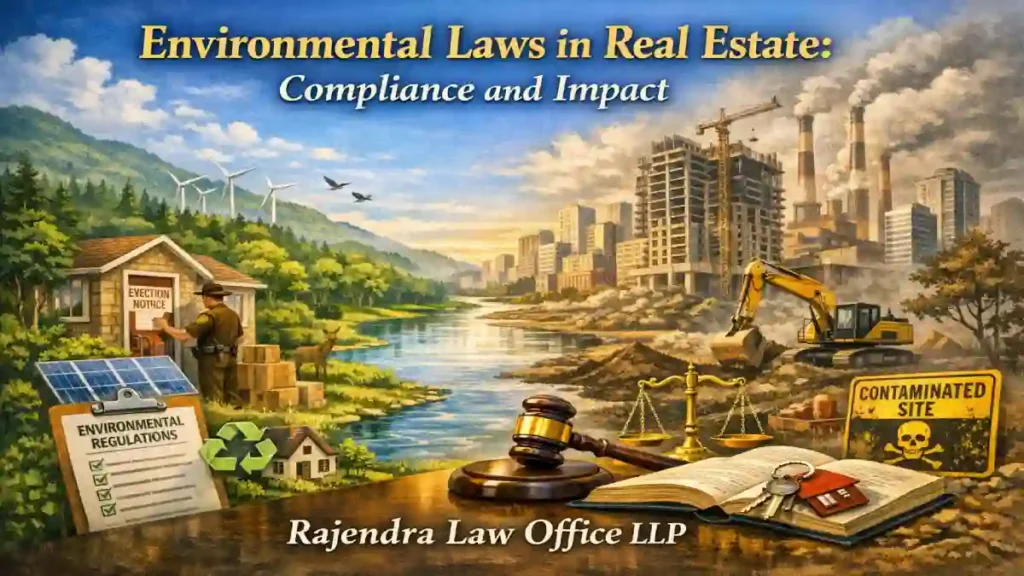
Environmental Laws in Real Estate – Real estate development is no longer just about land, buildings, and profits. Today, it is also about responsibility towards the environment. As cities expand and infrastructure grows, environmental protection has become a key legal requirement. Therefore, developers, investors, and property owners must understand environmental laws and follow them carefully.
At Rajendra Law Office LLP, we guide clients through the complex legal framework governing environmental compliance in real estate. In this article, we explain the importance of environmental laws, key regulations in India, and their impact on real estate projects.
Environmental Laws in Real Estate: Compliance and Impact – Rajendra Law Office LLP

Understanding Environmental Laws in Real Estate
Environmental laws are rules created to protect nature, public health, and natural resources. In the context of real estate, these laws regulate how land is used, how construction is carried out, and how projects affect the environment.
For instance, before starting a project, developers must ensure that their activities do not harm air, water, forests, or wildlife. Moreover, they must obtain approvals from relevant authorities. As a result, environmental compliance has become an essential part of real estate planning.
Why Environmental Compliance Matters
Environmental compliance is not just a legal formality. In fact, it plays a crucial role in sustainable development.
Firstly, it protects natural resources such as water bodies, forests, and biodiversity. Secondly, it ensures that construction activities do not cause pollution or health hazards. Thirdly, it builds trust among buyers and investors.
On the other hand, non-compliance can lead to serious consequences. Developers may face penalties, project delays, or even demolition orders. Therefore, following environmental laws is both a legal and practical necessity.
Key Environmental Laws Affecting Real Estate in India
India has several laws that regulate environmental aspects of real estate. Understanding these laws helps developers avoid legal risks.
1. Environment (Protection) Act, 1986
This is the main law governing environmental protection in India. It gives the government power to regulate activities that may harm the environment. Under this law, many rules and notifications have been issued for real estate projects.
2. Environmental Impact Assessment (EIA) Notification
The EIA process requires certain projects to assess their environmental impact before starting construction. Developers must submit reports and obtain clearance from authorities.
3. Water (Prevention and Control of Pollution) Act, 1974
This law aims to prevent water pollution. Real estate projects must ensure proper sewage treatment and waste management systems.
4. Air (Prevention and Control of Pollution) Act, 1981
This law controls air pollution caused by construction activities. Developers must take steps to reduce dust and emissions.
5. Forest (Conservation) Act, 1980
If a project involves forest land, prior approval from the government is required. This ensures that forest resources are protected.
6. Coastal Regulation Zone (CRZ) Rules
Projects near coastal areas must follow strict guidelines to protect marine ecosystems and prevent environmental damage.
Environmental Clearance: A Critical Requirement
Environmental clearance (EC) is one of the most important approvals for real estate projects. Without it, construction cannot legally begin.
The process involves:
- Submission of project details
- Environmental impact study
- Public consultation (in certain cases)
- Review by expert authorities
Although the process may seem lengthy, it ensures that projects are environmentally safe. Therefore, developers must plan ahead and complete all requirements properly.
Role of Pollution Control Boards
Pollution Control Boards play a key role in enforcing environmental laws. They issue two important approvals:
- Consent to Establish (CTE)
- Consent to Operate (CTO)
These approvals confirm that the project meets environmental standards. Without them, developers cannot proceed legally.
Impact of Environmental Laws on Real Estate Development
Environmental laws significantly influence how real estate projects are planned and executed.
1. Project Planning
Developers must consider environmental factors from the beginning. For example, they must avoid restricted areas and plan waste management systems.
2. Increased Costs
Compliance may increase project costs due to environmental studies, approvals, and eco-friendly measures. However, these costs are necessary for long-term sustainability.
3. Project Delays
If approvals are not obtained on time, projects may face delays. Therefore, early legal planning is essential.
4. Better Quality Projects
On the positive side, environmental compliance leads to better and safer developments. Green buildings and sustainable practices attract more buyers.
Green Building and Sustainable Development
In recent years, green building practices have gained popularity. These practices focus on reducing environmental impact and improving energy efficiency.
For example:
- Rainwater harvesting
- Solar energy usage
- Waste recycling systems
- Energy-efficient construction materials
As a result, environmentally compliant projects not only meet legal requirements but also offer long-term benefits.
Legal Risks of Non-Compliance
Ignoring environmental laws can lead to serious legal problems.
Some common risks include:
- Heavy fines and penalties
- Stop-work orders
- Cancellation of project approvals
- Demolition of illegal constructions
- Legal action by affected parties
Moreover, non-compliance can damage the reputation of developers. Therefore, it is always better to follow the law from the beginning.
Environmental Laws and Property Buyers
Environmental compliance also affects property buyers. Buyers today are more aware and prefer projects that follow legal and environmental standards.
Before purchasing a property, buyers should:
- Check environmental clearance
- Verify approvals from authorities
- Ensure proper waste management systems
- Confirm compliance with local laws
By doing so, buyers can avoid future legal issues and ensure a safe investment.
Special Considerations for Companies, NGOs, and NRIs
Environmental laws apply to all entities, including companies, NGOs, and NRIs. However, each category may face unique challenges.
Companies
Companies must ensure strict compliance as large projects attract more scrutiny. They must maintain proper documentation and follow all legal procedures.
NGOs
NGOs involved in land or development projects must also comply with environmental laws. Additionally, they often play a role in monitoring and raising awareness.
NRIs
NRIs investing in Indian real estate must verify compliance before purchasing property. Since they may not be physically present, legal assistance becomes even more important.
Role of Legal Experts in Environmental Compliance
Environmental laws can be complex and constantly changing. Therefore, professional legal assistance is essential.
At Rajendra Law Office LLP, we help clients by:
- Advising on applicable environmental laws
- Assisting in obtaining approvals and clearances
- Conducting legal due diligence
- Representing clients in disputes
- Ensuring complete compliance
With expert guidance, clients can avoid risks and complete projects smoothly.
Importance of Due Diligence
Due diligence is a critical step in real estate transactions. It involves verifying all legal and environmental aspects of a property.
Key checks include:
- Land use classification
- Environmental clearance status
- Pollution control approvals
- Compliance with local regulations
Proper due diligence helps prevent future disputes and financial losses.
Future Trends in Environmental Regulation
Environmental regulations are becoming stricter with time. Governments are focusing more on sustainability and climate protection.
Some emerging trends include:
- Stricter environmental impact assessments
- Promotion of green buildings
- Increased penalties for violations
- Use of technology for monitoring compliance
Therefore, developers must stay updated and adapt to these changes.
Why Choose Rajendra Law Office LLP
Choosing the right legal partner is crucial for handling environmental compliance.
At Rajendra Law Office LLP, we offer:
- Deep understanding of environmental and real estate laws
- Practical and client-focused solutions
- Timely and reliable legal support
- Strong representation in legal matters
We ensure that your project meets all legal requirements while achieving your business goals.
Frequently Asked Questions
Environmental laws in real estate are legal rules that regulate how land is developed and used while protecting natural resources. These laws ensure that construction projects do not harm air, water, forests, or public health. Developers must follow these regulations before and during construction to avoid legal issues.
No, environmental clearance is not required for every project. However, large-scale developments, townships, and certain commercial projects must obtain clearance under the Environmental Impact Assessment rules. Without this approval, construction cannot legally begin, and violations may lead to penalties or project suspension.
If a developer fails to comply, authorities may impose heavy fines, stop construction, or cancel approvals. In serious cases, courts may order demolition of illegal structures. Additionally, non-compliance can damage the developer’s reputation and create long-term legal complications.
Environmental laws protect buyers by ensuring that properties are safe, legally approved, and sustainable. Buyers should verify environmental clearances, pollution control approvals, and compliance records before purchasing. This helps avoid future disputes and ensures a secure investment.
A legal expert assists in understanding applicable laws, obtaining approvals, and conducting due diligence. They also help in handling disputes and ensuring that all legal requirements are met. With proper legal guidance, developers and buyers can avoid risks and complete transactions smoothly.
Conclusion
Environmental laws play a vital role in shaping modern real estate development. They ensure that growth does not come at the cost of nature and public health. Therefore, compliance is not just a legal obligation but a responsibility.
While environmental regulations may seem complex, proper planning and legal guidance can make the process smooth. By following the law, developers can avoid risks, enhance project value, and contribute to sustainable development.
At Rajendra Law Office LLP, we are committed to helping you navigate environmental laws with confidence. Whether you are a developer, investor, or buyer, our expert assistance ensures that your rights are protected and your projects remain compliant.
Read More
- Expert Representation at Industrial Tribunal Chennai: Protecting Your Workplace Rights
- Entrepreneur Lawyers in Chennai: Navigating Legal Challenges with Confidence
- Intellectual Property Lawyers in Chennai for Trademark Registration
- Maritime Lawyers in Chennai for Shipping and Admiralty Law
- Navigating Zoning and Land Use Regulations: Legal Expertise
- Ministry of Environment, Forest and Climate Change (MoEFCC)
- Real Estate Law Unveiled: A Beginner’s Ultimate Guide 💬
- Compliance with Environmental Laws: Legal Support for Property Owners 🚫
- Communication between Civil Lawyer and Client: Importance and Impact 👩⚖️
- Practice Area
- Legal Support for Real Estate Transactions: Expert Advocacy 🛋️