At Rajendra Law Office LLP, we guide clients through every step of zoning and land use matters with clarity, precision, and practical solutions. In this article, we explain the basics, highlight common challenges, and show how legal expertise can make a real difference.
Navigating Zoning and Land Use Regulations: Legal Expertise – Rajendra Law Office LLP
What Are Zoning and Land Use Regulations?
To begin with, zoning laws are rules made by local authorities that control how land can be used in different areas. For example, certain zones are meant for residential use, while others are for commercial, industrial, or agricultural purposes.
At the same time, land use regulations go beyond zoning. They include rules about building height, density, environmental protection, road access, and public safety. Together, these laws ensure that development happens in an organized and balanced way.
Therefore, before starting any construction or land development, it is important to check the applicable zoning and land use rules.
Why Zoning Laws Matter
Zoning laws are not just technical rules; they directly affect everyday life. On one hand, they protect residential areas from harmful industrial activities. On the other hand, they promote planned growth and infrastructure development.
For instance, zoning laws:
- Maintain order in urban planning
- Protect the environment
- Ensure proper use of public resources
- Prevent land use conflicts
As a result, any violation of zoning rules can lead to penalties, project delays, or even demolition orders. This is why legal guidance becomes crucial from the very beginning.
Common Challenges in Zoning and Land Use
Even though zoning laws are meant to bring clarity, many individuals and businesses face challenges while dealing with them. Let us look at some common issues.
1. Complex Regulations
First of all, zoning laws are often detailed and difficult to understand. Different zones have different rules, and these rules may change over time. Therefore, interpreting them correctly requires legal knowledge and experience.
2. Approval Delays
In many cases, getting approvals from authorities takes time. Moreover, incomplete applications or minor errors can lead to delays. This can affect project timelines and increase costs.
3. Land Use Disputes
Sometimes, disputes arise between neighbors, developers, or authorities regarding land use. For example, a commercial project in a residential area may face objections. In such situations, legal intervention becomes necessary.
4. Zoning Violations
Unintentional violations can occur if a person is unaware of the rules. However, ignorance of the law is not a valid defense. Therefore, it is important to ensure compliance at all stages.
5. Change of Land Use
Many property owners want to convert land from one use to another, such as agricultural to residential. While this is possible, it involves a legal process that must be handled carefully.
The Role of Legal Expertise
Given these challenges, legal expertise plays a key role in navigating zoning and land use regulations effectively. At Rajendra Law Office LLP, we provide practical legal solutions tailored to each client’s needs.
Understanding Applicable Laws
To start with, we help clients understand the specific zoning laws that apply to their property. This includes reviewing local regulations, master plans, and government notifications.
Due Diligence
Before purchasing or developing land, due diligence is essential. We examine property documents, zoning classifications, and any restrictions. As a result, clients can make informed decisions and avoid future disputes.
Obtaining Approvals
Furthermore, we assist in preparing and submitting applications for approvals and permits. Since we understand the process, we help reduce delays and ensure compliance with all requirements.
Handling Disputes
In case of disputes, we represent clients before authorities and courts. Whether it is a zoning violation notice or a land use conflict, we provide strong legal support.
Change of Land Use Assistance
If a client wants to change the use of land, we guide them through the legal process. This includes filing applications, obtaining permissions, and ensuring all conditions are met.
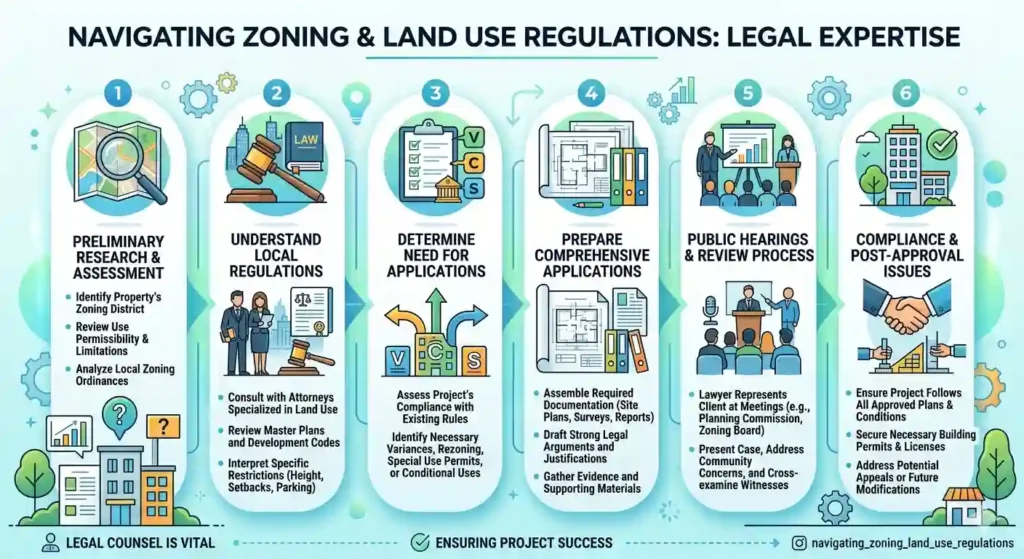
Step-by-Step Approach to Zoning Compliance
To make the process easier, it is helpful to follow a structured approach. Here is a simple step-by-step guide.
Step 1: Identify Zoning Classification
First, determine the zoning category of the land. This will define what activities are allowed.
Step 2: Review Local Regulations
Next, study the applicable rules, including building restrictions, setbacks, and environmental norms.
Step 3: Conduct Legal Due Diligence
Before proceeding, verify ownership, title, and legal compliance. This step helps prevent future problems.
Step 4: Apply for Necessary Permits
Then, submit applications to the relevant authorities. Ensure that all documents are complete and accurate.
Step 5: Monitor Compliance
Even after approvals, it is important to follow all conditions and regulations during construction or use.
Step 6: Seek Legal Support When Needed
Finally, consult a legal expert whenever there is uncertainty or a dispute.
Importance of Due Diligence in Land Transactions
Due diligence is one of the most important steps in any land-related transaction. Without proper verification, buyers may face serious legal and financial risks.
For example, a property may:
- Have unclear zoning status
- Be subject to restrictions or litigation
- Lack proper approvals
Therefore, legal due diligence ensures that the property is safe for investment and development. At Rajendra Law Office LLP, we conduct thorough checks to protect our clients’ interests.
Dealing with Government Authorities
Interacting with government departments is often a necessary part of zoning and land use matters. However, the process can be time-consuming and complicated.
That said, with the right legal support:
- Documentation becomes accurate and complete
- Communication with authorities improves
- Approval timelines can be managed better
As a result, projects move forward more efficiently.
Resolving Zoning Disputes
Zoning disputes can arise for many reasons. For instance, neighbors may object to a new project, or authorities may issue notices for violations.
In such cases, a calm and strategic approach is essential. Legal experts can:
- Analyze the situation
- Provide practical advice
- Represent clients in hearings and litigation
At Rajendra Law Office LLP, we focus on resolving disputes effectively while protecting our clients’ rights.
Adapting to Changing Regulations
Zoning laws and land use policies are not static. Governments often update them to meet changing needs and development goals.
Therefore, staying informed is very important. With legal guidance, clients can:
- Understand new rules
- Adjust their plans accordingly
- Avoid compliance issues
This proactive approach saves time, money, and effort in the long run.
Why Choose Rajendra Law Office LLP?
When it comes to zoning and land use matters, experience and attention to detail make a big difference. At Rajendra Law Office LLP, we offer:
- Clear and practical legal advice
- Thorough due diligence services
- Strong representation in disputes
- Efficient handling of approvals and documentation
- Client-focused solutions
Moreover, we believe in simplifying complex legal processes so that our clients can move forward with confidence.
Frequently Asked Questions
Zoning and land use regulations are legal rules that control how land can be used in different areas. For example, some areas are marked for residential use, while others are meant for commercial or industrial purposes. In addition, these regulations include rules about building height, density, road access, and environmental protection. Therefore, they ensure that development happens in an organized and planned manner.
Legal assistance is important because zoning laws are often complex and detailed. Without proper guidance, individuals and businesses may misunderstand the rules or miss important requirements. As a result, this can lead to delays, penalties, or legal disputes. A legal expert helps interpret the laws clearly, ensures compliance, and handles approvals efficiently.
Yes, land use can be changed, such as from agricultural to residential or commercial. However, this process involves legal procedures and approvals from government authorities. Moreover, the applicant must meet specific conditions and submit required documents. Therefore, legal support is essential to complete the process smoothly and avoid rejection.
If zoning regulations are violated, authorities may take strict action. For instance, they may issue notices, impose fines, or even order demolition of unauthorized structures. In some cases, legal proceedings may also follow. Hence, it is always better to check compliance in advance and seek legal advice before starting any project.
Due diligence helps verify the legal status of a property before purchase or development. It includes checking zoning classification, ownership, approvals, and any existing disputes. As a result, buyers can avoid risks and make informed decisions. Proper due diligence ensures that the land is suitable for the intended use and free from legal complications.
Conclusion
In conclusion, zoning and land use regulations are an essential part of property development and urban planning. While they may seem complex, they can be managed effectively with the right knowledge and legal support.
By understanding the rules, conducting proper due diligence, and seeking expert guidance, individuals and businesses can avoid risks and achieve their goals smoothly.
At Rajendra Law Office LLP, we are committed to helping our clients navigate these challenges with ease. Whether you are planning a new project, purchasing land, or facing a dispute, our legal expertise ensures that you stay compliant and protected at every step.
Read More
- Entertainment Lawyers in Chennai for Copyright Disputes
- Navigating Property Lease Agreements: Legal Expertise
- Ensuring Due Diligence: Expertise in Title Searches
- Ensure a Secure Investment: Importance of Property Title Search
- Empowering Business Transactions: Exploring Arbitration’s Role
- Ministry of Housing and Urban Affairs (MoHUA)