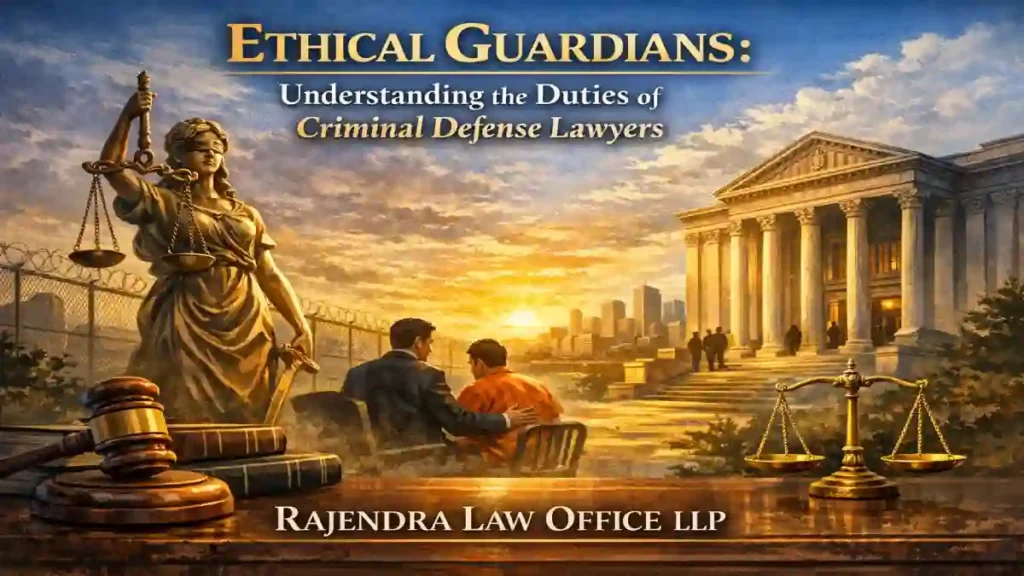
Criminal defense lawyers play a powerful and often misunderstood role in society. Many people assume that these lawyers simply defend individuals accused of crimes, regardless of guilt or innocence. However, the truth is much deeper and more meaningful. Criminal defense lawyers act as ethical guardians who protect the rights of individuals and ensure that justice is served fairly.
In a system where freedom, reputation, and even life can be at stake, the role of a defense lawyer becomes essential. Without proper legal representation, the balance of justice can easily tilt in favor of authority rather than fairness. Therefore, understanding the duties of criminal defense lawyers helps us appreciate their importance in maintaining the rule of law.
Ethical Guardians: Understanding the Duties of Criminal Defense Lawyers – Rajendra Law Office LLP

The Foundation of Criminal Defense Work
At the heart of criminal defense lies the principle that every person is innocent until proven guilty. This is not just a legal rule; it is a fundamental human right. Criminal defense lawyers uphold this principle by ensuring that the prosecution proves its case beyond a reasonable doubt.
Moreover, they act as a safeguard against misuse of power. Governments and law enforcement agencies have vast resources, and without a strong defense, an accused person may struggle to present their side effectively. Therefore, defense lawyers level the playing field and ensure fairness throughout the legal process.
Duty to Protect Client Rights
One of the primary duties of a criminal defense lawyer is to protect the legal and constitutional rights of their client. From the moment a person is accused or arrested, several rights come into play, such as the right to remain silent, the right to legal counsel, and the right to a fair trial.
A defense lawyer ensures that these rights are respected at every stage. For instance, if law enforcement conducts an illegal search or obtains evidence unlawfully, the lawyer can challenge its admissibility in court. In doing so, they not only protect their client but also uphold the integrity of the justice system.
Duty of Confidentiality
Another crucial responsibility is maintaining client confidentiality. Clients often share sensitive and personal information with their lawyers. Without trust, it would be impossible for a lawyer to build a strong defense.
Therefore, criminal defense lawyers must keep all client communications private. This duty continues even after the case ends. By protecting confidentiality, lawyers create a safe space where clients can speak openly, which ultimately leads to better legal representation.
Duty to Provide Competent Representation
Competence is a cornerstone of ethical legal practice. Criminal defense lawyers must possess the knowledge, skills, and preparation necessary to handle their cases effectively. This includes understanding criminal law, procedural rules, and courtroom strategies.
In addition, they must stay updated with changes in laws and judicial decisions. A competent lawyer carefully examines evidence, interviews witnesses, and prepares strong arguments. Through diligence and expertise, they ensure that the client receives the best possible defense.
Duty of Loyalty and Avoidance of Conflict
Loyalty to the client is another essential duty. A defense lawyer must act in the best interests of their client at all times. This means avoiding situations where personal interests or relationships could interfere with professional judgment.
For example, if a lawyer has a conflict of interest—such as representing multiple clients with opposing interests—they must either resolve the conflict or withdraw from the case. This ensures that the client receives unbiased and dedicated representation.
Duty to Act with Honesty and Integrity
While defense lawyers must advocate strongly for their clients, they must also maintain honesty and integrity. They cannot mislead the court, fabricate evidence, or present false information knowingly.
Instead, they must strike a balance between vigorous representation and ethical conduct. This duty reinforces the credibility of the legal system and ensures that justice is not compromised.
Duty to Ensure a Fair Trial
A fair trial is the backbone of justice. Criminal defense lawyers actively work to ensure that their clients receive a fair and impartial hearing. They challenge biased procedures, question unreliable evidence, and cross-examine witnesses effectively.
Furthermore, they ensure that the judge and jury consider all relevant facts before reaching a decision. By doing so, they prevent wrongful convictions and protect the rights of the accused.
Duty to Advise and Guide Clients
Legal processes can be confusing and stressful for individuals facing criminal charges. Therefore, defense lawyers must guide their clients through every step of the journey.
They explain legal options, possible outcomes, and risks in simple terms. They also help clients make informed decisions, such as whether to accept a plea deal or proceed to trial. Through clear communication, lawyers empower their clients to participate actively in their defense.
Ethical Limits: What Defense Lawyers Cannot Do
Although criminal defense lawyers have a duty to defend their clients, there are clear ethical boundaries they must not cross. For example, they cannot encourage illegal activities, assist in committing a crime, or knowingly present false testimony.
Additionally, if a client admits guilt privately, the lawyer cannot lie in court. Instead, they must focus on ensuring that the prosecution proves its case lawfully and that the client’s rights are protected.
Thus, ethical practice requires both courage and discipline. Lawyers must sometimes make difficult choices to uphold the law while still supporting their clients.
Role in Preventing Miscarriage of Justice
Criminal defense lawyers often serve as the last line of defense against wrongful convictions. History has shown that innocent people can be accused and even convicted due to errors, bias, or lack of proper representation.
By carefully examining evidence and challenging inconsistencies, defense lawyers help uncover the truth. They also bring attention to procedural errors and violations of rights, which might otherwise go unnoticed.
As a result, their work contributes significantly to preventing miscarriages of justice.
Building Public Trust in the Legal System
Although defense lawyers sometimes face criticism, their role ultimately strengthens public trust in the legal system. When individuals know that everyone—regardless of status or accusation—has access to fair representation, confidence in justice increases.
Moreover, ethical defense lawyers demonstrate that the system values fairness over punishment alone. This balanced approach helps maintain social order and respect for the law.
The Human Side of Criminal Defense
Beyond legal duties, criminal defense lawyers deal with real people facing serious challenges. Clients may experience fear, anxiety, and uncertainty about their future.
Therefore, empathy and understanding are essential qualities. A good lawyer listens carefully, treats clients with dignity, and provides emotional support alongside legal guidance. This human approach not only builds trust but also improves the overall quality of representation.
Challenges Faced by Criminal Defense Lawyers
Despite their important role, criminal defense lawyers often face significant challenges. They may handle complex cases, tight deadlines, and high-pressure situations. Additionally, they must deal with public perception, which sometimes unfairly criticizes their work.
However, ethical lawyers remain committed to their duties despite these challenges. Their dedication ensures that justice is not compromised, even in difficult circumstances.
Why Ethical Practice Matters
Ethics form the backbone of the legal profession. Without ethical standards, the justice system would lose its credibility and effectiveness. Criminal defense lawyers must adhere to these standards to maintain fairness and integrity.
Furthermore, ethical practice protects not only clients but also the broader society. It ensures that laws are applied consistently and that individual rights are respected.
Frequently Asked Questions
A criminal defense lawyer protects the rights of individuals accused of crimes. They ensure that the legal process is fair and that the prosecution proves its case beyond reasonable doubt. Moreover, they represent clients in court, prepare legal strategies, and challenge any unlawful actions by authorities. Ultimately, their role is not to justify crime but to ensure justice is delivered properly and lawfully.
Yes, they may represent individuals who are guilty, but their duty is not to prove innocence at all costs. Instead, they ensure that the accused receives a fair trial and that all legal procedures are followed correctly. Even if a client admits guilt privately, the lawyer focuses on protecting rights and ensuring that punishment, if any, follows due process.
Confidentiality builds trust between the lawyer and the client. Since clients often share sensitive and personal information, it is essential that lawyers keep these details private. This allows the lawyer to prepare a strong defense. Without confidentiality, clients may hesitate to speak openly, which can weaken their case significantly.
Yes, a lawyer can refuse a case for valid reasons. For example, they may decline if there is a conflict of interest, lack of expertise, or ethical concerns. Additionally, lawyers must ensure they can provide proper time and attention to each case. Refusing a case in such situations helps maintain professional integrity and quality representation.
Criminal defense lawyers must act with honesty and integrity at all times. They cannot present false evidence, mislead the court, or assist in illegal activities. While they strongly defend their clients, they must also respect the law and legal ethics. Balancing strong advocacy with ethical responsibility is a key part of their role.
Conclusion
Criminal defense lawyers are much more than legal representatives; they are ethical guardians who protect the principles of justice. Through their duties—such as safeguarding rights, maintaining confidentiality, ensuring fair trials, and acting with integrity—they uphold the rule of law.
At Rajendra Law Office LLP, we believe that every individual deserves a fair chance to be heard. Therefore, we approach each case with dedication, professionalism, and strong ethical values.
In conclusion, understanding the duties of criminal defense lawyers helps us recognize their vital role in society. They stand as a shield against injustice and as a voice for those who need it most. Ultimately, their work ensures that justice is not only done but also seen to be done.
Read More
- Environmental Lawyers in India for Pollution Cases
- Expertise in Property Title and Ownership Disputes: Real Estate Advocates
- Debt Recovery Tribunal Chennai: Legal Assistance for Debt Collection
- Environmental Laws in Real Estate: Compliance and Impact
- Expert Representation at Industrial Tribunal Chennai: Protecting Your Workplace Rights
- National Legal Services Authority (NALSA)