Insurance law protects policyholders against unfair claim practices and contractual violations. Insurance contracts create legal obligations between insurers and insured parties. Therefore, policyholders should understand their rights before disputes arise. Insurance claims often involve health insurance, life insurance, motor insurance, and property insurance. Legal protection extends to individuals, businesses, NGOs, and NRIs. Moreover, policy terms require careful interpretation during claim assessment. Insurers must act fairly and follow regulatory requirements. Policyholders may challenge wrongful claim denials through appropriate forums. Legal support strengthens claim enforcement and dispute resolution efforts.
Insurance Law: Your Rights and Legal Protections – Rajendra Law Office LLP
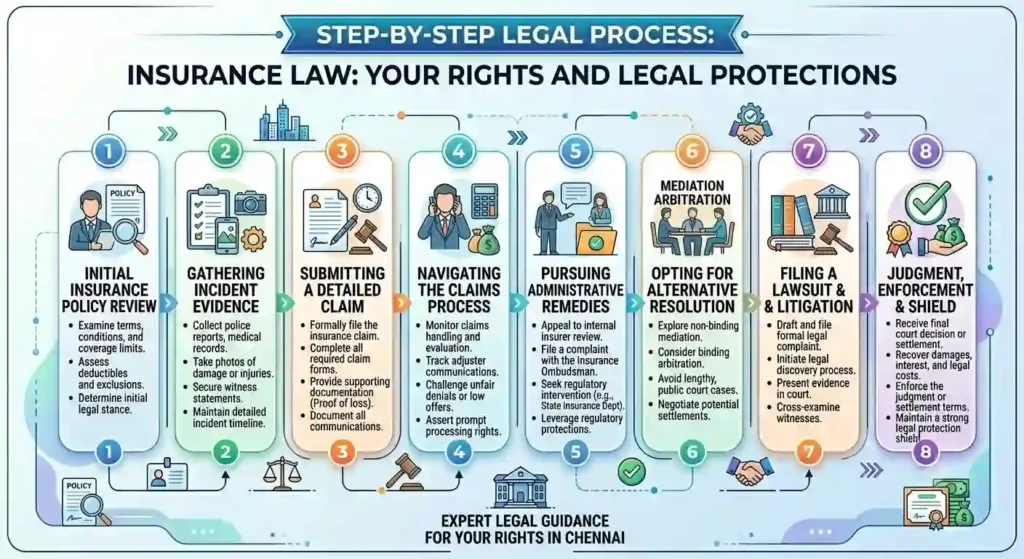
Common insurance issues include:
• Claim rejection disputes
• Delayed claim settlement
• Policy misrepresentation
• Coverage disagreements
| Authority | Function |
|---|---|
| IRDAI | Insurance regulation |
| Consumer Commission | Consumer disputes |
| Civil Court | Contract claims |
Why Legal Protection Matters in Insurance Disputes
Insurance disputes often involve complex policy conditions and technical interpretations. Therefore, professional legal guidance becomes important. Policyholders frequently encounter delays, partial settlements, and claim repudiations. Lawyers review policy wording and supporting evidence carefully. Moreover, they assess insurer obligations and regulatory compliance. Early legal intervention improves settlement prospects and litigation readiness. Insurance disputes may affect financial stability significantly. Important legal benefits include:
- Policy interpretation
- Claim assessment
- Evidence evaluation
- Forum representation
| Dispute Type | Legal Remedy |
|---|---|
| Claim rejection | Complaint filing |
| Delay in settlement | Compensation claim |
| Policy dispute | Legal proceedings |
Common Insurance Legal Issues Faced by Policyholders
Insurance disputes arise across several policy categories. Health claims often involve exclusions and treatment eligibility disagreements. Furthermore, motor insurance claims may involve liability disputes. Property insurance cases frequently concern valuation disagreements. Life insurance disputes often involve nominee and disclosure issues. Common legal concerns include:
• Wrongful claim denial
• Underpayment disputes
• Fraud allegations
• Coverage interpretation issues
• Documentation disputes
| Insurance Type | Common Issue |
|---|---|
| Health | Claim rejection |
| Motor | Liability dispute |
| Life | Nominee conflict |
Health Insurance Claim Disputes
Health insurance protects policyholders against medical expenses and hospitalization costs. However, claim disputes frequently arise regarding exclusions and policy conditions. Therefore, legal review becomes essential. Lawyers examine policy wording and medical records carefully. Important evidence includes:
- Policy document
- Hospital records
- Claim correspondence
- Medical bills
Consumer Commissions often hear health insurance disputes. Consequently, strong documentation improves recovery prospects significantly.
Claim Rejection Due to Policy Exclusions
Insurers may reject claims citing policy exclusions. Policyholders should verify whether exclusions apply correctly. Therefore, legal analysis remains necessary. Common disputes involve:
• Pre-existing conditions
• Waiting periods
• Treatment exclusions
• Documentation concerns
Legal professionals evaluate insurer decisions carefully. Consequently, policyholders can challenge unjustified rejections effectively.
Delayed Settlement of Medical Claims
Claim delays create financial stress and uncertainty. Policyholders expect timely settlement under policy terms. Therefore, legal remedies may become necessary. Key supporting records include:
- Claim acknowledgment
- Medical reports
- Settlement communications
- Expense statements
Prompt legal action often accelerates claim resolution and protects policyholder interests.
Motor and Property Insurance Claims
Motor and property insurance disputes commonly involve loss assessment disagreements. Therefore, accurate evidence becomes crucial. Insurers may dispute damage extent or liability issues. Lawyers evaluate survey reports and claim records carefully. Common disputes include:
• Accident claims
• Theft claims
• Fire damage claims
• Natural disaster losses
Proper legal support improves settlement outcomes and claim enforcement.
Vehicle Accident and Theft Claim Issues
Motor insurance claims require compliance with policy obligations. Policyholders should report incidents promptly. Therefore, documentation remains critical. Important records include:
• FIR copies
• Survey reports
• Repair estimates
• Policy documents
Nearby police stations often play an important role in accident and theft cases. Consequently, prompt reporting strengthens insurance claims.
Property Damage and Loss Recovery
Property insurance protects against financial losses from covered events. However, valuation disputes frequently occur. Therefore, legal review becomes valuable. Common concerns include:
- Under-assessment disputes
- Fire damage claims
- Flood loss claims
- Structural damage issues
Legal representation often helps secure fair compensation and policy enforcement.
Forums and Remedies for Insurance Disputes
Several forums provide remedies for insurance-related disputes. Therefore, policyholders should select appropriate forums carefully. Consumer Commissions handle many insurance claims. Civil Courts exercise jurisdiction over contractual disputes. Regulatory complaints may proceed before relevant authorities. Available remedies include:
• Claim settlement orders
• Compensation awards
• Interest recovery
• Litigation costs
• Corrective directions
| Forum | Purpose |
|---|---|
| Consumer Commission | Consumer claims |
| Civil Court | Contract disputes |
| High Court | Judicial remedies |
Consumer Protection and Insurance Rights
Insurance policyholders qualify as consumers in many circumstances. Therefore, consumer law provides additional protection. Consumer Commissions address unfair claim practices and service deficiencies. Lawyers prepare complaints supported by documentary evidence. Common consumer remedies include:
• Compensation claims
• Refund requests
• Interest awards
• Service deficiency findings
Consumer proceedings often provide effective dispute resolution mechanisms. Consequently, policyholders obtain practical remedies against wrongful insurer conduct.
Compensation for Wrongful Claim Denial
Wrongful denial may cause financial and emotional hardship. Policyholders can seek compensation through legal proceedings. Therefore, detailed evidence remains essential. Relevant factors include:
• Financial loss
• Delay consequences
• Medical hardship
• Contract violations
Courts and consumer forums assess damages based on circumstances and supporting records.
Interest and Cost Recovery Claims
Policyholders may seek interest for unjustified settlement delays. Therefore, insurers face accountability for unreasonable conduct. Important claims may include:
- Interest recovery
- Litigation expenses
- Administrative costs
- Additional losses
These remedies promote fair treatment and encourage timely claim processing.
Criminal Issues, Evidence, and Legal Support
Certain insurance disputes involve fraud, forgery, or dishonest conduct. Therefore, criminal remedies may apply. The BNS addresses cheating, forgery, and related offences. The BNSS governs criminal procedures. Victims may approach nearby police stations when criminal conduct appears. The BSA regulates evidentiary requirements in proceedings. Important concerns include:
• Insurance fraud
• Forged documents
• False representations
• Identity misuse
| Authority | Function |
|---|---|
| Police | Criminal investigation |
| Magistrate Court | Criminal proceedings |
| Higher Courts | Appeals and supervision |
Importance of Evidence in Insurance Litigation
Evidence determines success in most insurance disputes. Therefore, policyholders should preserve records carefully. Lawyers evaluate documentary and electronic evidence thoroughly. Important records include:
• Insurance policies
• Claim forms
• Medical records
• Correspondence files
Organized documentation improves negotiation and litigation outcomes significantly. Moreover, proper evidence strengthens credibility before courts and tribunals.
Insurance Fraud Investigations and Legal Remedies
Fraud allegations require careful legal examination. Policyholders should respond strategically and promptly. Therefore, legal guidance remains essential. Common issues include:
- False claim allegations
- Forged records accusations
- Identity fraud concerns
- Investigation disputes
Effective representation protects rights and ensures procedural fairness throughout investigations.
Legal Support from Rajendra Law Office LLP
Rajendra Law Office LLP provides comprehensive insurance dispute resolution services. The firm assists policyholders, businesses, NGOs, and NRIs. Therefore, clients receive practical legal solutions. Services include:
• Claim review
• Policy interpretation
• Consumer complaints
• Civil litigation
• Settlement negotiations
Experienced lawyers protect policyholder rights and pursue available remedies. Consequently, clients improve recovery prospects and legal outcomes.
Conclusion
Insurance law safeguards policyholders against unfair treatment and wrongful claim practices. Timely legal action strengthens claims and protects financial interests. Moreover, professional guidance helps navigate complex policy disputes. Policyholders should preserve evidence and seek advice promptly. Effective legal representation improves compensation recovery and dispute resolution outcomes.
FAQs
FAQ 1: Can I challenge a rejected insurance claim?
Yes. Policyholders may challenge wrongful claim denials through Consumer Commissions, Civil Courts, and other legal forums.
FAQ 2: What documents help in insurance disputes?
Policies, claim forms, medical records, correspondence, survey reports, invoices, and payment records support insurance claims.
FAQ 3: Can I claim compensation for delayed settlement?
Yes. Courts and consumer forums may award compensation, interest, and costs for unjustified claim delays.
FAQ 4: Which forum handles insurance disputes?
Consumer Commissions, Civil Courts, and higher judicial forums commonly hear insurance-related disputes.
FAQ 5: Can criminal action arise in insurance matters?
Yes. Fraud, forgery, cheating, and document manipulation may attract criminal proceedings under applicable laws.
FAQ 6: How can a lawyer assist in insurance disputes?
Lawyers review policies, assess claims, gather evidence, negotiate settlements, and represent clients before forums.
Read More
- Immigration Lawyers in Chennai for Visa Services
- Navigating Trademark Law and Registration: Essential Steps and Procedures
- Family Dispute Lawyers in Chennai: Finding Harmony in Conflict
- Exploring Alternative Dispute Resolution (ADR): Legal Options
- Expertise in Real Estate Litigation: Legal Resolution Services
- Insurance Regulatory and Development Authority of India (IRDAI)