
Introduction: Strategic Trademark Protection for Indian Businesses
Trademark protection gives businesses a legal framework for securing names, logos, slogans, symbols, packaging, and brand identities. Rajendra Law Office LLP assists businesses with trademark registration, prosecution, enforcement, and dispute resolution. A strong trademark strategy begins before commercial launch and continues throughout the brand lifecycle. Therefore, businesses should combine clearance searches, proper classification, evidence preservation, and enforcement planning. Indian trademark practice involves the Trade Marks Act, 1999 and Trade Marks Rules, 2017. Additionally, commercial disputes may involve the Commercial Courts Act, 2015 and procedural rules. Online infringement also creates evidentiary challenges involving websites, marketplaces, social media, and digital advertising. Consequently, intellectual property lawyers in India must address both conventional and digital infringement risks. Businesses may require representation before the Trade Marks Registry, courts, commercial courts, and other forums. Effective legal support also includes cease-and-desist notices, opposition proceedings, cancellation actions, injunctions, damages, and settlement strategies. Rajendra Law Office LLP provides structured trademark legal support for Indian and international businesses.
Trademark Law Framework and Brand Protection Strategy
Why Trademark Protection Matters for Indian Businesses
Building Exclusive Brand Rights
A trademark can become one of the most valuable intangible assets of a growing business. Registration provides statutory rights against qualifying infringing uses. Therefore, businesses should consider trademark protection before investing heavily in advertising and distribution. A brand owner can protect distinctive words, logos, labels, shapes, colours, and other qualifying marks. However, registrability depends upon statutory requirements and the specific facts surrounding the mark. Section 29 addresses infringement involving registered trademarks and specified commercial uses. Section 27 preserves passing off remedies for unregistered trademarks. Thus, unregistered brand owners can still pursue passing off where evidence supports goodwill and misrepresentation. Businesses should maintain invoices, advertisements, packaging, website records, sales data, and promotional material. Such records can establish commercial use and support enforcement strategies. Furthermore, a consistent trademark portfolio helps businesses manage licensing, franchising, assignments, and expansion. Legal advice can identify risks before competitors exploit similar branding opportunities. Accordingly, early trademark planning can reduce expensive disputes and strengthen long-term commercial protection.
Identifying Common Trademark Legal Issues
Trademark disputes can arise from several commercial activities, including adoption, registration, licensing, advertising, distribution, and online sales. Businesses frequently encounter objections based on similarity, descriptiveness, prior rights, or prohibited marks. Likewise, registered proprietors may face counterfeit products, deceptive packaging, domain-name misuse, and marketplace infringement. Another issue involves unauthorized use of trademarks as business names or social media identifiers. Passing off claims can also arise when competitors create confusing associations with established brands. Importantly, legal analysis should distinguish infringement from passing off because their statutory foundations differ. Businesses should also monitor trademark applications published in the Trade Marks Journal. Early opposition may prevent registration of a conflicting mark. Meanwhile, cancellation or rectification proceedings may address problematic registrations already appearing on the register. Common legal support therefore includes:
- Trademark clearance and availability searches.
- Registration and examination response support.
- Opposition and counterstatement drafting.
- Infringement and passing off litigation.
- Anti-counterfeiting and enforcement strategy.
- Licensing, assignment, and portfolio management.
A structured approach allows businesses to address disputes before commercial damage becomes substantial.
Trademark Registration and Prosecution in India
Conducting Comprehensive Trademark Searches
Trademark clearance should precede filing because registration does not automatically eliminate every commercial risk. Lawyers examine existing registrations, pending applications, prior-use evidence, and potentially conflicting marks. The official Trade Marks Registry provides public search facilities for examining existing trademark records. A professional search should consider identical marks and phonetic, visual, conceptual, and structural similarities. It should also examine relevant goods and services under the Nice Classification system. Furthermore, searches should include company names, domain names, marketplace listings, and major social media platforms. A clearance opinion can then classify risks as manageable, moderate, or significant. Businesses should avoid relying solely on exact-match database searches. Similar marks may create objections even when spelling differs substantially. Therefore, lawyers should review Section 9 absolute grounds and Section 11 relative grounds. Evidence of honest adoption and prior use can also influence strategic decisions. Search results should remain documented because they can support future legal analysis. Rajendra Law Office LLP can develop a trademark clearance process suited to startups, companies, partnerships, and established brands.
Choosing Correct Trademark Classes
Correct classification directly influences the scope and usefulness of trademark registration. Businesses must identify the actual goods and services associated with present and planned commercial activities. A technology company may require different classes for software, telecommunications, education, or business services. Similarly, manufacturers may need separate protection for products, retail services, advertising, and related commercial activities. Filing in an incorrect class can leave important commercial activities insufficiently protected. Therefore, lawyers should examine business models before recommending trademark classes. The filing process includes identifying the applicant, mark representation, goods or services, and supporting documents. Businesses should also decide between word marks, device marks, series marks, collective marks, and certification marks. A strategic portfolio may require several applications rather than one broad filing. However, unnecessary classes can increase costs without providing meaningful commercial protection. The official fee structure varies according to applicant category and filing circumstances. Accordingly, professional classification advice can prevent avoidable objections and future portfolio gaps. Trademark protection should reflect both present operations and realistic business expansion plans.
Managing Examination, Objection and Hearing Proceedings
Trademark examination can produce objections requiring a reasoned legal response. The response should address the cited provisions, earlier marks, distinctiveness, classification, and supporting evidence. Businesses should avoid generic submissions that fail to confront the examiner’s specific concerns. Instead, lawyers can prepare evidence demonstrating distinctiveness, prior use, market recognition, or differences between marks. Where necessary, the applicant may attend a hearing before the Registrar. Timelines matter because missed procedural deadlines can seriously affect an application. A strong prosecution strategy therefore combines legal submissions with documentary evidence. Relevant documents may include invoices, advertisements, product photographs, website analytics, promotional campaigns, and sales figures. Additionally, affidavits can establish continuous use and commercial circumstances. Applicants should maintain copies of every filing, examination report, response, hearing notice, and order. This record assists with future opposition or enforcement proceedings. Consequently, experienced trademark lawyers can reduce procedural errors while presenting commercially relevant evidence. Proper prosecution also creates a stronger foundation for subsequent enforcement and portfolio management.
Handling Trademark Opposition Proceedings
Opposition proceedings allow interested persons to challenge advertised trademark applications. Section 21 provides the statutory framework for opposing registration. The Trade Marks Rules prescribe procedural requirements for notices, counterstatements, evidence, and hearings. Therefore, parties should monitor the Trade Marks Journal and act within prescribed periods. An opponent may rely on prior registration, prior use, confusion, descriptiveness, bad faith, or other applicable grounds. Meanwhile, applicants can defend registration through factual and legal evidence. The opposition process may include pleadings, documentary evidence, affidavits, and oral hearings. Missing a procedural deadline can create serious consequences for either side. Accordingly, trademark lawyers should maintain a detailed docket of statutory and procedural dates. Parties should also evaluate commercial settlement where continued litigation provides limited business value. Since April 2026, the CGPDTM and WIPO have operated a pilot mediation programme for eligible trademark opposition disputes. Written consent from both parties is required under that programme. Therefore, mediation may provide another structured pathway for resolving qualifying opposition disputes.
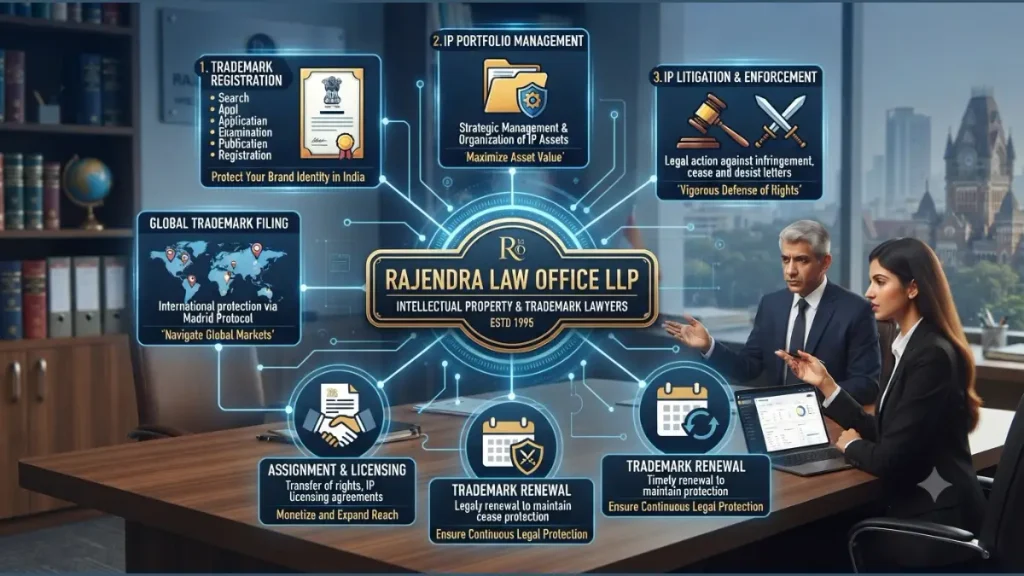
Trademark Enforcement, Litigation and Commercial Remedies
Responding to Trademark Infringement and Passing Off
Detecting Counterfeit and Deceptive Brand Use
Trademark enforcement begins with reliable detection and evidence preservation. Counterfeit goods may appear through physical markets, distributors, websites, social media accounts, or online marketplaces. Businesses should establish monitoring systems that identify suspicious listings and repeated infringing patterns. A legal team can compare product packaging, labels, photographs, prices, seller information, and distribution channels. Investigators may also document physical purchases where lawful and appropriate. Digital evidence should preserve URLs, timestamps, screenshots, communications, account identifiers, and transaction details. The Bharatiya Sakshya Adhiniyam, 2023 recognizes electronic records subject to statutory requirements. Therefore, evidence collection should consider authenticity, integrity, provenance, and admissibility from the beginning. Businesses should avoid altering screenshots or digital records after collection. Instead, evidence should remain preserved in its original form wherever practical. Lawyers can then assess whether civil, criminal, administrative, or platform-based remedies are appropriate. Prompt detection can limit customer confusion and reduce continuing commercial harm. An organized enforcement protocol also helps maintain consistent treatment across multiple infringers and jurisdictions.
Civil Litigation Before Competent Courts
Trademark infringement and passing off suits involve detailed questions of rights, similarity, use, jurisdiction, evidence, and remedies. Section 134 of the Trade Marks Act identifies District Courts with jurisdiction for specified trademark suits. The Commercial Courts Act may also govern commercial disputes satisfying applicable statutory requirements. Businesses should therefore determine territorial and pecuniary jurisdiction before commencing litigation. Section 20 of the Code of Civil Procedure may also become relevant to civil jurisdiction analysis. Furthermore, courts may consider the plaintiff’s business location, defendant’s activities, and cause of action. Lawyers commonly seek interim injunctions where continuing infringement creates ongoing commercial harm. Section 135 permits injunctions and, subject to circumstances, damages or an account of profits. Courts may also grant orders concerning preservation, discovery, delivery, or destruction of infringing material. Litigation strategy should match the evidence, commercial urgency, and relief required. Therefore, an early case assessment can identify the appropriate forum and procedural pathway. Rajendra Law Office LLP can coordinate pleadings, evidence, interim applications, hearings, and enforcement steps.
Seeking Injunctions and Interim Protection
Interim injunctions can become critical when infringing activity threatens ongoing brand value. Courts assess the applicable legal principles alongside the evidence presented by each party. A plaintiff should clearly establish its trademark rights and identify the challenged commercial use. Evidence should demonstrate similarity, market context, customer confusion, reputation, or other legally relevant factors. Section 135 also recognizes interlocutory measures involving discovery and preservation of relevant evidence. In urgent cases, lawyers may seek appropriate interim relief according to procedural requirements. However, every application should accurately present material facts and supporting documents. Overstating allegations can undermine credibility and complicate subsequent proceedings. Businesses should therefore provide a complete evidence package before seeking urgent relief. That package may include registration certificates, renewal records, sales evidence, advertising material, photographs, purchase invoices, and digital captures. Courts may tailor injunctions according to the facts and circumstances of each dispute. Consequently, trademark litigation requires careful preparation rather than relying solely upon registration status. Effective interim strategy can preserve commercial interests while the court determines the underlying dispute.
Recovering Damages and Other Legal Remedies
Trademark enforcement may involve several remedies beyond an injunction. Section 135 recognizes damages or an account of profits, along with delivery-up measures. Courts may also address infringing labels, marks, packaging, documents, and other relevant material. The appropriate remedy depends on evidence, pleadings, conduct, and applicable legal principles. Businesses should therefore quantify commercial losses where possible. Useful evidence may include declining sales, cancelled orders, customer complaints, diverted revenue, and advertising expenditure. An account of profits may require information concerning the infringer’s revenues and related commercial activity. Lawyers can pursue discovery and document preservation where legally appropriate. Additionally, settlement agreements can establish undertakings concerning future use, destruction, licensing, or compensation. Businesses should ensure settlement terms address digital listings and future infringement risks. Cross-border disputes may require coordinated proceedings in multiple jurisdictions. Therefore, enforcement planning should consider India-wide and international commercial activity. A remedy-focused strategy helps align litigation objectives with the client’s actual commercial priorities.
Criminal and Administrative Enforcement Measures
Addressing Counterfeit Goods Through Criminal Law
Certain counterfeit activities can involve criminal offences concerning false or counterfeit property marks. The Bharatiya Nyaya Sanhita, 2023 contains provisions addressing property marks and counterfeit-related conduct. Sections 345 onwards address property marks, false property marks, counterfeiting, and related conduct. However, trademark infringement does not automatically create a criminal case under every circumstance. Lawyers should identify the precise conduct and applicable statutory provisions before approaching law enforcement. A complaint should contain clear facts, supporting documents, product photographs, purchase records, and available seller information. Police action depends upon the applicable offence, jurisdiction, evidence, and statutory procedure. Businesses should preserve seized-product information and maintain proper evidence chains. Criminal proceedings may operate alongside civil trademark litigation where legally appropriate. Therefore, coordinated civil and criminal strategies can address different aspects of brand abuse. Lawyers should also advise clients about realistic expectations regarding investigation and prosecution. Proper legal classification remains essential because trademark rights and property-mark offences operate through distinct statutory frameworks.
Chennai Police Stations and Enforcement Coordination
Businesses operating around Chennai may need coordinated assistance from the appropriate local police authority. The correct police station depends upon the location and territorial jurisdiction of the alleged offence. Greater Chennai Police listings identify stations including J3 Guindy and J1 Saidapet. St. Thomas Mount, Nandambakkam, and nearby stations also serve relevant southern Chennai areas. Therefore, complainants should verify territorial jurisdiction before submitting enforcement complaints. The Chennai Trade Marks Registry operates from the Intellectual Property Office on G.S.T. Road, Guindy. Businesses should distinguish Trade Marks Registry proceedings from police complaints and civil litigation. Each forum performs a different legal function within the enforcement process. A trademark lawyer can coordinate documents across these forums to avoid inconsistent factual positions. Relevant support may include complaint drafting, evidence organization, seizure documentation, legal notices, and court proceedings. Furthermore, digital infringement may require additional cybercrime reporting depending upon the facts. Businesses should preserve online evidence before listings disappear or accounts change. Prompt coordination can improve evidence continuity and reduce delays during enforcement action.
Digital Trademark Protection, Disputes and Legal Support
Online Brand Enforcement and Evidence Management
Protecting Trademarks on Marketplaces and Social Media
Digital commerce has expanded trademark infringement beyond physical stores and conventional distribution networks. Unauthorized sellers can use protected names, logos, product photographs, and descriptions across online marketplaces. Social media accounts may also imitate established brands and mislead consumers. Domain names can create additional disputes involving brand identity and online association. Businesses should maintain periodic monitoring across marketplaces, search engines, social networks, and domain registrations. Lawyers can issue platform complaints supported by registration certificates and evidence of unauthorized use. Where necessary, civil proceedings may seek appropriate injunctions against continuing digital infringement. Evidence should include URLs, account names, timestamps, screenshots, communications, transaction records, and archived content. The Bharatiya Sakshya Adhiniyam provides statutory rules governing electronic records and their admissibility. Therefore, digital evidence should receive the same preservation discipline as physical evidence. Businesses should also create internal escalation procedures for repeated infringement. A coordinated approach can reduce customer confusion and protect online brand reputation. Rajendra Law Office LLP can advise on digital monitoring, takedown strategy, evidence preservation, and litigation escalation.
Domain Name and Cybersquatting Disputes
Domain names can become valuable extensions of trademark identity and customer access. Cybersquatting may involve registration or use of domains that imitate established trademarks. Such disputes can require domain-name policy proceedings, civil litigation, or negotiated transfer arrangements. Lawyers should examine the trademark rights, domain registration date, respondent conduct, and commercial purpose. Evidence of bad faith registration or use can become important in applicable proceedings. Businesses should register key domain variants before launching major marketing campaigns. They should also monitor new registrations resembling their trademarks. A comprehensive domain strategy can include country-code domains and commercially significant generic domains. Social media handles should receive similar attention because users often identify brands through short usernames. Where infringement occurs, lawyers can coordinate domain complaints with trademark enforcement measures. However, each domain dispute requires analysis under the applicable policy or contractual framework. Therefore, businesses should avoid assuming that every domain conflict follows the same procedure. Early legal advice can help identify the correct forum, evidence, and available remedy.
Preserving Digital Evidence for Court Proceedings
Digital evidence increasingly influences trademark disputes involving online sales and advertising. Screenshots alone may not establish the complete context of digital activity. Businesses should preserve original files, source information, URLs, timestamps, transaction records, and relevant communications. The Bharatiya Sakshya Adhiniyam, 2023 provides specific rules concerning electronic records and supporting certification requirements. Therefore, evidence collection should follow a documented and repeatable process. Businesses should record who collected evidence, when it was collected, and how it was stored. Hash values and secure storage can assist technical integrity where appropriate. Website captures should preserve relevant pages, product descriptions, seller identities, and checkout information. Emails and platform communications should also remain in their original electronic form. Lawyers can then prepare evidence bundles suitable for litigation or settlement negotiations. Proper preservation reduces the risk of later disputes concerning authenticity or completeness. Consequently, evidence management should begin when infringement is first detected, rather than after litigation begins.
Trademark Portfolio Management and Long-Term Legal Support
Licensing, Assignment and Commercial Agreements
Trademark value can increase when businesses structure licensing and assignment arrangements carefully. Licensing permits authorized third-party use while preserving contractual control over commercial conditions. Agreements should define permitted marks, territories, goods, services, quality standards, duration, royalties, and termination rights. Assignment transactions require careful examination of ownership, consideration, goodwill, pending disputes, and registry requirements. Lawyers should also review existing security interests, franchise agreements, and co-existence arrangements. Poorly drafted agreements can create uncertainty regarding ownership and authorized use. Therefore, every trademark transaction should align contractual terms with registry records. Businesses should maintain written approvals for significant brand changes and licensing arrangements. Periodic audits can identify unauthorized use by distributors, former partners, employees, or licensees. Furthermore, agreements should address digital marketing, domain names, social media accounts, and marketplace activity. Rajendra Law Office LLP can assist with drafting, review, negotiation, registration-related filings, and dispute prevention. Strong commercial documentation reduces uncertainty while supporting consistent brand governance across multiple business relationships.
Renewal, Monitoring and Trademark Portfolio Audits
Trademark protection requires continuing portfolio management after registration. Registered trademarks generally require renewal according to the statutory renewal framework. Businesses should maintain centralized records of application numbers, classes, renewal dates, ownership, licenses, and assignments. Periodic audits can identify marks that no longer support business objectives. Meanwhile, monitoring can detect conflicting applications, unauthorized uses, and counterfeit products. Trademark Journal monitoring can support timely opposition decisions against problematic applications. Businesses should also review whether actual use matches registered goods and services. Corporate restructuring can create ownership inconsistencies that require timely record updates. Similarly, assignments and licenses should receive appropriate legal and registry attention. A portfolio audit should examine domestic and international marks according to commercial priorities. Therefore, trademark management should function as an ongoing compliance programme rather than a one-time filing exercise. Legal counsel can establish calendars, review protocols, evidence repositories, and escalation procedures. Such systems help businesses preserve valuable rights while reducing avoidable procedural and commercial risks.
Forums, Tribunals and Government Authorities
Trademark disputes can involve multiple institutions depending on the legal issue involved. The Trade Marks Registry handles registration, examination, opposition, and specified rectification-related proceedings. Courts handle infringement, passing off, injunctions, damages, and other judicial remedies. Commercial Courts may hear qualifying commercial disputes under the applicable statutory framework. High Courts can exercise relevant appellate and original jurisdiction according to governing law and local arrangements. The CGPDTM administers the Trade Marks Registry and related intellectual property functions. In Chennai, the Trade Marks Registry operates from the Intellectual Property Office at Guindy. Therefore, businesses should select forums based on statutory jurisdiction and procedural requirements. A forum matrix can help organize the enforcement pathway:
| Legal Issue | Primary Forum or Authority | Typical Support |
|---|---|---|
| New trademark application | Trade Marks Registry | Filing and prosecution |
| Examination objection | Registrar | Written response and hearing |
| Trademark opposition | Registrar | Notice, counterstatement, evidence |
| Infringement | Competent District or Commercial Court | Injunction and damages |
| Counterfeit activity | Appropriate police authority | Criminal complaint |
| Digital infringement | Court and platform | Takedown and injunction |
| Settlement | Mediation forum or parties | Negotiation and agreement |
This structure helps businesses avoid procedural confusion during urgent disputes.
Practical Trademark Legal Support by Rajendra Law Office LLP
Rajendra Law Office LLP can support businesses across the complete trademark protection lifecycle. Legal support can begin with brand clearance and continue through registration, monitoring, opposition, enforcement, and litigation. Businesses may require different strategies depending on whether they own a registered mark or rely upon prior use. Startups often need portfolio planning before launch, while established companies may require anti-counterfeiting programmes. International businesses may also need Indian trademark prosecution and enforcement coordination. Legal support can include:
- Trademark availability and conflict assessment.
- Classification and application strategy.
- Examination objection responses and hearings.
- Opposition and counterstatement proceedings.
- Infringement and passing off litigation.
- Interim injunction and evidence applications.
- Counterfeit enforcement and police complaints.
- Licensing, assignment, and portfolio audits.
Each matter requires a fact-specific legal assessment. Therefore, clients should provide registration records, commercial documents, advertisements, invoices, product samples, and infringement evidence. Early consultation can also identify urgent limitation, evidence, or forum concerns. A coordinated legal strategy can protect brand value while supporting broader commercial objectives. Rajendra Law Office LLP can provide trademark legal assistance for businesses seeking structured and responsive intellectual property protection in India.
Frequently Asked Questions on Trademark Protection
FAQ 1: Why should a business register its trademark in India?
A registered trademark provides statutory protection and supports infringement proceedings. Registration also strengthens brand ownership evidence and commercial licensing opportunities.
FAQ 2: Can an unregistered trademark receive legal protection?
Yes. Unregistered marks can support passing off actions where goodwill, misrepresentation, and resulting damage are properly established through evidence.
FAQ 3: What should businesses do after discovering counterfeit products?
Preserve evidence immediately, identify the seller and supply chain, and seek legal advice. Civil, criminal, platform, and administrative remedies may apply.
FAQ 4: Can trademark disputes be resolved through mediation?
Yes. Eligible pending trademark oppositions may use the 2026 CGPDTM-WIPO mediation pilot. Participation requires written consent from both parties.
FAQ 5: Which Chennai authority handles trademark registration?
The Chennai Trade Marks Registry operates from the Intellectual Property Office on G.S.T. Road, Guindy. Its jurisdiction covers specified southern states and territories.
FAQ 6: What remedies are available for trademark infringement?
Remedies may include injunctions, damages, account of profits, delivery-up, destruction, evidence preservation, and other orders permitted under applicable trademark law.
Legal Source Verification and Current Reference Points
The article reflects the current statutory framework verified against official Indian sources. The Trade Marks Act, 1999 covers registration, infringement, opposition, jurisdiction, and civil remedies.
The Trade Marks Rules, 2017 continue to govern procedural requirements, while IP India provides current filing procedures, forms, fees, and public-search facilities.
The Commercial Courts Act, 2015 establishes the statutory framework for commercial courts and related divisions. The CPC continues to provide general civil procedure principles where applicable.
The BNS, BNSS, and BSA are relevant where trademark-related disputes involve criminal conduct, investigation, or electronic evidence. Their application depends upon the specific facts and alleged offences.
For Chennai, IP India identifies the Trade Marks Registry at the Intellectual Property Office, G.S.T. Road, Guindy. Greater Chennai Police listings identify Guindy, Saidapet, and other relevant stations.
The CGPDTM-WIPO mediation pilot commenced on 26 April 2026 and currently focuses on eligible pending trademark opposition proceedings.