Real estate transactions are often exciting, whether you are buying your first home, selling land, or entering a joint development project. However, alongside the excitement, there is also a great deal of legal responsibility. Every real estate deal—small or big—depends heavily on well-drafted contracts. Without clear agreements, misunderstandings can arise, deals may collapse, and costly disputes can follow. At Rajendra Law Office LLP, we help individuals, companies, NRIs, and developers draft real estate contracts that are clear, fair, and legally sound. In this article, we explain, in simple words, why proper real estate agreements matter and how professional legal advice can make your transactions smoother and safer.
Crafting Real Estate Contracts: Legal Advice for Agreements – Rajendra Law Office LLP
Why Strong Real Estate Contracts Matter
A real estate contract is more than just a piece of paper. It is the foundation of the entire transaction. When the contract is clear, both parties understand their rights and responsibilities. But when it is weak or vague, confusion follows.
For example, a missing clause about payment timelines or construction deadlines can lead to serious disagreements. Similarly, unclear property descriptions or missing approvals can create legal trouble later. Therefore, strong contracts protect both sides and give the deal stability.
Types of Real Estate Contracts You May Need
Real estate is not limited to buying or selling property. It includes many different legal relationships. Therefore, you may need:
- Sale Agreements
- Sale Deeds
- Construction Agreements
- Joint Development Agreements (JDA)
- Lease Agreements
- Gift Deeds
- Mortgage Deeds
- Power of Attorney (POA) documents
- Builder-Buyer Agreements
- Co-ownership Agreements
Each agreement has a different purpose, and each must be drafted carefully. At Rajendra Law Office LLP, we help clients select the right contract and structure it according to the law.
Key Elements Every Real Estate Contract Must Include
Although every contract is unique, certain elements must always be present. These include:
1. Clear Description of the Property
The description should include boundaries, survey numbers, flat numbers, built-up area, and any related rights such as parking or terrace rights.
2. Payment Terms
This includes advance payments, instalment schedules, due dates, and penalties for delays. Clear payment terms prevent financial disputes.
3. Possession and Delivery Timelines
Whether it is a constructed property or a development project, timelines ensure accountability.
4. Rights and Duties of Each Party
The agreement should clearly explain who is responsible for payments, approvals, maintenance, taxes, and registration charges.
5. Penalty and Default Clauses
Without these, parties may delay commitments without consequences.
6. Dispute Resolution Method
Contracts should specify whether disputes go to mediation, arbitration, or civil courts.
7. Compliance with Local Laws and RERA
This is especially important in new developments or builder-buyer agreements.
These elements ensure the contract is strong and enforceable.
Common Mistakes People Make in Real Estate Agreements
Even smart individuals and large companies make mistakes when entering real estate contracts. Some common issues include:
- Signing agreements without verifying ownership
- Relying only on verbal promises
- Using generic templates found online
- Not including penalty clauses
- Missing important deadlines
- Failing to check government approvals
- Ignoring risks in joint ventures
- Not verifying encumbrances or mortgages
Unfortunately, these small mistakes can lead to big losses. This is why legal review is essential.
Why You Should Never Use Ready-Made Templates
It is tempting to download a ready-made agreement from the internet. It looks convenient and inexpensive. However, such templates rarely match your unique situation. They often lack:
- Local law compliance
- RERA clauses
- Accurate property descriptions
- Clear penalty or breach provisions
- Protection for both parties
- Necessary signatures and annexures
Because of this, a generic template can cause disputes rather than prevent them. Therefore, proper drafting by experienced property lawyers is always safer.
How Lawyers Help You Draft a Strong Contract
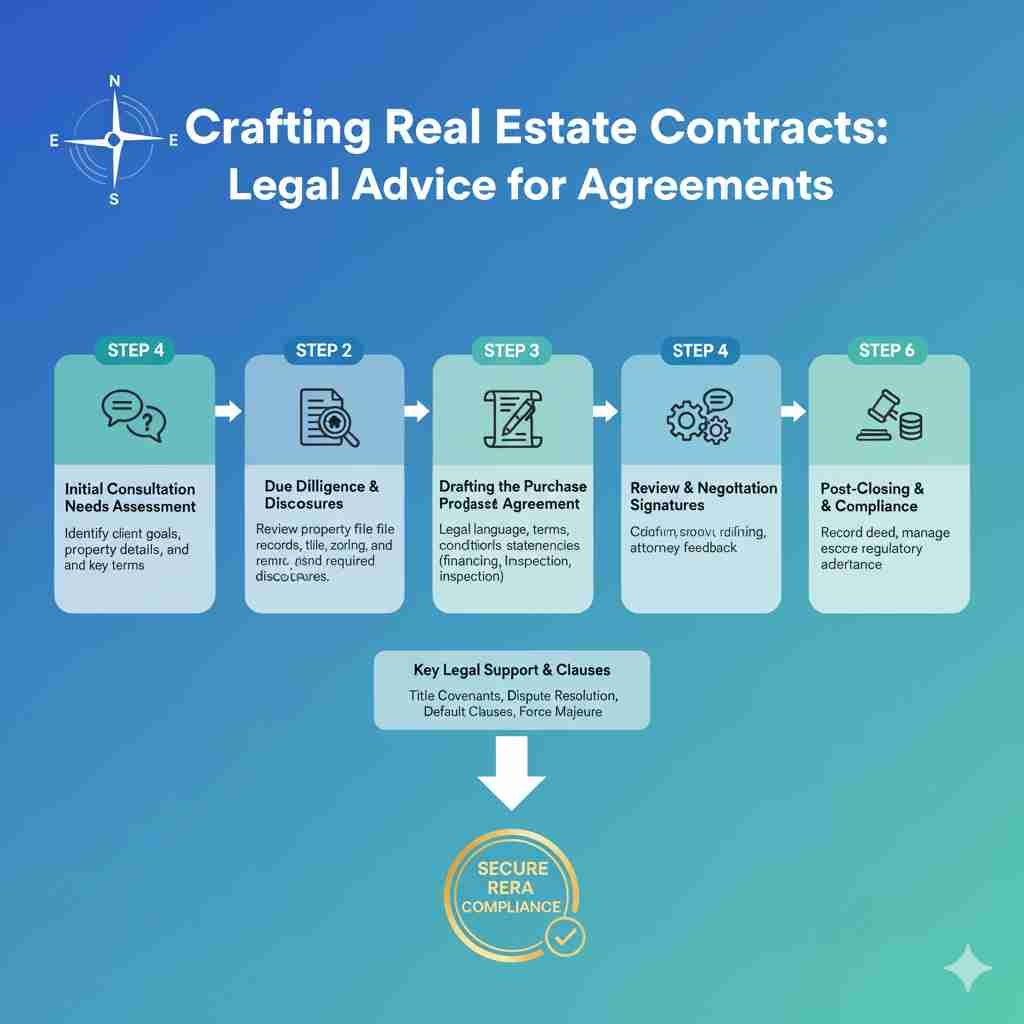
At Rajendra Law Office LLP, we follow a step-by-step approach to contract drafting:
1. Understanding Your Requirements
We begin by discussing your goals, whether you are selling, buying, leasing, or developing property.
2. Verifying Property Documents
We check title deeds, encumbrance certificates, approvals, and ownership rights to avoid future disputes.
3. Identifying Risks and Protecting You
Every transaction carries risks. Our job is to identify them and include clauses that protect you.
4. Drafting Clear and Simple Language
We use simple, understandable language so that all parties know exactly what they are agreeing to.
5. Ensuring Legal and Regulatory Compliance
We make sure the contract meets legal requirements under local laws, stamp duty rules, and RERA (if applicable).
6. Final Review and Sign-off
We review every clause with you and make changes wherever needed.
This thorough process ensures you enter every transaction with confidence.
The Role of RERA in Real Estate Agreements
In recent years, RERA has become a key factor in real estate contracts. It protects homebuyers and promotes transparency. Therefore:
- Builder-buyer agreements must follow RERA guidelines
- Developers must provide correct project details
- Penalties must match RERA norms
- Construction timelines must be realistic
- Refund and compensation clauses must be fair
By aligning your contract with RERA, you reduce legal risks and ensure compliance.
Agreements for Companies, NGOs, and NRIs
Different categories of clients face different challenges.
1. Companies
They often enter commercial leases, development agreements, or land purchases for expansion. They need strong corporate protection.
2. NGOs
They often purchase land for schools, social programs, or community centres. Therefore, compliance with special regulations is necessary.
3. NRIs
NRIs often buy or sell property from abroad, which requires power of attorney documentation, verification of legal heirs, and remote signing support.
At Rajendra Law Office LLP, we offer tailored solutions for each category.
Joint Development Agreements: A Sensitive Area
JDAs can be profitable but risky. Landowners and builders must clearly define:
- Revenue sharing
- Construction responsibilities
- Development timelines
- Approval duties
- Default remedies
Poorly drafted JDAs are a major cause of litigation. Therefore, legal guidance is essential before signing.
Dispute Prevention Through Strong Agreements
Most real estate disputes occur due to poorly drafted contracts. Examples include:
- Confusion over property size
- Misunderstood payment plans
- Unclear possession dates
- Missing penalty clauses
- Disputes between landowners and builders
- Tenant-landlord disagreements
A well-crafted agreement prevents such issues by laying out accurate terms.
How Rajendra Law Office LLP Supports You
Our law firm provides:
- Expert drafting of all real estate contracts
- Document verification and due diligence
- RERA-compliant agreement drafting
- Joint development agreement support
- Lease and sale deed preparation
- Legal opinions for properties
- Dispute resolution assistance
- 24×7 support for urgent transactions
We bring clarity, security, and legal strength to every real estate deal.
Frequently Asked Questions – Real Estate Contracts
Well-drafted contracts are important because they clearly define each party’s rights, duties, timelines, and financial obligations. They reduce confusion, prevent misunderstandings, and protect you from legal risks. A strong agreement also ensures that the transaction follows local property laws and avoids future disputes.
Every agreement should include a clear property description, payment terms, possession timelines, penalty clauses, dispute-resolution methods, and responsibilities of both parties. It must also follow stamp duty rules, registration laws, and RERA guidelines when applicable. These elements make the contract enforceable and transparent.
While online templates may look convenient, they are risky because they usually lack important clauses and do not reflect your unique situation. They may also miss legal requirements under local laws. Using such templates can result in disputes or financial loss. Therefore, professional drafting or legal review is always safer.
A lawyer verifies property documents, identifies legal risks, drafts clear clauses, ensures compliance with relevant laws, and protects your interests. Lawyers also help negotiate terms, prevent loopholes, and guide you through signing and registration. Their support ensures your agreement is valid, enforceable, and safe from future challenges.
Yes. NRIs may need power of attorney documents and verification support. Companies often require commercial lease agreements, joint development contracts, or corporate safeguards. NGOs may need contracts that comply with land-use rules or charitable regulations. Tailored legal drafting ensures each type of client meets their specific legal requirements.
Conclusion: A Good Real Estate Contracts Is Your Best Protection
Real estate is one of the biggest investments in anyone’s life. Therefore, you need a contract that protects your rights, explains your responsibilities, and prevents disputes. With proper legal guidance, you can enter any property transaction with peace of mind.
At Rajendra Law Office LLP, we ensure every agreement is legally strong, transparent, and tailored to your needs. Whether you are an individual, company, NGO, or NRI, we guide you with clarity and confidence—every step of the way.
Read More
- Crafting Property Development Agreements: Legal Guidance
- GST Advance Ruling Mechanism: How to Avoid Tax Disputes Before They Start
- SVB vs Transfer Pricing: How Customs and Income Tax Intersect in Valuation of Imports
- GST Advance Ruling and Cross-Border Transactions: What Importers and Exporters Must Know
- How to Report Income Tax Violations in India | A Legal Guide
- Ministry of Housing & Urban Affairs (MoHUA)
- Contract Drafting Lawyers in Chennai: Crafting Agreements with Precision 📄
- Legal Support for Real Estate Transactions: Expert Advocacy 🛋️
- Contract Law Attorney in Chennai: Expert Legal Guidance 👨💼
- Environmental Laws in Real Estate: Compliance and Impact
- Corporate Lawyers in Chennai: Get Expert Legal Advice and Solutions for Your Business 👨⚖️
- How to Choose the Best Property Lawyer in Chennai (2026 Guide) 🏛️