Cyber Crime Lawyers in India – The internet has changed the way people live, work, and do business. Today, many services—from banking to shopping—are available online. While this digital revolution has brought great convenience, it has also opened the door to new types of crimes. Online fraud, identity theft, phishing scams, financial hacking, and social media misuse are becoming increasingly common in India.
As a result, individuals and businesses often find themselves victims of cyber crime. At such times, professional legal help becomes essential. This is where experienced cyber crime lawyers play a crucial role. At Rajendra Law Office LLP, we help victims of online fraud take swift legal action, recover losses where possible, and ensure that offenders are brought to justice.
Cyber Crime Lawyers in India for Online Fraud Cases – Rajendra Law Office LLP
Understanding Cyber Crime in India
Cyber crime refers to any criminal activity that involves computers, mobile devices, networks, or the internet. In simple terms, when technology is used to commit a crime, it falls under cyber crime.
In India, cyber crimes are mainly governed by the Information Technology Act, 2000 (IT Act) along with provisions of the Indian Penal Code (IPC).
These laws address several forms of digital crimes, including:
- Unauthorized access to computer systems
- Data theft and hacking
- Online financial fraud
- Identity theft
- Cyber stalking and harassment
- Phishing and fake websites
- Social media fraud
As technology evolves, cyber criminals constantly find new ways to exploit digital systems. Therefore, legal expertise in cyber laws has become increasingly important.
Common Types of Online Fraud Cases
Online fraud can happen in many ways. In fact, thousands of complaints are registered every day across India. Some of the most common types include the following.
1. Banking and UPI Fraud
UPI and online banking transactions have become very popular. However, fraudsters often trick people into sharing OTPs, PINs, or payment links.
For example, criminals may send fake payment requests or pretend to be bank officials. Once victims share sensitive information, money is quickly transferred from their accounts.
2. Phishing Scams
Phishing involves fake emails, SMS messages, or websites that appear to be legitimate. These messages usually ask users to verify bank details, passwords, or personal information.
Once the victim enters the information, the fraudster gains access to their accounts.
3. Online Shopping Fraud
Another common issue is fake e-commerce websites. Fraudsters advertise products at extremely low prices and collect payments but never deliver the goods.
Similarly, some sellers on online marketplaces cheat buyers by sending defective or fake products.
4. Social Media Fraud
Social media platforms are widely used for scams. Fraudsters may create fake profiles, impersonate others, or run fraudulent investment schemes.
Sometimes criminals hack accounts and request money from friends and contacts.
5. Investment and Cryptocurrency Scams
Many people lose money through fake investment platforms promising high returns. These scams often involve cryptocurrency trading, forex trading, or stock market investments.
Once victims deposit funds, the websites disappear or block access.
Why Cyber Crime Cases Need Legal Expertise
Cyber crime cases are different from traditional criminal cases. They involve digital evidence, technical investigation, and coordination with cyber police authorities.
Therefore, victims need lawyers who understand both technology and law.
At Rajendra Law Office LLP, our cyber crime lawyers carefully analyze each case and guide clients through every legal step. Moreover, we ensure that the complaint is filed properly so that authorities can begin an investigation quickly.
Legal Framework for Cyber Crime in India
India has a strong legal framework to deal with cyber offences. Some of the key laws include the following.
Information Technology Act, 2000
The IT Act is the primary law governing cyber crimes in India. It deals with hacking, identity theft, cheating by impersonation, and data breaches.
Important sections include:
- Section 43 – Unauthorized access and damage to computer systems
- Section 66 – Computer-related offences
- Section 66C – Identity theft
- Section 66D – Cheating by personation using computer resources
Indian Penal Code (IPC)
In many cyber fraud cases, provisions of the IPC are also applied, such as:
- Cheating and dishonesty
- Criminal breach of trust
- Forgery
- Fraudulent transactions
Because cyber crimes often involve financial loss, multiple laws may apply simultaneously.
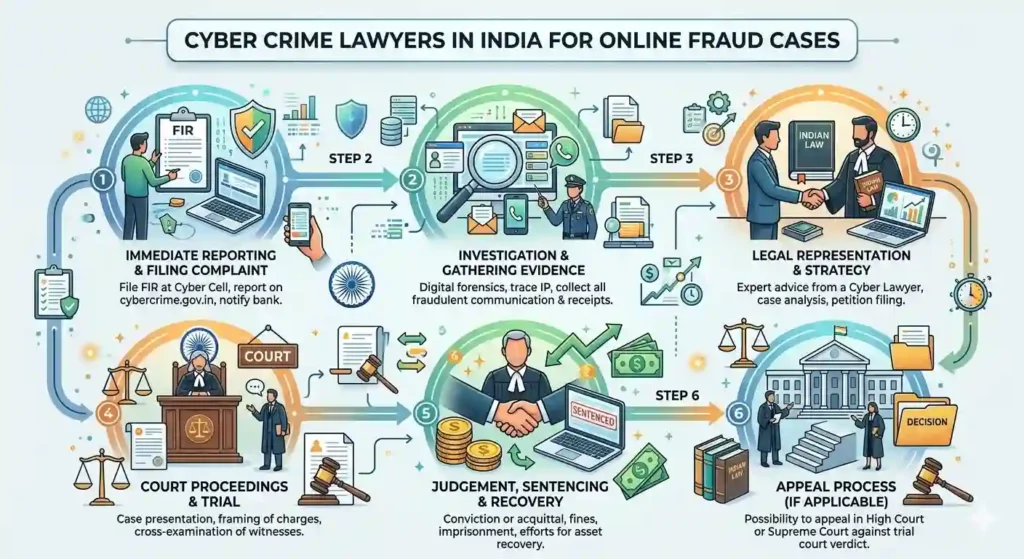
Steps to Take If You Become a Victim of Online Fraud
If someone becomes a victim of cyber fraud, quick action is very important. The faster the complaint is filed, the higher the chances of recovering the lost money.
Here are the steps victims should take.
1. Inform the Bank Immediately
If the fraud involves financial transactions, the victim must contact their bank immediately. Banks can sometimes freeze the transaction or block the account involved.
2. Report to the Cyber Crime Portal
Victims can file a complaint through the National Cyber Crime Reporting Portal.
This portal is operated by the Government of India to handle online fraud complaints.
3. File a Police Complaint
Victims can also file a complaint at the nearest cyber crime police station. Providing evidence such as screenshots, transaction details, and messages helps investigators.
4. Consult a Cyber Crime Lawyer
Legal guidance ensures that the complaint is properly drafted and filed. A lawyer can also follow up with authorities and represent the victim in court if needed.
How Rajendra Law Office LLP Helps Victims
At Rajendra Law Office LLP, we understand how stressful online fraud can be. Victims often feel confused and helpless after losing money or personal data.
Therefore, our team provides comprehensive legal support.
Legal Consultation
First, we analyze the case in detail. We examine digital evidence, transaction records, and communication messages to understand the nature of the fraud.
Drafting Legal Complaints
Next, we help clients prepare detailed complaints for cyber police authorities. Proper documentation increases the chances of effective investigation.
Coordination with Investigating Authorities
Cyber crime investigations often involve banks, internet service providers, and digital platforms. Our lawyers coordinate with these agencies to assist the investigation.
Court Representation
If the case proceeds to court, we represent victims and ensure their rights are protected. We also pursue compensation and recovery wherever possible.
Importance of Digital Evidence
Unlike traditional crimes, cyber crimes rely heavily on digital evidence. Therefore, preserving evidence becomes extremely important.
Examples of digital evidence include:
- Screenshots of messages or emails
- Bank transaction details
- Payment receipts
- IP addresses
- Device logs
- Social media account information
Victims should avoid deleting any communication related to the fraud. Instead, they should save and share it with investigators and legal professionals.
Cyber Crime Prevention Tips
While legal remedies are available, prevention is always better. By following certain safety practices, individuals can reduce the risk of cyber fraud.
Protect Personal Information
Never share OTPs, passwords, or banking details with unknown persons.
Verify Before Making Payments
Always verify payment requests, especially if they come through phone calls or social media.
Avoid Suspicious Links
Do not click on unknown links received through emails or messages.
Use Strong Passwords
Create strong passwords for online accounts and change them regularly.
Enable Two-Factor Authentication
Two-factor authentication provides an extra layer of security for banking and social media accounts.
Cyber Crime Impact on Businesses
Cyber fraud does not affect only individuals. Businesses also face serious threats such as data breaches, financial fraud, and ransomware attacks.
These incidents can lead to:
- Financial losses
- Reputation damage
- Legal liabilities
- Customer data leaks
Therefore, companies must take cyber security seriously. When fraud occurs, businesses should seek legal advice immediately.
At Rajendra Law Office LLP, we assist businesses in handling cyber disputes, regulatory compliance, and criminal complaints related to digital fraud.
Role of Cyber Crime Lawyers in the Digital Age
As India moves toward a digital economy, cyber crime cases are expected to increase. This makes cyber law expertise more important than ever.
Cyber crime lawyers play several key roles:
- Advising victims about legal rights
- Filing complaints with proper documentation
- Assisting investigations
- Representing clients in court
- Seeking compensation for financial losses
Because cyber crimes often involve cross-border elements, experienced lawyers can also handle complex legal challenges.
Why Choose Rajendra Law Office LLP
Choosing the right legal team is essential in cyber fraud cases. At Rajendra Law Office LLP, we combine legal knowledge with a deep understanding of cyber laws and digital evidence.
Our firm offers:
- Professional legal advice
- Quick response to cyber fraud cases
- Strong legal representation
- Confidential client support
- Strategic legal solutions
Most importantly, we focus on protecting our clients’ rights and helping them navigate the legal system effectively.
Frequently Asked Questions
A cyber crime lawyer helps victims of online fraud understand their legal rights and take proper action under Indian law. First, the lawyer studies the details of the fraud, such as transaction records, emails, messages, and other digital evidence. Then, they assist in filing complaints with cyber crime police stations or through the national cyber crime reporting portal.
If you become a victim of online fraud, quick action is very important. First, immediately inform your bank or payment service provider and request them to block or freeze the transaction if possible. Next, collect all evidence related to the fraud, including screenshots, payment receipts, phone numbers, emails, and messages. After that, report the incident through the National Cyber Crime Reporting Portal or visit the nearest cyber crime police station.
In many cases, recovering money lost through online fraud is possible, especially if the complaint is filed quickly. When victims report fraud immediately, banks and authorities may be able to freeze the recipient account before the money is withdrawn.
Cyber fraud in India is mainly governed by the Information Technology Act, 2000 and certain provisions of the Indian Penal Code. The IT Act includes sections dealing with hacking, identity theft, and cheating using computer resources. At the same time, IPC provisions related to cheating, forgery, and criminal breach of trust may also apply. These laws allow authorities to investigate cyber criminals and take legal action against them.
Hiring a cyber crime lawyer ensures that your case is handled professionally and according to legal procedures. Cyber crimes often involve technical evidence and complex digital investigations.
Conclusion
Cyber crimes are becoming more common as digital technology continues to grow. Online fraud, phishing scams, social media fraud, and banking scams affect thousands of people across India every year.
However, victims are not helpless. With the right legal guidance, they can take strong action against cyber criminals. Cyber crime lawyers play a crucial role in helping victims report crimes, preserve evidence, and pursue justice through the legal system.
At Rajendra Law Office LLP, we are committed to assisting individuals and businesses facing online fraud. Our legal team works diligently to ensure that cyber criminals are held accountable and victims receive the legal support they deserve.
Read More
- Employment Issue Lawyers in Chennai: Defending Your Workplace Rights
- Drafting Commercial Contracts: Expert Tips for Success
- Domestic vs. International Arbitration: A Comparative View
- Finding the Right Defense: How to Select Your Criminal Defense Attorney
- Wills and Trusts Lawyers in Chennai: Securing Your Legacy
- Indian Cybercrime Coordination Centre (I4C)