Employment law plays a vital role in maintaining fairness, transparency, and trust in the workplace. In today’s fast-changing business environment, both employers and employees must understand their rights and responsibilities. Employment laws protect workers from unfair treatment while also helping employers maintain discipline, productivity, and legal compliance.
In India, several statutes regulate employment relationships, including the Industrial Disputes Act, 1947, the Payment of Wages Act, 1936, the Minimum Wages Act, 1948, the Employees’ Provident Funds and Miscellaneous Provisions Act, 1952, and the Sexual Harassment of Women at Workplace (Prevention, Prohibition and Redressal) Act, 2013. These laws ensure that workplaces operate fairly and legally.
For businesses and workers alike, understanding these legal principles is not optional—it is essential. At Rajendra Law Office LLP, we regularly guide employers and employees in navigating employment law issues effectively.
Employment Law: Key Legal Considerations for Employers and Employees – Rajendra Law Office LLP
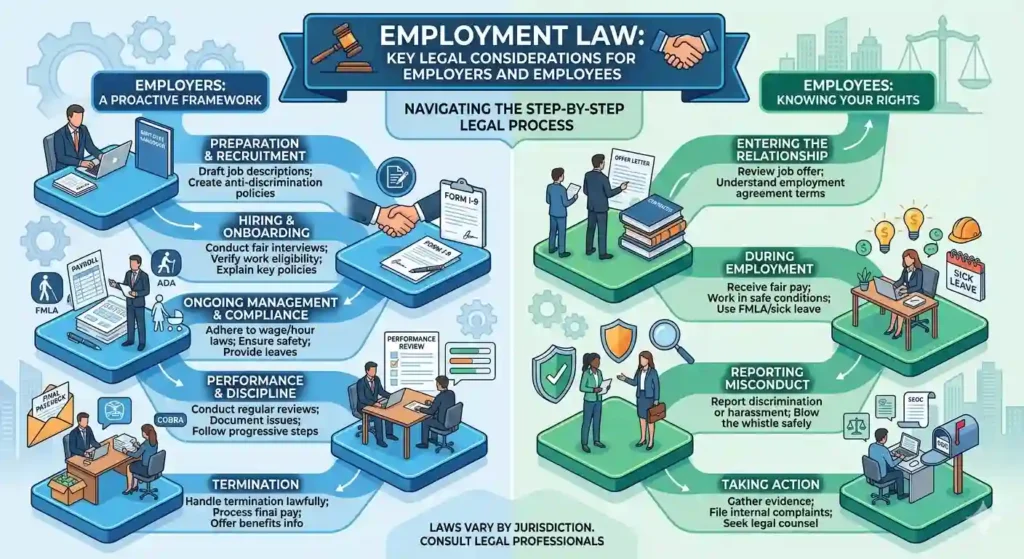
Understanding the Importance of Employment Law
First and foremost, employment law sets the foundation for healthy employer-employee relationships. It outlines the rights, duties, and protections that apply to both parties.
For employers, these laws help establish clear rules regarding hiring, wages, working hours, termination, and workplace conduct. As a result, companies can avoid disputes and maintain compliance with government regulations.
For employees, employment law ensures protection from exploitation, discrimination, and unfair dismissal. In other words, it provides workers with legal remedies when their rights are violated.
Moreover, employment laws also promote workplace harmony. When both sides understand the legal framework, misunderstandings and conflicts reduce significantly.
Employment Contracts and Their Legal Value
One of the most important elements in employment law is the employment contract. A properly drafted contract clearly defines the terms and conditions of employment.
Typically, an employment contract includes details such as:
- Job role and responsibilities
- Salary and benefits
- Working hours
- Leave policies
- Confidentiality obligations
- Termination procedures
Because of this clarity, both employers and employees know exactly what is expected.
Furthermore, written contracts help prevent disputes in the future. For instance, if a disagreement arises regarding salary or duties, the contract serves as legal evidence.
Therefore, employers should always ensure that employment agreements are well-structured and legally compliant.
Wage and Salary Regulations
Another crucial aspect of employment law relates to wages and salary payments. Indian law strictly regulates how employers must pay employees.
For example, the Minimum Wages Act, 1948 requires employers to pay workers at least the minimum wage fixed by the government. This rule protects workers from underpayment and financial exploitation.
Similarly, the Payment of Wages Act, 1936 ensures that employees receive their wages on time and without unauthorized deductions.
Additionally, many employees are entitled to benefits such as provident fund contributions under the Employees’ Provident Funds and Miscellaneous Provisions Act, 1952.
Consequently, employers must maintain proper payroll systems and records to comply with these legal requirements.
Workplace Safety and Employee Welfare
Workplace safety is another key component of employment law. Employers must provide a safe working environment for their employees.
This includes maintaining proper infrastructure, providing safety equipment, and following government safety standards.
Furthermore, organizations must also focus on employee welfare. Facilities such as restrooms, drinking water, medical assistance, and reasonable working hours are part of responsible workplace management.
When employers fail to provide safe conditions, employees may seek legal remedies. Therefore, proactive compliance with safety regulations is always the best approach.
Prevention of Workplace Harassment
In recent years, preventing workplace harassment has become a major focus in employment law. Employers must ensure that employees work in a respectful and secure environment.
The Sexual Harassment of Women at Workplace (Prevention, Prohibition and Redressal) Act, 2013 requires organizations to establish an Internal Complaints Committee (ICC) to address complaints of harassment.
Moreover, companies must conduct awareness programs and create clear policies against harassment.
Employees, on the other hand, should report inappropriate behavior promptly. When complaints arise, employers must investigate them fairly and take appropriate action.
By addressing harassment issues effectively, organizations create safer and more productive workplaces.
Employee Termination and Legal Procedures
Termination of employment is one of the most sensitive areas in employment law. If employers terminate employees without following proper legal procedures, disputes may arise.
The Industrial Disputes Act, 1947 regulates termination, layoffs, and retrenchment in many industries.
Generally, employers must:
- Provide notice before termination
- Follow fair disciplinary procedures
- Pay compensation where required
- Maintain proper documentation
If these steps are not followed, employees may challenge the termination in court or before labor authorities.
Therefore, employers should always handle termination matters carefully and legally.
Employee Rights and Legal Protections
Employees in India enjoy several legal protections under employment law. These rights ensure dignity, fairness, and financial security in the workplace.
Some important employee rights include:
- The right to fair wages
- The right to safe working conditions
- The right to protection from harassment
- The right to statutory benefits
- The right to raise grievances
In addition, employees have the right to approach legal authorities if their employer violates these protections.
However, employees must also fulfill their duties. They must perform their responsibilities honestly and follow workplace policies.
Thus, employment law promotes balance between rights and responsibilities.
Handling Workplace Disputes
Despite clear rules, workplace disputes may still occur. Common disputes include salary disagreements, wrongful termination, discrimination, and breach of contract.
In such situations, both employers and employees should attempt to resolve issues through dialogue first.
If internal resolution fails, parties may approach labor authorities or courts for legal remedies. Government labor departments and industrial tribunals play an important role in dispute resolution.
Legal guidance from experienced lawyers can help both parties understand their rights and avoid prolonged conflicts.
Importance of Compliance for Employers
Legal compliance is not merely a formality—it is essential for every organization.
When companies comply with employment laws, they protect themselves from penalties, lawsuits, and reputational damage.
Moreover, compliance improves employee trust and morale. Workers are more motivated when they feel respected and protected by law.
Employers should regularly review their policies, employment contracts, and HR practices to ensure they align with current legal requirements.
Professional legal advice can also help businesses stay updated with changing regulations.
Role of Legal Experts in Employment Matters
Employment law often involves complex regulations and procedural requirements. Therefore, legal assistance becomes extremely valuable.
Experienced employment lawyers can help with:
- Drafting employment contracts
- Advising on compliance with labor laws
- Representing parties in labor disputes
- Handling wrongful termination cases
- Addressing harassment complaints
By seeking legal guidance early, both employers and employees can prevent small issues from becoming major legal problems.
Frequently Asked Questions
Employment law refers to the legal rules that regulate the relationship between employers and employees in the workplace. It governs issues such as hiring, wages, working conditions, termination, and employee benefits. In India, laws like the Industrial Disputes Act, 1947 and the Minimum Wages Act, 1948 help ensure fair treatment of workers. For employers, these laws provide a clear framework for managing employees and avoiding legal disputes. For employees, they protect against unfair dismissal, discrimination, and exploitation. Therefore, understanding employment law helps both parties maintain a transparent and legally compliant workplace.
An employment contract clearly defines the terms and conditions of employment between the employer and the employee. It usually includes details such as job responsibilities, salary, working hours, leave policies, and termination procedures. Because of this clarity, both parties understand their rights and obligations from the beginning. A written contract also helps prevent misunderstandings and disputes in the future. If any disagreement arises, the contract can serve as legal proof of the agreed terms.
Employees in India have several legal protections under various labor laws. These include the right to receive minimum wages, safe working conditions, and protection from harassment. For example, the Sexual Harassment of Women at Workplace (Prevention, Prohibition and Redressal) Act, 2013 protects women from harassment at work. Additionally, employees are entitled to benefits such as provident fund contributions under the Employees’ Provident Funds and Miscellaneous Provisions Act, 1952. These protections ensure fairness and dignity in the workplace.
Generally, employers must follow proper legal procedures before terminating an employee. Many employment contracts require notice periods, and labor laws like the Industrial Disputes Act, 1947 provide protections against unfair termination. If an employer dismisses an employee without valid reasons or due process, the employee may challenge the action before labor authorities or courts.
Workplace disputes can often be resolved through internal discussions, mediation, or company grievance mechanisms. However, if the issue remains unresolved, employees or employers may approach labor authorities or legal forums for resolution. Legal guidance from experienced professionals can help both parties understand their rights and find practical solutions while avoiding prolonged litigation.
Conclusion
Employment law serves as the backbone of a fair and productive workplace. It protects employees from exploitation while also providing employers with a structured legal framework for managing their workforce.
From employment contracts and wage regulations to workplace safety and dispute resolution, employment law covers every stage of the employer-employee relationship. Therefore, both employers and employees must stay informed about their legal rights and responsibilities. Doing so helps avoid disputes and promotes a culture of fairness and professionalism.
At Rajendra Law Office LLP, we are committed to helping businesses and workers understand and navigate employment law effectively. Through practical legal advice and strong representation, we aim to ensure that workplace relationships remain lawful, balanced, and respectful.
Read More
- Cyber Crime Lawyers in India for Online Fraud Cases
- Employment Issue Lawyers in Chennai: Defending Your Workplace Rights
- Drafting Commercial Contracts: Expert Tips for Success
- Domestic vs. International Arbitration: A Comparative View
- Finding the Right Defense: How to Select Your Criminal Defense Attorney
- Ministry of Labour and Employment – Government of India