
Family Law Matters is the foundation of our lives. It gives us support, love, and a sense of belonging. However, even the strongest families face challenges. Sometimes, these challenges turn into legal issues that require careful handling. At such times, understanding your rights and taking proper legal guidance becomes essential.
Family law covers a wide range of issues, including marriage, divorce, child custody, maintenance, and property disputes. While these matters are deeply personal, they also involve legal rules that must be followed. Therefore, having the right legal support can make a significant difference.
At Rajendra Law Office LLP, we provide clear, practical, and compassionate legal guidance to help individuals and families navigate difficult situations. In this article, we will explain key aspects of family law and how proper legal assistance can protect your interests.
Family Law Matters: Legal Guidance for Family Issues – Rajendra Law Office LLP
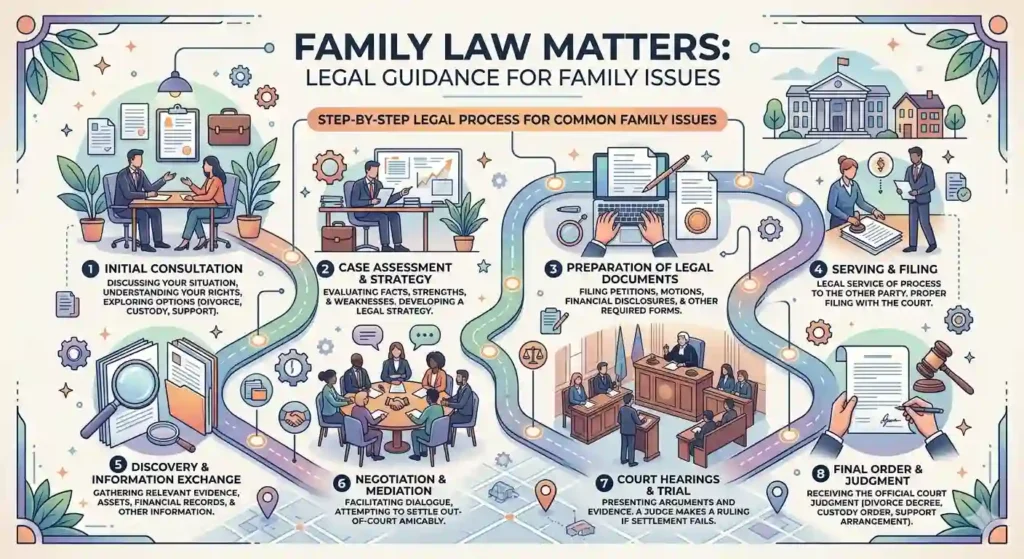
What is Family Law?
Family law is a branch of law that deals with legal issues related to family relationships. It includes matters such as marriage, divorce, child custody, adoption, and inheritance.
In India, family law is governed by different personal laws based on religion, as well as general laws like the Special Marriage Act. Therefore, the legal process may vary depending on the situation.
Because of this complexity, it is important to seek professional advice. A lawyer can guide you through the legal system and help you make informed decisions.
Common Family Law Issues
Family law matters can arise in many forms. Let us look at some of the most common issues faced by individuals and families.
1. Marriage and Registration
Marriage is not just a social or religious ceremony. It is also a legal relationship. Therefore, registering a marriage is very important.
A registered marriage provides legal proof and protects both spouses in case of disputes. Moreover, it helps in matters such as visa applications, property rights, and inheritance.
2. Divorce and Separation
Sometimes, relationships break down despite best efforts. In such cases, divorce or judicial separation may be the only solution.
Divorce can be either mutual or contested. In a mutual divorce, both parties agree to end the marriage peacefully. On the other hand, contested divorce involves disputes over issues like cruelty, desertion, or adultery.
Since divorce can be emotionally and legally complex, professional legal support is essential.
3. Child Custody and Visitation Rights
When parents separate, the welfare of the child becomes the top priority. Courts decide custody based on what is best for the child.
Custody may be given to one parent, while the other gets visitation rights. In some cases, joint custody is also possible.
Legal guidance ensures that the child’s interests are protected while also safeguarding parental rights.
4. Maintenance and Alimony
After separation or divorce, one spouse may be required to provide financial support to the other. This is known as maintenance or alimony.
The amount depends on factors such as income, lifestyle, and financial needs. Similarly, children are also entitled to maintenance.
A lawyer can help you claim fair maintenance or defend against unreasonable demands.
5. Domestic Violence
Domestic violence is a serious issue that affects many families. It includes physical, emotional, verbal, and financial abuse.
The law provides protection to victims through various remedies, including protection orders and residence rights.
If you are facing such a situation, seeking immediate legal help is crucial for your safety and well-being.
6. Property and Inheritance Disputes
Family disputes often arise over property and inheritance. These issues can become complicated, especially when multiple family members are involved.
Proper legal advice helps in understanding rights, resolving disputes, and ensuring fair distribution of assets.
Why Legal Guidance is Important
Many people try to handle family disputes on their own. While this may seem convenient, it can lead to mistakes and misunderstandings.
Legal guidance is important for several reasons.
First, it helps you understand your rights and obligations clearly. Second, it ensures that all legal procedures are properly followed. Third, it protects you from unfair agreements or decisions.
Most importantly, a lawyer can help resolve disputes in a structured and lawful manner, reducing stress and conflict.
The Role of a Family Lawyer
A family lawyer plays a crucial role in handling sensitive issues. Their work goes beyond legal advice.
Providing Clear Advice
A lawyer explains legal options in simple terms. This helps clients make informed decisions without confusion.
Drafting Legal Documents
Family law involves various documents such as petitions, agreements, and affidavits. Proper drafting ensures clarity and legal validity.
Representing Clients in Court
If a matter goes to court, a lawyer represents the client and presents their case effectively.
Encouraging Settlement
Whenever possible, lawyers try to resolve disputes through negotiation or mediation. This saves time, money, and emotional stress.
Steps to Take When Facing a Family Issue
If you are dealing with a family-related legal problem, taking the right steps early can make a big difference.
Step 1: Stay Calm and Think Clearly
Family disputes are emotional. However, it is important to stay calm and avoid making rushed decisions.
Step 2: Gather Important Documents
Collect all relevant documents such as marriage certificates, financial records, and property papers.
Step 3: Seek Legal Advice Early
Consult a qualified lawyer as soon as possible. Early advice can prevent complications later.
Step 4: Understand Your Options
Learn about your legal rights and possible solutions. This will help you choose the best course of action.
Step 5: Aim for Amicable Resolution
Whenever possible, try to resolve issues peacefully. This is especially important when children are involved.
Importance of Mediation in Family Disputes
Mediation is an effective way to resolve family disputes without going to court. In this process, a neutral third party helps both sides reach an agreement.
Mediation offers several benefits. It is faster, less expensive, and more private than court proceedings. Moreover, it encourages cooperation and reduces conflict.
Therefore, many family disputes can be resolved successfully through mediation with proper legal support.
How Rajendra Law Office LLP Can Help
At Rajendra Law Office LLP, we understand that family law matters are not just legal issues. They involve emotions, relationships, and personal well-being.
That is why we provide:
- Personalized legal advice based on your situation
- Clear explanation of your rights and options
- Strong representation in court, when needed
- Support in negotiation and mediation
- Practical solutions to protect your interests
We handle every case with care, confidentiality, and professionalism. Our goal is to help you move forward with confidence and peace of mind.
Why Early Legal Intervention Matters
Many people delay seeking legal help. Unfortunately, this often makes the situation more complicated.
Early legal intervention helps in:
- Preventing escalation of disputes
- Protecting your rights from the beginning
- Avoiding costly legal battles
- Achieving faster resolution
Therefore, it is always wise to consult a lawyer at the earliest stage.
Frequently Asked Questions
Family law in India covers legal issues related to family relationships, including marriage, divorce, child custody, maintenance, adoption, and property disputes. It operates under various personal laws and statutes. Therefore, proper legal guidance helps individuals understand their rights and follow the correct legal procedures in each situation.
You should consult a family lawyer as soon as a dispute arises or even before taking any major legal step. Early legal advice helps you avoid mistakes, understand your options, and protect your rights. Moreover, timely guidance often leads to faster and more effective resolutions.
Courts always prioritize the welfare and best interests of the child. They consider factors such as the child’s age, emotional needs, education, and the ability of each parent to provide a stable environment. As a result, custody decisions may vary, including sole or joint custody arrangements.
Maintenance refers to financial support provided during or after legal proceedings, while alimony is usually granted after divorce as a long-term financial arrangement. Both aim to ensure that the dependent spouse or children can maintain a reasonable standard of living.
Yes, many family disputes can be resolved through mediation or mutual settlement. This approach is faster, less stressful, and more cost-effective. With proper legal assistance, parties can reach fair agreements while maintaining privacy and reducing conflict significantly in most cases.
Conclusion
Family law matters can be challenging and emotional. However, with the right legal guidance, you can handle these issues effectively and protect your rights.
Whether it is marriage, divorce, child custody, or property disputes, each situation requires careful attention and proper legal support.
At Rajendra Law Office LLP, we are committed to providing reliable and compassionate legal services. We stand by our clients at every step and help them find practical solutions to complex family issues.
If you are facing a family law matter, do not face it alone. Seek professional guidance and take the first step towards a secure and stable future.
Read More
- Interlocutory Application vs Interim Application: Key Differences, Examples & Legal Usage in India
- Expert Chennai Lawyers: Your Partners in Legal Matters
- Unlocking Divorce Mediation Benefits: Insights from a Family Law Advocate
- Experienced Family Lawyers in Chennai
- RERA Compliance Lawyer Chennai for Builders: Expert Legal Support
- Ministry of Law & Justice (Government of India)