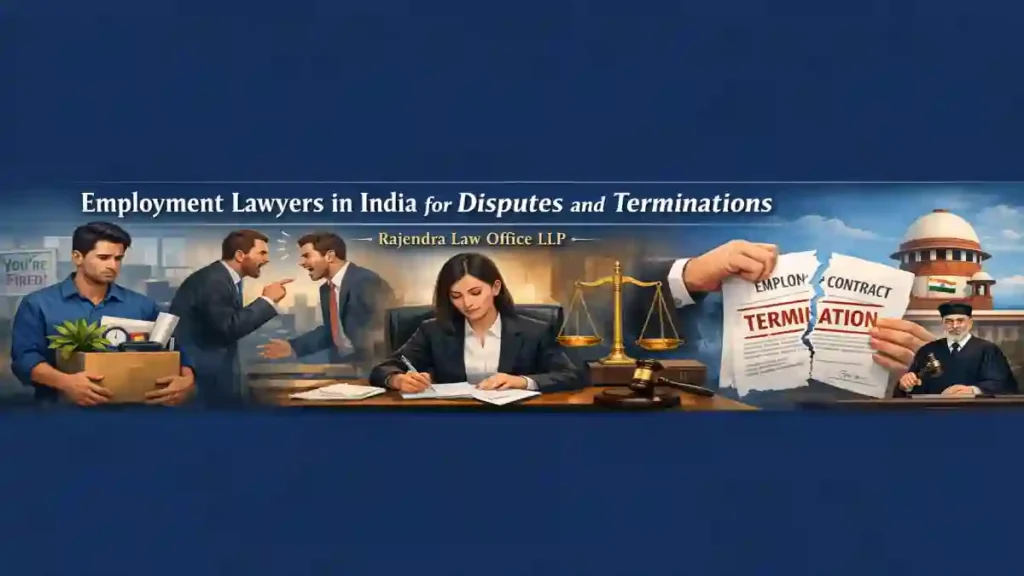
Employment Lawyers in India – Employment is not just about earning a salary; it is closely tied to dignity, stability, and personal growth. However, disputes between employers and employees are quite common in India. These conflicts may arise due to unfair termination, salary issues, harassment, or breach of contract. In such situations, employment lawyers play a vital role. They guide both employees and employers through complex legal processes and ensure that justice is served.
At Rajendra Law Office LLP, we understand that workplace disputes can be stressful and confusing. Therefore, we offer clear legal guidance and strong representation to protect your rights. In this article, we will explain how employment lawyers in India help resolve disputes and handle termination matters effectively.
Employment Lawyers in India for Disputes and Terminations – Rajendra Law Office LLP

Understanding Employment Law in India
To begin with, employment law in India is governed by various statutes and regulations. These laws are designed to maintain a balance between the rights of employees and the responsibilities of employers. Some key areas include wages, working conditions, termination rules, and dispute resolution.
Moreover, employment law is not a single, unified law. Instead, it consists of multiple acts such as the Industrial Disputes Act, Shops and Establishments Acts, and labour codes. Because of this complexity, individuals often find it difficult to understand their rights without professional help. This is exactly where employment lawyers step in.
Common Types of Employment Disputes
Workplace conflicts can arise in many forms. Let us look at some of the most common disputes where legal assistance becomes essential.
1. Wrongful Termination
First and foremost, wrongful termination is one of the most frequent issues. It occurs when an employee is dismissed without valid reason or without following proper procedure. For example, termination without notice, lack of inquiry, or discrimination can make a dismissal illegal.
2. Unpaid Salaries and Benefits
In many cases, employees face delays or denial of salary, bonuses, or gratuity. This not only affects their financial stability but also violates legal provisions. Therefore, legal intervention becomes necessary to recover dues.
3. Workplace Harassment
Another serious concern is harassment at the workplace, including sexual harassment or mental harassment. Employees have the right to work in a safe and respectful environment. When this right is violated, legal action can be taken.
4. Breach of Employment Contract
Sometimes, employers or employees may fail to honour the terms of an employment agreement. This could involve non-compete clauses, confidentiality breaches, or sudden resignation without notice.
5. Discrimination and Unfair Labour Practices
Discrimination based on gender, religion, caste, or disability is strictly prohibited. Similarly, unfair labour practices such as forced overtime or denial of leave can lead to disputes.
Role of Employment Lawyers in Dispute Resolution
Now that we understand the types of disputes, let us explore how employment lawyers help resolve them.
Legal Advice and Consultation
To start with, employment lawyers provide clear legal advice. They assess your case, explain your rights, and suggest the best course of action. This step is crucial because it helps you make informed decisions.
Drafting and Reviewing Documents
In addition, lawyers assist in drafting legal notices, employment contracts, and settlement agreements. They also review documents to ensure that your interests are protected.
Representation Before Authorities
Furthermore, employment lawyers represent clients before labour courts, tribunals, and other authorities. They present arguments, submit evidence, and fight for a fair outcome.
Negotiation and Settlement
Not every dispute needs to go to court. In fact, many cases are resolved through negotiation. Lawyers act as mediators and help both parties reach a mutually acceptable solution.
Legal Framework for Termination in India
Termination of employment is a sensitive issue. Therefore, Indian law lays down specific procedures that must be followed.
Notice Period and Compensation
Generally, employers must provide a notice period or pay salary in lieu of notice. Failure to do so can make the termination illegal.
Domestic Inquiry
In cases of misconduct, employers must conduct a fair inquiry. This includes giving the employee an opportunity to defend themselves. Without this step, termination may not stand legally.
Retrenchment Rules
For companies laying off employees due to financial reasons, retrenchment rules apply. These include compensation and prior notice to authorities.
Protection Against Unfair Dismissal
Employees are protected against arbitrary dismissal. If termination is found to be unjust, courts may order reinstatement or compensation.
How Rajendra Law Office LLP Can Help
At Rajendra Law Office LLP, we take a client-focused approach. We understand that every case is unique, and therefore, we tailor our services accordingly.
Personalized Legal Strategy
Firstly, we analyze your case in detail and develop a strategy that suits your situation. Whether you are an employee or an employer, we ensure that your interests are safeguarded.
Strong Representation
Secondly, we provide strong representation before courts and tribunals. Our team works diligently to present your case effectively and achieve the best possible outcome.
Quick and Efficient Solutions
Additionally, we aim to resolve disputes as quickly as possible. Through negotiation and mediation, we try to avoid lengthy litigation whenever feasible.
Transparent Communication
Most importantly, we maintain clear and honest communication with our clients. We keep you informed at every stage of the process, so you are never left in the dark.
Steps to Take if You Face Employment Issues
If you are dealing with a workplace dispute or termination, it is important to act wisely. Here are some steps you should follow:
1. Gather Evidence
To begin with, collect all relevant documents such as appointment letters, salary slips, emails, and notices. These will support your case.
2. Understand Your Rights
Next, try to understand your legal rights. However, do not rely solely on online information. Consulting a lawyer is always advisable.
3. Send a Legal Notice
In many cases, sending a legal notice can resolve the issue. It formally communicates your grievances and demands.
4. Seek Legal Representation
If the matter is not resolved, approach an experienced employment lawyer. They will guide you through the legal process and represent you effectively.
Importance of Timely Legal Action
Timing plays a crucial role in employment disputes. Delayed action can weaken your case or even make it invalid due to limitation periods. Therefore, it is always better to seek legal advice at the earliest.
Moreover, early intervention often leads to quicker resolution. It also helps preserve evidence and strengthens your position.
Benefits of Hiring an Employment Lawyer
You might wonder whether hiring a lawyer is necessary. Let us look at some clear benefits:
- Expert Knowledge: Lawyers understand complex laws and procedures.
- Strategic Approach: They develop effective strategies for your case.
- Reduced Stress: Handling legal matters alone can be overwhelming.
- Better Outcomes: Professional representation increases the chances of success.
Challenges in Employment Disputes
While legal remedies are available, employment disputes can still be challenging. For instance, cases may take time, and evidence may be difficult to obtain. Additionally, power imbalance between employer and employee can make matters more complicated.
However, with the right legal support, these challenges can be managed effectively. A skilled lawyer ensures that your voice is heard and your rights are protected.
Future of Employment Law in India
Employment law in India is evolving. With the introduction of new labour codes, the legal landscape is becoming more structured. These changes aim to simplify compliance and improve worker protection.
At the same time, the rise of remote work and gig economy has created new challenges. Therefore, employment lawyers must stay updated and adapt to changing scenarios.
Frequently Asked Questions
Wrongful termination happens when an employer dismisses an employee without following legal procedures or without a valid reason. For example, termination without notice, without conducting a proper inquiry in case of misconduct, or termination based on discrimination can be considered unlawful. In such cases, an employee has the right to challenge the dismissal before labour courts or tribunals. Legal remedies may include reinstatement, compensation, or settlement depending on the facts of the case.
Yes, absolutely. If your employer has not paid your salary, bonus, gratuity, or other dues, you can take legal action. An employment lawyer will first send a legal notice demanding payment. If the employer still fails to comply, the lawyer can file a claim before the appropriate authority or court. This process ensures recovery of rightful dues along with possible interest or penalties.
An employment lawyer provides end-to-end assistance. They evaluate your case, check whether the termination was legal, and guide you on the best course of action. They also draft legal notices, represent you before courts or tribunals, and negotiate settlements. Their expertise increases your chances of getting fair compensation or reinstatement.
Not always. Many employment disputes are resolved through negotiation, mediation, or settlement outside court. Lawyers often try to resolve issues amicably to save time and costs. However, if the dispute is serious or unresolved, approaching a court or tribunal becomes necessary.
You should contact a lawyer as soon as possible. Early action helps preserve evidence and strengthens your case. Moreover, legal claims are subject to limitation periods, so delay may reduce your chances of success.
Conclusion
In conclusion, employment disputes and terminations are serious matters that require careful handling. Whether you are facing wrongful termination, unpaid dues, or workplace harassment, legal assistance can make a significant difference.
Employment lawyers in India play a crucial role in protecting rights and ensuring fair treatment. They provide guidance, representation, and solutions that help resolve conflicts efficiently.
At Rajendra Law Office LLP, we are committed to delivering reliable and effective legal services. We stand by our clients and work tirelessly to achieve justice. If you are facing an employment issue, do not hesitate to seek professional help. Acting at the right time can protect your career, finances, and peace of mind.
Read More
- Understanding Eminent Domain and Condemnation: Legal Implications
- Expert Divorce Lawyers in Chennai
- Arbitration vs. Mediation: Understanding the Differences
- Unlocking Plea Bargaining: Its Role and Impact in Criminal Cases
- Employment Law: Key Legal Considerations for Employers and Employees
- Ministry of Labour & Employment (Government of India)