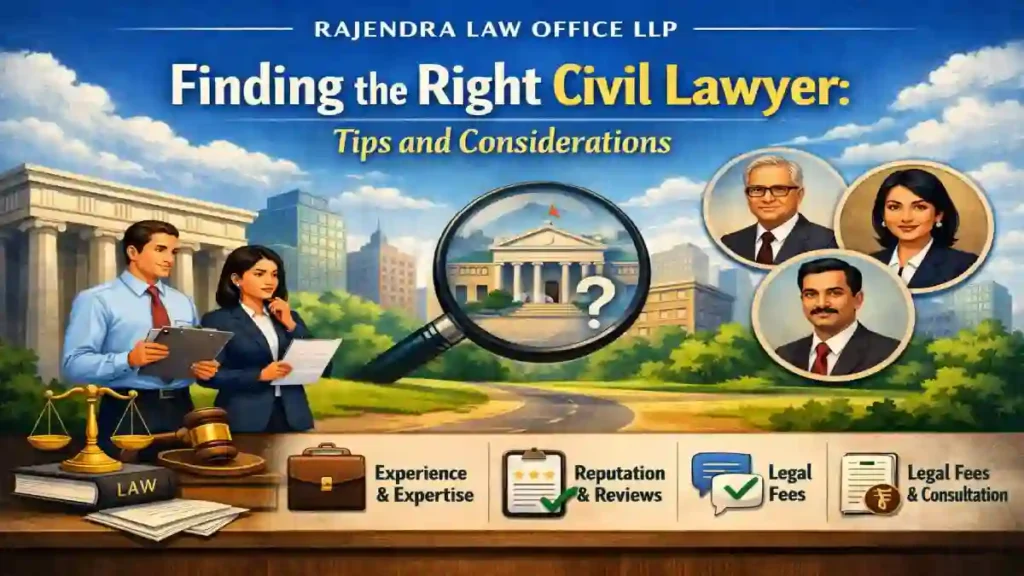
Finding the Right Civil Lawyer – Civil disputes can affect property rights, contracts, business interests, family assets, and financial stability. Therefore, selecting the right civil lawyer becomes a crucial decision. A qualified advocate helps clients understand legal rights and available remedies. Moreover, proper legal representation improves case preparation and litigation strategy. Civil matters commonly involve property disputes, recovery suits, injunctions, partition actions, contract breaches, and declaration suits. Courts examine pleadings, evidence, and applicable laws carefully. Consequently, legal expertise often influences outcomes significantly. Clients should assess experience, communication skills, and legal knowledge before engagement. A lawyer must understand the Code of Civil Procedure, 1908 and related statutes. Effective representation also reduces procedural delays and legal risks. Therefore, informed selection strengthens the chances of achieving favorable results.
Finding the Right Civil Lawyer: Tips and Considerations – Rajendra Law Office LLP
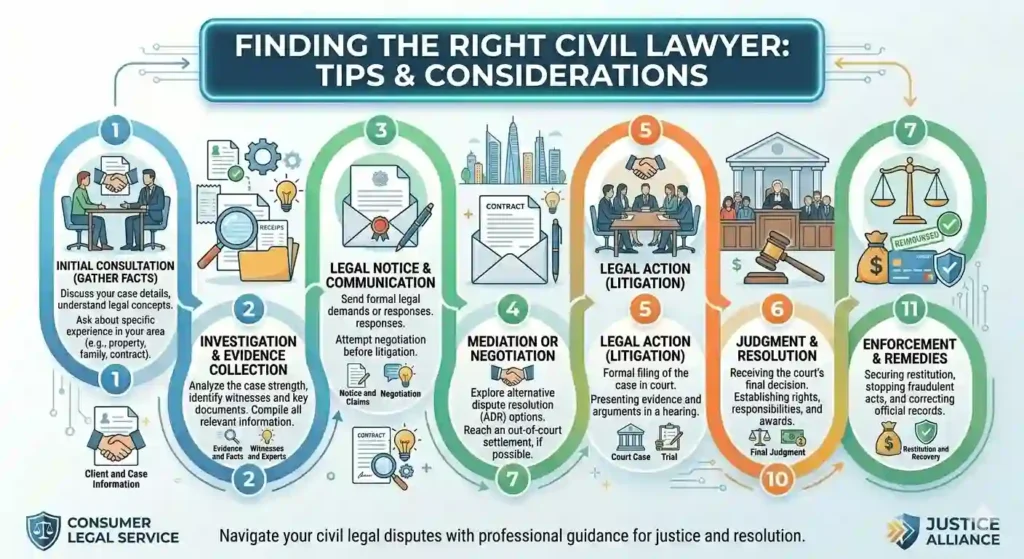
| Civil Issue | Forum |
|---|---|
| Property Dispute | Civil Court |
| Contract Breach | Civil Court |
| Recovery Suit | Commercial Court |
| Injunction Matter | District Court |
Understanding Common Civil Legal Issues
Civil litigation covers a broad range of disputes. Individuals frequently seek relief regarding property ownership and possession. Additionally, companies face contractual disputes, commercial recovery matters, and partnership conflicts. NGOs may encounter trust administration issues and governance disputes. NRIs often require representation in property and inheritance matters. Therefore, selecting a lawyer with relevant experience remains essential. Legal professionals evaluate facts and recommend suitable remedies. Common remedies include injunctions, declarations, damages, possession recovery, and specific performance. Consequently, clients receive practical solutions based on legal principles. Early legal advice helps prevent escalation and protects valuable rights.
Essential Qualities of a Competent Civil Lawyer
A competent civil lawyer combines legal knowledge with strategic thinking. Moreover, strong communication skills improve client understanding and case management. Lawyers should explain risks, timelines, and expected outcomes clearly. Experience before civil courts and tribunals remains equally important. Therefore, clients should verify qualifications and professional standing. Legal research abilities help advocates address complex issues effectively. Consistent responsiveness also builds trust throughout proceedings. Consequently, clients remain informed during every stage of litigation.
Evaluating Legal Experience and Expertise
Experience remains a primary factor when selecting legal counsel. Lawyers handling similar disputes often understand procedural and practical challenges better. Furthermore, specialized experience improves case assessment and legal strategy. Clients should review previous work involving comparable matters.
Important Evaluation Factors
- Civil litigation experience
- Property dispute handling
- Contract dispute expertise
- Court appearance record
- Legal drafting skills
Therefore, careful evaluation helps identify suitable legal representation.
Knowledge of Courts, Tribunals and Jurisdiction
Jurisdiction determines where legal proceedings should commence. Therefore, lawyers must understand territorial and pecuniary jurisdiction rules. Civil courts, commercial courts, revenue authorities, and tribunals handle different disputes. Moreover, procedural compliance prevents unnecessary objections and delays. Experienced advocates assess jurisdiction before initiating proceedings. Consequently, clients avoid costly procedural errors.
Relevant Forums
- District Civil Courts
- Commercial Courts
- Appellate Courts
- Revenue Authorities
- Tribunals
Importance of Communication and Transparency
Effective communication forms the foundation of a successful lawyer-client relationship. Lawyers should provide realistic assessments rather than exaggerated promises. Furthermore, transparent fee discussions prevent misunderstandings. Clients deserve regular updates regarding hearings and developments. Therefore, communication standards should influence selection decisions. Clear guidance improves confidence and decision-making throughout litigation.
Legal Research and Case Preparation Skills
Strong case preparation often determines litigation success. Lawyers must analyze documents, identify legal issues, and develop persuasive arguments. Additionally, thorough preparation strengthens evidence presentation. Courts expect precise pleadings supported by applicable laws. Therefore, research skills remain essential. Professional preparation also enhances settlement opportunities before trial. Consequently, clients benefit from stronger legal positions.
Reviewing Legal Fees and Service Scope
Legal fees vary depending upon complexity, urgency, and forum requirements. Clients should understand the scope of services before engagement. Furthermore, written fee structures improve transparency and accountability. Legal support may include consultation, drafting, appearances, negotiations, and appeals. Therefore, discussing costs early helps avoid future disputes.
| Service | Typical Support |
|---|---|
| Consultation | Legal Advice |
| Drafting | Pleadings |
| Representation | Court Appearances |
| Appeals | Higher Court Proceedings |
Checking Reputation and Client Feedback
Reputation often reflects professionalism and service quality. Clients should review testimonials, references, and professional achievements carefully. Moreover, positive feedback may indicate reliability and competence. Ethical conduct remains equally important. Therefore, individuals should verify credentials before appointing counsel. Proper research improves confidence and reduces uncertainty.
Legal Remedies Available in Civil Disputes
Civil law provides several remedies for protecting rights and resolving disputes. Courts may grant injunctions, declarations, damages, possession orders, and specific performance. Furthermore, mediation and settlement options may reduce litigation costs. Lawyers assess facts and recommend appropriate remedies. Therefore, clients receive solutions tailored to their objectives. Strategic legal planning improves enforcement prospects and procedural efficiency. Consequently, effective representation supports favorable outcomes.
Importance of Evidence Under Modern Laws
Evidence remains central to every civil proceeding. Courts evaluate documentary records, witness testimony, and electronic evidence carefully. Furthermore, the Bharatiya Sakshya Adhiniyam, 2023 recognizes electronic records. Lawyers must organize evidence systematically and lawfully. Therefore, clients should preserve contracts, correspondence, and financial records. Proper documentation strengthens claims and defenses significantly. Consequently, evidence management remains a critical litigation component.
Interaction with Criminal and Regulatory Proceedings
Certain civil disputes involve parallel criminal allegations. Fraud, forgery, and cheating claims may attract provisions under BNS, 2023. Additionally, BNSS, 2023 governs investigations and criminal procedures. Police stations and investigating agencies may examine related complaints. Therefore, coordinated legal strategies become important. Lawyers ensure consistency across proceedings and protect client interests effectively.
Legal Support from Rajendra Law Office LLP
Rajendra Law Office LLP provides comprehensive assistance for civil disputes. The firm advises individuals, companies, NGOs, and NRIs regarding litigation and dispute resolution. Furthermore, lawyers handle property disputes, contract claims, recovery proceedings, and injunction matters. Clients receive practical legal guidance and strategic representation. Therefore, the firm helps protect rights and achieve effective remedies. Professional support improves case management and litigation outcomes.
Key Steps Before Hiring a Civil Lawyer
Choosing a civil lawyer requires careful consideration and informed decision-making. Clients should evaluate expertise, communication, fees, and reputation systematically. Moreover, they should discuss strategy and expected timelines during consultations. Legal representation affects both costs and outcomes. Therefore, selecting experienced counsel remains essential. A thoughtful approach reduces risks and strengthens legal protection. Consequently, clients can pursue remedies confidently and efficiently.
Frequently Asked Questions
Q1. What types of cases does a civil lawyer handle?
Civil lawyers handle property disputes, contract breaches, recovery suits, injunctions, declarations, partition matters, and compensation claims.
Q2. How do I verify a lawyer’s experience?
Review qualifications, litigation history, client feedback, court appearances, and experience handling similar legal disputes.
Q3. Why is jurisdiction important in civil cases?
Jurisdiction determines the proper court or forum and prevents procedural objections that may delay proceedings.
Q4. Can a civil dispute involve criminal allegations?
Yes. Fraud, forgery, cheating, and related conduct may trigger parallel proceedings under applicable criminal laws.
Q5. What evidence helps strengthen a civil case?
Contracts, property records, financial documents, correspondence, electronic records, and witness testimony support legal claims.
Q6. How can a civil lawyer assist before litigation begins?
Lawyers provide legal advice, risk assessment, notices, negotiations, mediation support, and settlement strategies.
Read More
- Find Top Lawyers in Chennai: Your Legal Solutions Await
- Insurance Law: Your Rights and Legal Protections
- Immigration Lawyers in Chennai for Visa Services
- Navigating Trademark Law and Registration: Essential Steps and Procedures
- Family Dispute Lawyers in Chennai: Finding Harmony in Conflict
- National Legal Services Authority (NALSA)