
Hiring a Criminal Defense Lawyer – A criminal accusation can threaten liberty, reputation, employment, family relationships, and financial stability. Therefore, early legal representation can significantly influence the direction of a criminal case. A criminal defense lawyer examines allegations before you make damaging statements. The lawyer also explains arrest procedures, bail options, investigation risks, and available defenses. Since July 1, 2024, India’s criminal-law framework includes the Bharatiya Nyaya Sanhita, 2023. The Bharatiya Nagarik Suraksha Sanhita, 2023 governs criminal procedure. The Bharatiya Sakshya Adhiniyam, 2023 governs evidence. Accordingly, lawyers must apply the current statutory framework to new proceedings. A lawyer can also identify jurisdictional defects and procedural violations. Moreover, timely intervention may protect evidence before it disappears. Rajendra Law Office LLP assists accused persons through investigation, bail, trial, and appellate stages.
Maximizing Your Defense: Advantages of Hiring a Criminal Defense Lawyer – Rajendra Law Office LLP
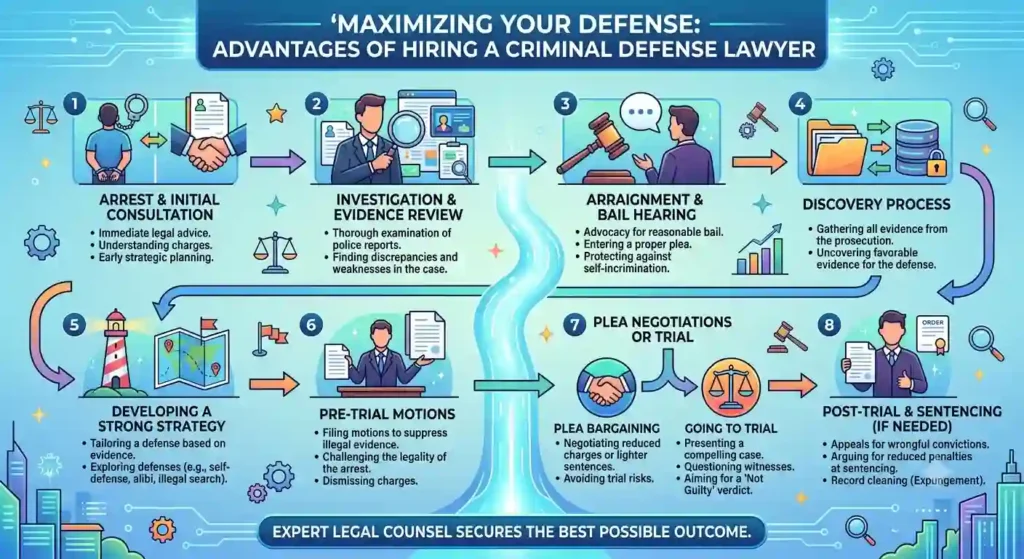
Understanding Criminal Charges and Potential Consequences
Criminal cases can involve offences affecting individuals, businesses, property, finances, public order, or personal safety. Common allegations include cheating, criminal breach of trust, assault, theft, forgery, intimidation, cybercrime, and narcotics offences. However, every accusation requires analysis of its statutory ingredients and available evidence. A criminal defense lawyer tests whether the complaint actually establishes each essential element. The lawyer also examines contradictions, delay, motive, jurisdiction, identification, and documentary evidence. Furthermore, the lawyer assesses whether police action complies with applicable procedural safeguards. Depending upon the offence, consequences may include arrest, custody, trial, conviction, imprisonment, fine, or other statutory penalties. Therefore, early defense planning remains important even before filing a charge-sheet. Legal advice can also prevent accidental admissions during police interaction. Consequently, professional representation helps an accused understand both immediate risks and long-term defense opportunities.
Strategic Defense Planning for Accused Persons
Every criminal case requires a strategy based on allegations, evidence, witnesses, procedural history, and jurisdiction. Initially, counsel should obtain the FIR, complaint, notices, seizure records, statements, and relevant documents. Next, the lawyer should identify weaknesses within the prosecution theory. The defense may challenge ingredients, evidence, identification, admissibility, jurisdiction, or procedural compliance. Additionally, counsel can determine whether bail, discharge, quashing, or another remedy deserves immediate consideration. Different cases require different approaches rather than standard responses. For example, a false complaint may require an entirely different strategy from a genuine factual dispute. Similarly, cybercrime cases require careful examination of electronic records and technical evidence. Therefore, Rajendra Law Office LLP develops case-specific defense strategies rather than relying on generic arguments. This approach helps protect legal rights while addressing the prosecution’s strongest allegations.
Building a Strong Criminal Defense
Bail, Anticipatory Bail and Custody Protection
Bail can become the first critical objective after criminal allegations arise. Anticipatory bail can protect an eligible person who reasonably apprehends arrest for a non-bailable offence. Under the present procedural framework, counsel must examine the relevant BNSS provisions carefully. Courts consider factors such as accusation seriousness, antecedents, investigation needs, and risk of absconding. Therefore, an anticipatory bail application requires strong factual preparation. Regular bail becomes relevant after arrest, subject to statutory provisions and judicial discretion. A lawyer can present employment, residence, medical, family, cooperation, and investigation-related circumstances. Additionally, counsel can challenge unnecessary custodial interrogation where facts support such arguments. Bail orders can also contain conditions requiring cooperation or restricting travel. Consequently, experienced representation can improve the presentation of relevant facts before the Sessions Court or High Court.
Handling Police Investigation and Notices
Police investigation can determine the evidence ultimately presented before a criminal court. Therefore, accused persons should avoid ignoring lawful notices or making uninformed statements. A defense lawyer can explain the purpose and legal effect of investigation notices. Counsel can also advise clients regarding attendance, documents, questioning, and lawful cooperation. Furthermore, lawyers can monitor whether investigators follow applicable procedural requirements. Where necessary, counsel can challenge unlawful detention, coercive conduct, or procedural irregularities through appropriate legal remedies. Police stations may investigate offences based on territorial or statutory jurisdiction. However, jurisdictional issues can become complicated when offences involve multiple locations. Cybercrime investigations can also cross state boundaries and involve electronic evidence. Consequently, early legal intervention can prevent avoidable mistakes during investigation. Rajendra Law Office LLP can advise accused persons regarding police complaints, notices, searches, seizures, statements, and investigation strategy.
Evidence Analysis Under the BSA
Evidence frequently determines whether a prosecution can establish guilt beyond reasonable doubt. The Bharatiya Sakshya Adhiniyam, 2023 now provides India’s principal evidence framework for applicable proceedings. Electronic records have become increasingly important in cybercrime and financial investigations. These records may include emails, messages, CCTV footage, call records, device data, and transaction information. Therefore, lawyers must examine authenticity, relevance, reliability, custody, and statutory admissibility. A defense lawyer can compare prosecution documents against witness statements and other materials. Contradictions can reveal weaknesses requiring careful cross-examination. Additionally, missing documents may affect the prosecution’s ability to establish its case. Counsel can also challenge evidence where statutory requirements remain unsatisfied. Consequently, detailed evidence review can expose inconsistencies that ordinary case review might overlook. Strong evidence preparation also supports applications for discharge, bail, acquittal, or other appropriate remedies.
Cross-Examination and Trial Representation
Trial advocacy requires preparation long before witnesses enter the courtroom. A defense lawyer studies every statement, document, exhibit, and prosecution allegation. Counsel then develops cross-examination objectives based upon disputed facts and evidentiary weaknesses. Effective cross-examination can expose contradictions, omissions, bias, unreliable identification, or inconsistent testimony. However, unnecessary questioning can sometimes strengthen a prosecution witness. Therefore, experienced advocates ask focused questions that serve defined defense objectives. Trial lawyers also address objections, exhibits, legal submissions, and procedural applications. Furthermore, counsel can present defense evidence where strategically appropriate. Criminal courts assess the entire evidentiary record rather than isolated allegations. Consequently, consistent courtroom representation can protect the accused throughout trial proceedings. Rajendra Law Office LLP provides criminal litigation support before Magistrate Courts, Sessions Courts, and the Madras High Court.
Quashing, Discharge and Other Pre-Trial Remedies
Some criminal proceedings may justify intervention before a full trial begins. Depending upon the facts, accused persons may consider discharge applications or High Court remedies. Quashing may become relevant where allegations fail to disclose an offence or proceedings constitute legal abuse. However, courts apply established principles before terminating criminal proceedings at an early stage. Therefore, counsel must examine the complaint, FIR, statutory ingredients, and supporting materials carefully. Discharge applications similarly depend upon the nature of the offence and procedural stage. Additionally, lawyers can identify defects involving sanction, limitation, jurisdiction, or mandatory statutory requirements. These remedies can prevent unnecessary trials where the prosecution lacks sufficient legal foundation. Nevertheless, courts will not normally conduct a full trial during preliminary proceedings. Consequently, persuasive legal drafting requires precise statutory and factual analysis.
Criminal Appeals and Revision Proceedings
An adverse criminal order does not necessarily end every available legal remedy. Depending upon the order, accused persons may have appellate or revisional remedies. Counsel must identify the correct forum, limitation period, statutory provision, and challengeable findings. Appeals can address conviction, sentence, evidentiary appreciation, procedural errors, or legal interpretation. Revision proceedings may address specific jurisdictional or legal errors where applicable. Furthermore, suspension of sentence and bail pending appeal may require separate applications. A lawyer should obtain certified copies and review the complete trial record promptly. Delay can create procedural complications and potentially affect available remedies. Therefore, appellate strategy should begin immediately after an adverse judgment. Rajendra Law Office LLP can review trial findings and formulate suitable appellate strategies before competent courts.
Protecting Reputation, Employment and Family Interests
Criminal allegations can create consequences beyond imprisonment or monetary penalties. Employers may react to allegations, arrests, or pending criminal proceedings. Family relationships can also suffer because of social pressure and public accusations. Therefore, defense planning should consider practical consequences alongside courtroom strategy. Lawyers can advise clients about lawful communication and responsible handling of sensitive allegations. Additionally, counsel can help prevent unnecessary disclosure of confidential case information. Defamation risks may also arise when allegations spread publicly. However, responses should avoid creating additional criminal or civil exposure. Consequently, accused persons should avoid emotional social-media statements during active investigations. Professional legal advice can provide a controlled strategy for protecting reputation and personal interests. A strong defense therefore considers the person’s complete circumstances rather than focusing solely on courtroom proceedings.
Criminal Cases Involving Women, Men and NRIs
Criminal allegations can affect women, men, older citizens, professionals, entrepreneurs, and NRIs differently. Women may require urgent assistance involving domestic allegations, workplace disputes, or protection proceedings. Men may face allegations involving matrimonial disputes, financial transactions, property conflicts, or workplace complaints. NRIs can face additional challenges involving immigration, overseas residence, warrants, travel, and representation. Therefore, nationality or residence can create important procedural considerations. An NRI should obtain legal advice before travelling to India when serious allegations exist. Counsel can assess bail, appearance, exemption, warrant, passport, and jurisdiction issues where applicable. Additionally, lawyers can coordinate documentation and representation requirements from abroad. The defense strategy should remain evidence-based regardless of gender or nationality. Consequently, tailored legal assistance can reduce avoidable procedural risks for clients facing criminal proceedings in India.
Cybercrime, Financial Fraud and Digital Evidence
Cybercrime allegations increasingly involve electronic transactions, online identities, devices, social-media accounts, and financial records. Financial fraud cases may involve cheating, forgery, criminal breach of trust, or related statutory offences. Therefore, digital evidence can become central to both prosecution and defense. Lawyers should examine transaction histories, device records, messages, emails, account access, and relevant forensic materials. The BSA framework makes evidence analysis especially important in technology-driven prosecutions. Moreover, investigators may collect evidence from banks, platforms, telecommunications providers, or digital devices. Defense counsel can challenge assumptions connecting an accused person with disputed digital activity. A person’s account appearing in a transaction does not automatically establish criminal guilt. Consequently, technical evidence requires careful factual and legal examination. Rajendra Law Office LLP assists clients facing cybercrime, online fraud, banking fraud, and electronic-evidence disputes.
Jurisdiction, Courts and Criminal Forums
Selecting the correct criminal forum can significantly affect procedural outcomes. Magistrate Courts generally handle matters within their statutory jurisdiction. Sessions Courts hear serious offences assigned under criminal procedure. The Madras High Court exercises constitutional and statutory jurisdiction over appropriate criminal matters. Furthermore, specialised courts and tribunals may handle offences created under particular legislation. Lawyers must therefore identify the applicable court before filing applications or appeals. Territorial jurisdiction can also depend upon where relevant acts occurred. Some offences involve multiple locations, creating complex jurisdictional questions. Consequently, counsel should examine the FIR, alleged acts, statutory provisions, and procedural history. Appropriate forum selection prevents avoidable objections and delays. Rajendra Law Office LLP provides representation and legal strategy across relevant criminal courts and forums in Chennai and Tamil Nadu.
Legal Remedies and Defense Support
Criminal defense lawyers provide several forms of support throughout the life of a case. These services may include:
- FIR and complaint analysis.
- Police investigation guidance.
- Anticipatory and regular bail applications.
- Discharge and quashing petitions.
- Trial representation and cross-examination.
- Criminal appeals and revision.
- Evidence and document analysis.
- Negotiation and lawful settlement advice where legally permissible.
Additionally, lawyers can coordinate with forensic professionals when technical evidence requires specialist assessment. They can also prepare written submissions and procedural applications. Therefore, comprehensive legal support reduces fragmentation between investigation and courtroom stages. However, no lawyer can guarantee acquittal, bail, or any particular judicial outcome. Each court exercises independent judicial authority according to law and facts. Consequently, clients should choose counsel based upon experience, communication, preparation, and ethical professional conduct.
Free Legal Aid and Government Legal Support
Eligible persons may receive free legal services through Legal Services Authorities under the Legal Services Authorities Act, 1987. NALSA confirms that free legal aid can cover criminal proceedings before courts, tribunals, and authorities. Women, children, persons in custody, and specified other categories may qualify. NALSA also identifies District, State, High Court, and Supreme Court legal services institutions. In Tamil Nadu, TNSLSA operates from the Madras High Court campus in Chennai. Therefore, eligible accused persons should consider government legal aid when private representation is unaffordable. Legal aid can include representation, drafting, and certain litigation expenses. Additionally, legal awareness can help accused persons understand their procedural rights. Consequently, government legal services provide an important access-to-justice safeguard.
Why Choose Rajendra Law Office LLP
Rajendra Law Office LLP focuses on practical criminal defense strategies tailored to each client’s circumstances. Our legal team can examine allegations, evidence, jurisdiction, investigation status, and available remedies. We assist clients with bail, anticipatory bail, police matters, criminal complaints, trial proceedings, and appeals. Furthermore, our approach considers BNS, BNSS, and BSA requirements applicable to current criminal proceedings. We also assist with cybercrime, financial fraud, matrimonial allegations, property offences, and business-related criminal disputes. Clients receive guidance regarding documents, evidence preservation, court procedures, and communication with investigating authorities. Moreover, our lawyers can represent eligible legal remedies before appropriate Chennai courts and forums. Early consultation can help identify risks before they become more difficult to manage. Therefore, professional criminal defense can protect liberty, procedural rights, reputation, and long-term interests. The objective remains clear: build the strongest lawful defense supported by facts, evidence, and applicable law.
Frequently Asked Questions
Why should I hire a criminal defense lawyer?
A lawyer protects your rights, examines evidence, handles bail, challenges procedural defects, advises during investigation, and presents your defense before the appropriate criminal court.
Can a lawyer prevent my arrest?
A lawyer may seek anticipatory bail where legally available. However, courts decide such applications after considering statutory requirements, allegations, investigation needs, and individual circumstances.
What is the difference between BNS and BNSS?
BNS primarily defines criminal offences and punishments. BNSS primarily governs criminal procedure, including investigation, arrest, bail, inquiry, trial, and related processes.
Can an NRI defend a criminal case in India?
Yes, depending upon the case and applicable procedure. An NRI can obtain legal representation and may seek appropriate court orders concerning appearance, bail, warrants, and travel.
Can a criminal lawyer challenge a false FIR?
A lawyer can examine whether the FIR discloses an offence and identify suitable remedies. Depending upon circumstances, discharge or High Court intervention may be available.
Can I obtain free legal aid for a criminal case?
Eligible persons can seek free legal services through NALSA and State Legal Services Authorities. NALSA confirms coverage for qualifying criminal proceedings.
Read More
- Mastering Mergers and Acquisitions: Legal Insights and Strategies
- Insurance Claim Lawyers in Chennai: Maximizing Your Policy Benefits
- Inside the Tribunal: Understanding Arbitral Roles
- Immigration Lawyers in India for Visa Applications
- Protecting Your Creativity: Understanding Copyright Law and Infringement Cases
- Ministry of Home Affairs – New Criminal Laws