Understanding Property Ownership Laws – Property ownership laws protect buyers, sellers, heirs, tenants, and investors across India. Rajendra Law Office LLP guides clients through land disputes, title verification, mutation, partition, and registration procedures. Moreover, property ownership creates enforceable rights under the Transfer of Property Act, Registration Act, CPC, BNSS, and BSA. Every buyer should verify encumbrances before completing registration before the Sub Registrar Office. Buyers frequently face illegal possession, forged documents, boundary disputes, adverse possession claims, and fraudulent sale agreements. Therefore, legal due diligence prevents expensive litigation before District Courts, High Courts, RERA authorities, and revenue tribunals. Police complaints also assist during criminal trespass, cheating, intimidation, or property document theft. Nearby police stations often register complaints under BNS provisions involving forgery or criminal breach of trust. Legal notices, injunction suits, partition actions, and declaratory suits remain common remedies. Furthermore, online land records, EC certificates, and municipal approvals strengthen ownership security during transactions.
Understanding Property Ownership Laws: Legal Insights – Rajendra Law Office LLP
Importance of Clear Property Title Verification
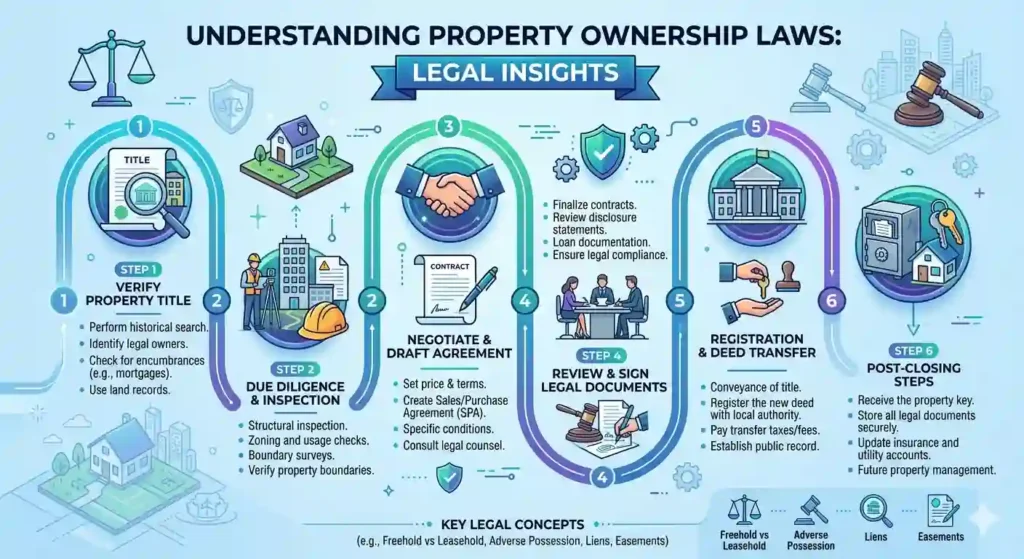
Clear property title verification protects purchasers from fraudulent transfers, disputed inheritance claims, and illegal encroachments. Rajendra Law Office LLP examines title deeds, patta records, tax receipts, parent documents, and survey records carefully. Additionally, advocates verify pending litigation before civil courts, consumer forums, revenue departments, and land tribunals. Buyers should inspect sale deeds spanning thirty years before executing agreements with developers or landowners. Encumbrance certificates reveal mortgages, attachments, prior sales, and pending legal liabilities affecting ownership rights. Therefore, purchasers avoid hidden disputes involving banks, financial institutions, or government acquisition proceedings. Mutation records also establish revenue recognition before municipal corporations and village administrative offices. Many disputes arise because buyers ignore zoning regulations, DTCP approvals, or CMDA permissions. Consequently, courts often examine official approvals during construction dispute proceedings. Nearby registrar offices maintain certified records supporting ownership claims during litigation. Proper verification reduces risks involving forged signatures, impersonation fraud, and illegal power of attorney misuse.
Legal Framework Governing Property Ownership
Indian property ownership laws derive authority from statutory enactments, constitutional protections, and judicial precedents. The Transfer of Property Act governs transfers involving sale, lease, exchange, gift, and mortgage transactions. Furthermore, the Registration Act mandates compulsory registration for significant immovable property transactions across India. The Indian Stamp Act regulates stamp duty obligations during property transfers and lease documentation. CPC provisions govern civil litigation involving injunctions, declarations, possession recovery, and partition claims. Meanwhile, BNSS regulates criminal investigation procedures connected with land grabbing, cheating, and trespass disputes. BNS provisions punish forgery, intimidation, criminal conspiracy, and fraudulent property transactions affecting innocent buyers. BSA rules determine admissibility of title deeds, electronic evidence, and certified public records during trials. Revenue departments manage mutation, land classification, and patta transfer proceedings affecting agricultural and residential lands. Therefore, property owners must understand statutory compliance before purchasing commercial spaces, apartments, or ancestral properties.
Key Documents Required During Property Purchase
Property buyers should maintain complete documentation before paying advance consideration or signing sale agreements. Rajendra Law Office LLP reviews documents ensuring compliance with registration, taxation, and municipal regulations. Essential documents usually include:
- Sale deed copy
- Encumbrance certificate
- Patta or mutation records
- Approved building plan
- Property tax receipts
- Identity proof documents
- Parent title deeds
- Occupancy certificate
Additionally, apartment purchasers should verify RERA registration, association approvals, and builder completion certificates carefully. Buyers must confirm electricity connections, water approvals, and sewage permissions before possession acceptance. Therefore, document verification reduces future litigation involving unauthorized construction or ownership conflicts. Banks also require these documents before sanctioning housing loans or mortgage facilities. Courts often reject unsupported ownership claims lacking registered deeds or authenticated revenue records. Consequently, legal scrutiny remains necessary during every transaction stage. Nearby Sub Registrar Offices provide certified copies supporting ownership verification. Proper documentation strengthens civil claims during injunction suits, recovery actions, and criminal complaints involving fraudulent transfers.
Role of Registration Offices and Revenue Departments
Registration offices and revenue departments play central roles during property ownership transfer procedures across India. Sub Registrar Offices record sale deeds, gift deeds, mortgage deeds, and lease agreements under statutory requirements. Furthermore, revenue authorities maintain patta records, land classification details, and mutation entries for agricultural properties. Buyers should immediately update mutation records after completing registration formalities before competent authorities. Municipal corporations collect property taxes and issue building approvals affecting urban ownership rights. Therefore, property owners must maintain updated revenue records to avoid administrative disputes or penalties. Revenue tribunals frequently resolve land classification disputes, survey conflicts, and boundary correction applications. Tahsildar offices also handle inheritance mutation proceedings involving legal heirs and succession documentation. Additionally, online land record portals improve transparency during ownership verification and due diligence procedures. Courts rely upon certified revenue records during partition suits, title disputes, and adverse possession litigation. Consequently, owners should preserve tax receipts, patta copies, and survey sketches carefully.
Common Property Ownership Disputes in India
Property disputes frequently arise because families ignore legal formalities during inheritance, sale, or partition transactions. Rajendra Law Office LLP handles title disputes, partition conflicts, tenant eviction matters, and illegal possession claims regularly. Common disputes include:
| Legal Issue | Concerned Authority | Available Remedy |
|---|---|---|
| Illegal encroachment | Civil Court | Permanent injunction |
| Forged sale deed | Police Station | Criminal complaint |
| Partition conflict | District Court | Partition suit |
| Builder fraud | RERA Authority | Compensation claim |
| Mutation rejection | Revenue Department | Appeal petition |
Moreover, disputes increase when oral agreements replace registered documentation during family settlements or land sales. Courts examine possession evidence, tax payments, witness testimony, and registered records carefully during adjudication. Therefore, litigants should preserve electronic evidence, photographs, and communication records supporting ownership claims. Mediation proceedings sometimes resolve family property disputes without lengthy courtroom litigation. Nearby police stations also investigate criminal intimidation, land grabbing, and document forgery complaints. Consequently, timely legal action prevents unauthorized transfers and irreversible property damage.
Partition Rights in Ancestral Property Matters
Partition rights create significant legal issues among siblings, coparceners, widows, and legal heirs within Hindu families. Rajendra Law Office LLP advises clients regarding Hindu Succession Act rights and partition litigation strategies. Daughters possess equal coparcenary rights after statutory amendments recognized gender equality in inheritance matters. Furthermore, ancestral property disputes often involve oral family arrangements lacking documentary evidence or registered settlement deeds. Courts examine genealogy records, birth certificates, and revenue documents before granting partition decrees. Therefore, heirs should secure legal heir certificates and succession documentation immediately after family deaths. Partition suits generally seek separate possession, mesne profits, and permanent injunction reliefs against unauthorized occupation. Revenue authorities later mutate records according to final decrees passed by competent civil courts. Additionally, mediation frequently resolves emotional family disputes involving ancestral homes and agricultural lands. Nearby District Courts and High Courts hear appeals involving inheritance disputes, probate proceedings, and testamentary succession conflicts.
Rights of Women in Property Ownership Cases
Women enjoy stronger ownership rights after important judicial decisions and legislative amendments supporting inheritance equality. Hindu daughters now receive equal coparcenary rights within ancestral property under amended succession laws. Moreover, married women may independently purchase, transfer, mortgage, or lease immovable properties without spousal approval. Courts also protect widows from unlawful dispossession involving matrimonial homes and inherited family assets. Therefore, women may seek injunctions, maintenance orders, and possession recovery before Family Courts and civil courts. Domestic violence proceedings sometimes involve residential rights under protective legislation benefiting aggrieved spouses. Banks increasingly sanction housing loans supporting women purchasers and co ownership arrangements. Additionally, Muslim, Christian, and Parsi inheritance matters follow personal laws governing succession distribution. Revenue authorities mutate inherited properties after verifying legal heir certificates and succession documents. Consequently, women should preserve purchase agreements, title deeds, and tax receipts supporting independent ownership claims. Legal remedies include declaratory suits, police complaints, maintenance petitions, and probate proceedings before competent forums.
Criminal Issues Connected With Property Ownership
Property disputes occasionally involve criminal conduct requiring police intervention and prosecution before criminal courts. Rajendra Law Office LLP assists victims facing cheating, criminal trespass, forgery, intimidation, and illegal dispossession. BNS provisions punish fraudulent property transactions involving fake signatures, fabricated title deeds, and impersonation schemes. Furthermore, nearby police stations investigate land grabbing complaints supported by documentary evidence and witness testimony. BNSS procedures regulate FIR registration, investigation powers, anticipatory bail, and charge sheet filing requirements. Therefore, complainants should immediately preserve electronic messages, recordings, photographs, and certified document copies. Courts sometimes grant interim police protection preventing unlawful occupation or violent interference with possession rights. Criminal remedies often accompany civil injunction suits and declaration proceedings before District Courts. Additionally, cybercrime complaints arise during online property fraud involving fake advertisements and forged digital documents. Victims may approach Economic Offences Wings during large scale real estate scams. Consequently, prompt legal consultation strengthens evidence preservation and prosecution success.
RERA Protection for Home Buyers and Investors
RERA transformed Indian real estate regulation by increasing accountability among builders, promoters, and developers nationwide. Rajendra Law Office LLP represents buyers before RERA authorities involving delayed possession, construction defects, and misleading advertisements. Developers must register qualifying projects before marketing apartments, villas, or commercial spaces to purchasers. Furthermore, buyers may inspect project approvals, completion timelines, and promoter disclosures through official RERA portals. Delayed projects frequently generate compensation claims, refund proceedings, and interest recovery applications before adjudicating officers. Therefore, purchasers should review RERA registration details before paying booking advances or installments. Consumer forums also entertain complaints involving unfair trade practices and deficient construction services. Banks generally prefer financing projects possessing valid RERA approvals and statutory permissions. Additionally, appellate tribunals hear challenges against RERA authority decisions affecting builders and purchasers. Nearby District Consumer Commissions also provide remedies involving compensation and service deficiency claims. Consequently, regulatory compliance strengthens transparency and investor confidence within Indian real estate markets.
Importance of Property Tax and Municipal Compliance
Property tax compliance protects ownership rights and prevents penalties, attachment proceedings, or municipal enforcement actions. Rajendra Law Office LLP advises owners regarding municipal approvals, trade licenses, and urban development regulations. Municipal corporations maintain assessment records reflecting occupancy status, building classification, and tax payment histories. Furthermore, unpaid property taxes may create encumbrances affecting future sale transactions or mortgage approvals. Buyers should verify outstanding dues before purchasing apartments, commercial buildings, or vacant plots. Therefore, tax receipts often support possession claims during injunction suits and ownership litigation proceedings. Unauthorized constructions frequently attract demolition notices from municipal authorities and planning departments. Courts examine approved plans, occupancy certificates, and tax assessments during construction dispute cases. Additionally, environmental approvals and fire safety clearances affect commercial property operations significantly. Nearby municipal offices issue certified tax extracts and building approvals supporting legal compliance verification. Consequently, timely payment and regulatory compliance reduce litigation risks involving civic authorities and neighboring property owners.
Tenant Rights and Landlord Ownership Disputes
Tenant landlord disputes commonly involve eviction claims, rent defaults, security deposit conflicts, and unauthorized occupation allegations. Rajendra Law Office LLP assists landlords and tenants before Rent Controllers, civil courts, and consumer forums. Written lease agreements clarify rent obligations, maintenance responsibilities, and termination conditions protecting both parties. Furthermore, registered lease deeds strengthen enforceability during eviction proceedings and rent recovery litigation. Landlords may seek eviction for wilful default, unlawful subletting, or personal occupation requirements before competent authorities. Therefore, tenants should maintain rent receipts, communication records, and security deposit acknowledgments carefully. Courts evaluate possession evidence, tenancy duration, and contractual terms before granting eviction orders. Police assistance sometimes becomes necessary during unlawful lockouts or intimidation involving disputed tenancies. Additionally, commercial lease disputes often involve arbitration clauses and damages claims arising from contractual breaches. Nearby Sub Registrar Offices register long term leases affecting commercial properties and residential apartments. Consequently, legal drafting prevents future conflicts between property owners and occupying tenants.
Legal Remedies and Litigation Strategies for Property Owners
Property owners possess several civil, criminal, and administrative remedies against unlawful interference affecting ownership rights. Rajendra Law Office LLP develops litigation strategies protecting residential, agricultural, and commercial property interests efficiently. Civil courts grant injunctions preventing encroachment, construction interference, or unauthorized occupation by third parties. Moreover, declaratory suits establish legal ownership when title disputes arise through conflicting documentation or inheritance claims. Recovery suits assist dispossessed owners seeking possession restoration against trespassers or illegal occupants. Therefore, litigants should preserve survey sketches, photographs, registered deeds, and communication evidence supporting claims. Criminal complaints before nearby police stations address forgery, cheating, criminal intimidation, and land grabbing activities. Revenue appeals challenge mutation refusals, patta cancellation orders, and classification disputes before administrative tribunals. Additionally, mediation proceedings sometimes resolve family property disputes without prolonged courtroom battles. Timely legal notices frequently encourage negotiated settlements avoiding expensive litigation costs.
Role of Courts, Tribunals, and Forums in Property Cases
Different courts and tribunals exercise jurisdiction depending upon dispute nature, property value, and statutory requirements. District Courts generally hear partition suits, declaration claims, possession recovery actions, and injunction proceedings involving immovable property. Furthermore, High Courts decide complex title disputes, writ petitions, and appeals challenging subordinate court judgments. Consumer forums address builder negligence, delayed possession, and construction defect complaints filed by apartment purchasers. Therefore, litigants should determine proper jurisdiction before filing suits or administrative appeals. RERA authorities adjudicate disputes involving registered real estate projects and promoter compliance failures. Revenue tribunals examine land classification disputes, patta cancellation proceedings, and survey correction applications. Additionally, Debt Recovery Tribunals handle mortgage enforcement and secured creditor recovery proceedings involving defaulting borrowers. Arbitration tribunals resolve commercial lease disputes and development agreement conflicts through contractual mechanisms. Nearby police stations investigate criminal complaints involving trespass, forgery, or fraudulent sale transactions. Consequently, jurisdictional strategy strongly influences litigation timelines, costs, and enforcement effectiveness.
Preventive Legal Measures for Property Buyers
Preventive legal measures significantly reduce ownership disputes and financial losses during property acquisition transactions. Rajendra Law Office LLP recommends professional title verification before signing agreements or transferring substantial consideration amounts. Buyers should physically inspect properties ensuring boundaries match survey records and approved municipal plans. Furthermore, purchasers must verify seller identity, power of attorney validity, and pending litigation details carefully. Encumbrance certificates reveal mortgages, court attachments, and prior sale transactions affecting ownership rights. Therefore, purchasers should avoid cash transactions lacking documented payment records or banking evidence. Registration before competent authorities remains essential for enforceable ownership transfer under statutory requirements. Home buyers should confirm RERA approvals, environmental clearances, and occupancy certificates before accepting possession. Additionally, banks and financial institutions often conduct independent due diligence before sanctioning housing loans. Nearby registrar offices and revenue departments provide certified extracts supporting verification processes. Consequently, careful preventive planning minimizes future litigation involving fraud, encroachment, or defective title claims.
Digital Evidence and Electronic Property Records
Digital evidence increasingly influences property litigation involving electronic agreements, online records, and digital communication platforms. Rajendra Law Office LLP uses electronic evidence strategically during civil suits, arbitration proceedings, and criminal prosecutions. BSA provisions regulate admissibility requirements involving emails, scanned deeds, WhatsApp messages, and online payment records. Furthermore, state governments maintain digital land records improving transparency during ownership verification procedures. Online portals provide encumbrance certificates, patta extracts, survey sketches, and registration details efficiently. Therefore, buyers should download certified electronic copies preserving transaction histories and municipal approvals carefully. Courts examine metadata, timestamps, and authentication certificates before admitting electronic evidence during trials. Cybercrime units investigate hacking incidents, fake listings, and fraudulent online property advertisements affecting unsuspecting purchasers. Additionally, blockchain discussions continue influencing future property registration and digital ownership authentication systems. Nearby e seva centers assist citizens accessing online land records and government property databases. Consequently, technological awareness strengthens legal preparedness during modern property ownership disputes.
Property Ownership Issues Faced by NRIs
NRIs frequently encounter ownership disputes involving unauthorized occupation, fraudulent sales, and inheritance conflicts affecting Indian properties. Rajendra Law Office LLP assists overseas clients through documentation review, litigation management, and power of attorney execution. NRIs may purchase residential and commercial properties subject to FEMA regulations and banking compliance requirements. Furthermore, overseas heirs often struggle obtaining mutation records, succession certificates, and tax clearances after family deaths. Courts sometimes appoint commissioners verifying possession status and property condition during prolonged absentee ownership situations. Therefore, NRIs should appoint trustworthy representatives through properly authenticated powers of attorney. Fraudsters occasionally misuse vacant properties through forged documents, illegal tenants, or fabricated sale transactions. Police complaints and injunction suits help prevent unauthorized transfers involving absentee owners. Additionally, online hearings and digital filings increasingly support NRI participation during ongoing litigation proceedings. Nearby Indian embassies and consulates authenticate documents supporting cross border succession and transfer formalities. Consequently, proactive monitoring protects overseas investments and inherited family assets.
Essential Checklist Before Buying Immovable Property
Every property purchaser should follow structured due diligence procedures before finalizing ownership transactions or development investments. Rajendra Law Office LLP provides legal audits identifying hidden liabilities, regulatory defects, and title related litigation risks. Buyers should verify:
- Seller ownership records
- Encumbrance certificate status
- Approved building permissions
- Pending litigation details
- Property tax payments
- RERA registration validity
- Physical possession condition
- Bank loan liabilities
Furthermore, purchasers should inspect neighborhood infrastructure, access roads, drainage facilities, and environmental compliance records carefully. Survey discrepancies frequently create future disputes involving adjoining landowners and municipal authorities. Therefore, professional legal opinions reduce uncertainty before executing sale deeds or paying substantial advances. Banks often reject defective properties lacking approvals or clear ownership documentation. Nearby registration offices provide certified deed copies supporting transaction verification processes. Consequently, disciplined due diligence strengthens ownership security and investment confidence.
Conclusion: Securing Property Rights Through Legal Awareness
Property ownership laws influence financial security, family stability, inheritance planning, and commercial investment decisions across India. Rajendra Law Office LLP assists individuals, companies, women, older people, and NRIs during property related legal challenges. Furthermore, proper documentation, registration compliance, and title verification reduce disputes involving fraudulent transactions or illegal occupation. Courts, tribunals, police stations, and revenue authorities provide several remedies protecting lawful ownership rights effectively. Therefore, owners should act quickly against encroachment, forgery, intimidation, or unauthorized transfers affecting valuable assets. Legal notices, injunction suits, criminal complaints, and administrative appeals remain powerful enforcement mechanisms under Indian laws. Buyers should consult experienced advocates before purchasing apartments, agricultural lands, villas, or commercial properties. Additionally, digital land records and RERA regulations continue improving transparency within Indian real estate transactions. Timely legal advice prevents expensive litigation and strengthens long term ownership protection. Consequently, informed property decisions create secure investments and sustainable family wealth for future generations.
FAQs
What documents prove legal property ownership?
Registered sale deeds, patta records, encumbrance certificates, and tax receipts strongly support lawful ownership claims before courts and authorities.
Can daughters claim ancestral property rights?
Yes. Hindu daughters enjoy equal coparcenary rights under amended succession laws and may file partition suits before competent courts.
Which authority handles builder delay complaints?
RERA authorities and Consumer Commissions handle delayed possession, refund disputes, and compensation claims against developers and promoters.
How can owners stop illegal encroachment?
Owners may file injunction suits, police complaints, and possession recovery actions before civil courts and nearby police stations.
Why is mutation important after registration?
Mutation updates revenue records, strengthens ownership recognition, and supports tax compliance before municipal and revenue authorities.
Can NRIs manage Indian property disputes remotely?
Yes. NRIs may use authenticated powers of attorney, online hearings, and digital filings during Indian property litigation proceedings.
Read More
- Expert Guidance in Real Estate Investment and Financing
- Family Law Matters: Legal Guidance for Family Issues
- Interlocutory Application vs Interim Application: Key Differences, Examples & Legal Usage in India
- Expert Chennai Lawyers: Your Partners in Legal Matters
- Unlocking Divorce Mediation Benefits: Insights from a Family Law Advocate
- Department of Land Resources – Registration Act, 1908