
Global Enforcement of Intellectual Property – Intellectual property drives innovation, investment, and global commercial growth. Therefore, effective enforcement safeguards valuable creations against infringement across jurisdictions. Rajendra Law Office LLP advises businesses, startups, inventors, artists, software developers, exporters, manufacturers, researchers, NGOs, and NRIs on domestic and cross-border intellectual property disputes. Our lawyers handle trademark, copyright, patent, design, trade secret, domain name, licensing, and technology-related matters. Early legal intervention prevents commercial losses and reputational damage. Comprehensive enforcement strategies strengthen ownership rights before judicial and regulatory authorities. Professional legal guidance also supports licensing, commercialization, compliance, and dispute resolution. Strong intellectual property protection improves investor confidence while preserving competitive market advantages across international business environments.
Global Enforcement of Intellectual Property Rights: Legal Insights – Rajendra Law Office LLP
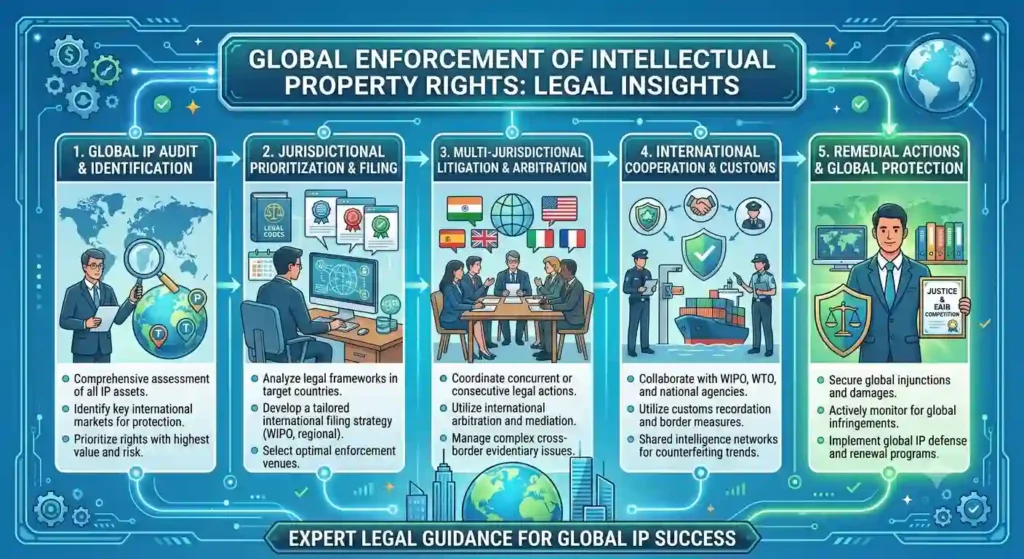
Importance of Global Intellectual Property Enforcement
International commerce increases intellectual property infringement risks across multiple countries. Consequently, rights holders require proactive legal enforcement strategies. Rajendra Law Office LLP develops customized legal solutions protecting valuable intellectual assets worldwide. Our advocates examine infringement evidence, ownership documents, licensing agreements, assignment records, customs issues, digital violations, counterfeiting activities, and contractual obligations.
- Trademark protection
- Copyright enforcement
- Patent litigation
- Design protection
- Trade secret security
- Domain disputes
| Intellectual Property | Legal Support |
|---|---|
| Trademark | Registration and Litigation |
| Copyright | Enforcement |
| Patent | Infringement Action |
| Industrial Design | Protection |
Strategic legal planning reduces commercial risks while strengthening global intellectual property portfolios.
Cross-Border Intellectual Property Challenges
Global businesses frequently encounter intellectual property misuse beyond domestic borders. However, coordinated legal action improves enforcement efficiency. Our lawyers evaluate jurisdiction, governing law, international treaties, licensing obligations, technology transfers, counterfeit imports, online infringement, piracy, parallel imports, and contractual rights. Clients receive commercially practical advice supporting business continuity. We coordinate enforcement with foreign associates whenever necessary. Timely legal responses preserve market reputation while discouraging repeat violations. Comprehensive evidence collection significantly strengthens claims before domestic courts, foreign authorities, customs agencies, and arbitration forums. Effective planning protects valuable innovations against cross-border commercial exploitation.
Intellectual Property Assets Requiring Protection
Different intellectual property rights require specialized legal strategies and enforcement mechanisms. Every valuable asset deserves comprehensive legal protection.
- Trademarks
- Copyrights
- Patents
- Industrial designs
- Trade secrets
- Domain names
- Software
- Brand identity
Businesses also benefit from portfolio audits, licensing documentation, confidentiality agreements, technology transfer contracts, and intellectual property due diligence.
Applicable Laws and International Frameworks
Intellectual property enforcement depends upon domestic statutes and international legal frameworks. Furthermore, procedural laws support effective dispute resolution. Relevant laws include the Trade Marks Act, 1999, Copyright Act, 1957, Patents Act, 1970, Designs Act, 2000, Geographical Indications of Goods Act, 1999, Information Technology Act, 2000, Code of Civil Procedure, 1908, Bharatiya Nyaya Sanhita, 2023, Bharatiya Nagarik Suraksha Sanhita, 2023, Bharatiya Sakshya Adhiniyam, 2023, and Commercial Courts Act, 2015. International protection commonly relies upon the TRIPS Agreement, Paris Convention, Berne Convention, Madrid Protocol, and Patent Cooperation Treaty. Available remedies include injunctions, damages, seizure, customs enforcement, criminal prosecution, mediation, arbitration, and settlement.
Legal Strategy for International Intellectual Property Disputes
Cross-border disputes require coordinated legal planning, jurisdictional analysis, and procedural compliance. Therefore, experienced legal representation becomes commercially essential. Rajendra Law Office LLP evaluates infringement location, applicable treaties, contractual clauses, governing law, evidence requirements, limitation periods, and enforcement mechanisms. Our advocates issue legal notices, negotiate settlements, commence litigation, pursue arbitration, and coordinate customs enforcement. Every strategy balances commercial objectives with legal efficiency. Businesses receive continuous guidance regarding intellectual property licensing, assignment, franchising, technology collaborations, compliance obligations, and portfolio management. Practical legal advice strengthens long-term protection while reducing avoidable international disputes.
Forums, Authorities, and Jurisdiction
Intellectual property disputes proceed before specialized authorities depending upon rights involved and dispute location. Moreover, jurisdiction depends upon statutory provisions, infringement, and contractual arrangements.
Relevant authorities include:
- Commercial Courts
- District Courts
- High Courts
- Supreme Court
- Customs Authorities
- Police Stations
- Cyber Crime Police Stations
- Intellectual Property Offices
Government departments include the Controller General of Patents, Designs and Trade Marks, Copyright Office, Department for Promotion of Industry and Internal Trade, Customs Department, Ministry of Commerce and Industry, and Ministry of Electronics and Information Technology. Proper jurisdiction improves enforcement success.
Available Legal Remedies for Intellectual Property Owners
Indian and international laws provide extensive remedies against intellectual property infringement. Our advocates recommend appropriate legal action after detailed factual assessment.
- Legal notice
- Interim injunction
- Permanent injunction
- Damages
- Account of profits
- Seizure orders
- Customs enforcement
- Criminal complaint
- Mediation
- Arbitration
- Settlement
- Appeals
Clients also receive portfolio management, registration support, licensing advice, assignment drafting, compliance reviews, infringement monitoring, due diligence, appellate representation, and enforcement coordination. Early legal action protects innovation and commercial goodwill.
Enforcement Through Courts and Investigating Authorities
Serious intellectual property violations occasionally involve criminal offences requiring coordinated investigations. Consequently, businesses may approach Police Stations, Cyber Crime Police Stations, and Customs Authorities wherever appropriate. Commercial Courts adjudicate civil intellectual property disputes involving infringement, licensing, and contractual breaches. High Courts exercise appellate jurisdiction and constitutional powers according to applicable laws. Criminal investigations may involve counterfeiting, forgery, cheating, data theft, software piracy, and trademark offences under relevant legislation. Strategic coordination between civil remedies and criminal proceedings strengthens enforcement while preserving valuable intellectual property rights.
Why Choose Rajendra Law Office LLP
Rajendra Law Office LLP delivers comprehensive intellectual property services supporting domestic and international businesses. Additionally, our lawyers combine commercial understanding with updated legal expertise. We represent startups, corporations, manufacturers, exporters, innovators, investors, educational institutions, NGOs, technology companies, and NRIs. Every engagement receives strategic planning supported by current legislation and international practices. Our services include registrations, portfolio management, licensing, assignment drafting, infringement litigation, customs enforcement, arbitration, mediation, legal opinions, and appellate representation. Professional legal support protects innovation while strengthening commercial competitiveness. Effective intellectual property enforcement creates sustainable business value across global markets.
Frequently Asked Questions
Q1. Why is global intellectual property enforcement important?
Global enforcement protects innovations, brands, technology, creative works, and commercial reputation against international infringement, piracy, counterfeiting, and unauthorized exploitation.
Q2. Which intellectual property rights receive international protection?
Trademarks, copyrights, patents, industrial designs, geographical indications, trade secrets, software, and domain-related rights receive legal protection through applicable laws.
Q3. What remedies exist against international infringement?
Rights holders may seek injunctions, damages, customs seizures, criminal prosecution, arbitration, mediation, settlements, account of profits, and appellate remedies.
Q4. Which courts hear intellectual property disputes?
Commercial Courts, District Courts, High Courts, Supreme Court, and competent foreign courts hear disputes according to jurisdiction and applicable legislation.
Q5. Can customs authorities stop counterfeit imports?
Yes. Customs authorities may detain suspected counterfeit goods under applicable intellectual property enforcement procedures and border protection mechanisms.
Q6. How does Rajendra Law Office LLP assist clients?
Our lawyers provide registrations, licensing, infringement actions, portfolio management, customs enforcement, dispute resolution, international coordination, and comprehensive legal compliance.
Read More
- Future Forecasts: Trends and Innovations in Criminal Defense Law
- From Local to Global: Enforcing Arbitration Awards
- Finding the Right Civil Lawyer: Tips and Considerations
- Find Top Lawyers in Chennai: Your Legal Solutions Await
- Insurance Law: Your Rights and Legal Protections
- Trade Marks Registry – Official Information